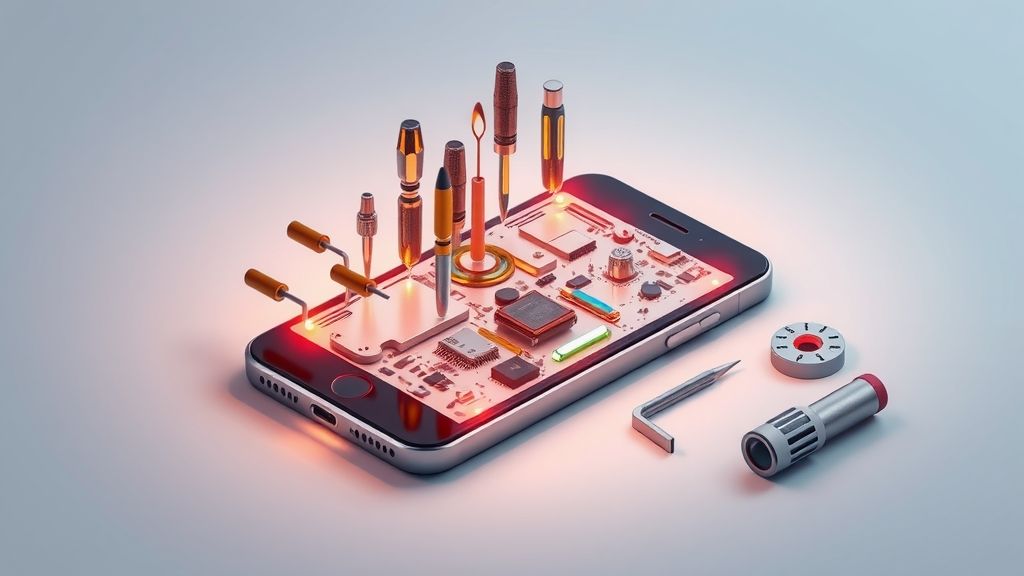
NPU specs now matter more than chip benchmarks for smartphone AI features
On-device AI assistants, local transcription and photo editing live or die on NPU throughput and RAM, not the CPU/GPU scores that still dominate phone reviews.
Latest articles on AI, technology, and software development.

On-device AI assistants, local transcription and photo editing live or die on NPU throughput and RAM, not the CPU/GPU scores that still dominate phone reviews.

Alternative app stores in the EU never got the adoption regulators expected. The real impact of the Digital Markets Act has been a slow, forced simplification of Apple's own fee structure — and the latest round just took effect.

Starting February 2027, every phone sold in the EU must have a user-replaceable battery that survives 1,000 charge cycles. Here's why that will change phones sold worldwide.

Starlink and AST SpaceMobile made satellite-to-phone service work in 2026, killing HughesNet along the way. Now SpaceX may turn Direct to Cell into a standalone carrier that competes with its own partners.

Sub-20ms local inference versus 200-500ms cloud round-trips is changing what phones can do offline — and quietly resolving one of AI's biggest privacy complaints.

RCS fixed read receipts, typing indicators, and media quality across platforms, but cross-platform messages still lack end-to-end encryption that same-platform chats have.

Under-display camera technology has spent five years as a niche gimmick with visibly worse selfies. A new generation of pixel and shielding designs is closing that gap, and foldables are the proving ground.

Sensor resolution stopped predicting photo quality years ago. In 2026, the phones with the best cameras are winning on processing, not pixel count — and that changes what buyers should actually look for.

Qualcomm's latest NPU runs inference at 220 tokens per second, up from 70 a generation ago. That leap -- not a bigger cloud model -- is what's actually changing how AI features work on your phone in 2026.

Honor's Magic V6 passed independent SGS testing at 500,000 fold cycles. Samsung and Google made real engineering leaps too. Here's what's actually different in the hinges shipping in 2026, and which durability claims are worth trusting.

The GSMA standard for end-to-end encrypted RCS is now rolling out on both Google Messages and Apple Messages, closing a security gap that has existed since Apple added RCS support in 2024.

The EU's mandatory repairability index gives Motorola a B+ and Apple a D-. With the Right to Repair Directive enforceable from July 31, 2026, the grades come with real legal teeth.