Why Warehouse Humanoids Need Economics, Not Hype
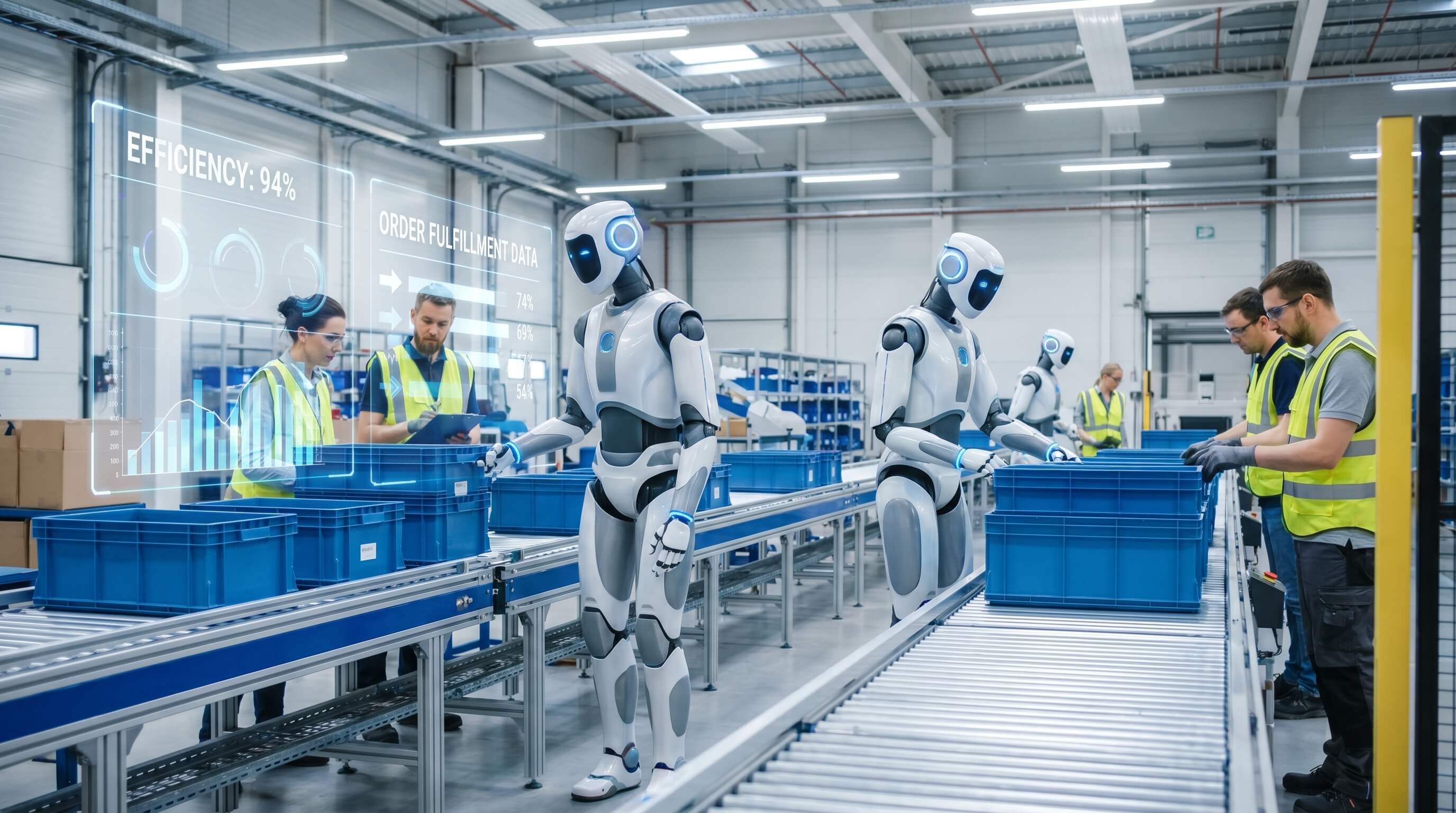
Humanoid robots are excellent at attracting attention. A machine that walks on two legs, carries totes and works beside people feels like a symbolic turning point for automation. That is one reason the warehouse has become a favorite proving ground. Logistics sites are repetitive, labor-intensive and under pressure to move faster. If humanoids are going to justify themselves anywhere early, a warehouse is an obvious place to try. But the most important question is not whether the demo looks futuristic. It is whether the economics work.
That sounds less exciting than the vision videos, but it is the only question that matters at scale. A warehouse operator does not buy robotics to impress investors. It buys automation to improve throughput, reduce injury risk, fill labor gaps and increase reliability without breaking the operation. If a humanoid robot cannot beat or complement narrower forms of automation on those terms, it will remain a curiosity.
Why logistics is interested anyway
The interest is real for good reasons. GXO has described live trials with several humanoid developers and argues that flexible robots could take on repetitive tasks with lower integration demands than traditional fixed automation. Amazon has expanded robotics across its network and continues to invest in systems that bring inventory to workers faster and make workflows safer. In the background, labor constraints remain stubborn. Warehouses need systems that can adapt to varied tasks, changing layouts and peak-season swings.
That is the central promise of the humanoid form. A robot shaped roughly like a person can, in theory, use spaces and tools already designed for humans. Instead of rebuilding an entire site around one machine, operators may be able to deploy robots into existing workflows. That possibility is economically attractive because integration is often one of the most expensive parts of automation.
The real metric is not general intelligence
Public conversation about humanoids often drifts toward science-fiction questions. Will they become general workers? Will they replace whole job categories? In warehouses, those are not the best near-term metrics. The real test is much narrower: can the system do a small set of tasks safely, repeatedly and cheaply enough to matter?
That means uptime, battery performance, payload capacity, error recovery and supervisor burden matter more than philosophical intelligence. A robot that handles tote movement, picking assistance or simple transfer tasks for long shifts with predictable maintenance may be valuable even if it is far from general-purpose. The warehouse rewards boring reliability.
Why orchestration matters as much as hardware
This is also why the best automation stories are increasingly software stories. A humanoid robot does not enter an empty environment. It enters a site full of warehouse management systems, conveyors, scanners, safety rules, staffing patterns and other robots. Value comes from fitting into that system, not from standing apart from it.
GXO’s commentary on operational incubation is revealing here. The company is not merely buying robots. It is shaping prototypes around battery life, payload, grip, stability and interaction with other automation. That is how commercialization usually works in industrial technology. The winning product is not the one with the most spectacular demo. It is the one whose failure modes are understood and whose output can be planned around.
In practice, that means humanoids may depend on a strong orchestration layer even more than on a dramatic hardware leap. Schedulers need to decide which tasks go to people, to fixed automation, to mobile robots and to humanoids. Safety systems must know where each machine is. Managers need dashboards that explain not just whether a robot is active, but whether it is economically useful.
Where hype can mislead buyers
The risk in the current market is that humanoids get sold as universal labor rather than as specific industrial tools. That framing invites disappointment. Warehouses already use many kinds of automation, from fixed arms to autonomous carts. A humanoid must compete with those alternatives, not with a movie fantasy of human-level robotics. If a cheaper non-humanoid system can perform the same task more reliably, buyers will choose it.
That does not mean humanoids have no future. It means their value has to come from flexibility where other systems struggle. They are strongest when one body can switch between multiple human-designed tasks without requiring the whole site to be rebuilt.
What adoption will really depend on
The next phase of warehouse robotics will likely be decided by ordinary metrics: cost per task, implementation time, utilization rates, injury reduction, throughput consistency and ease of supervision. Those are not glamorous benchmarks, but they are how industrial automation scales.
That is why the most sensible way to think about warehouse humanoids is not as a revolution that arrives all at once. They are better understood as a new robotics labor category that has to earn its place. If the economics improve, deployments will spread. If they do not, warehouses will keep favoring narrower machines and better software over more dramatic bodies.
So yes, the humanoid form makes for a powerful symbol. But symbols do not get purchase orders. In logistics, economics still decides what becomes infrastructure.