Why Sim-to-Real Is Becoming the Most Important Idea in Robotics
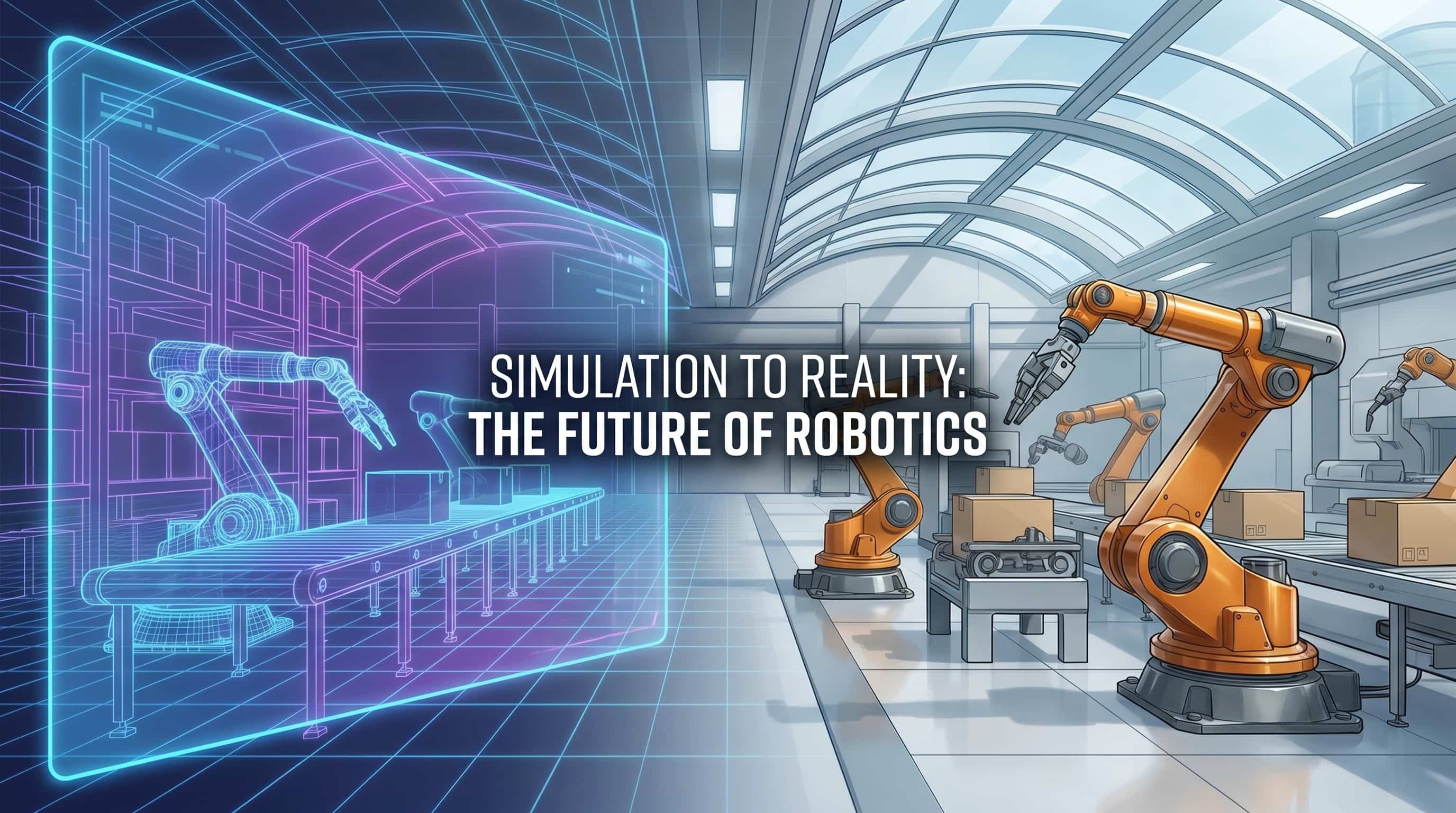
For decades, the dream of robots seamlessly integrating into our daily lives and industrial spaces has captivated imaginations. Yet, bringing this dream to fruition has been a slow, arduous process. While robots excel at repetitive, predictable tasks, teaching them to navigate the messy, unpredictable real world has remained a monumental challenge. This is where a concept known as "sim-to-real" is rapidly emerging as perhaps the most critical idea in modern robotics.
The Bottleneck of Physical Development
Imagine trying to teach a robot to pick up a new, oddly shaped item in a warehouse. Traditionally, this would involve programming the robot, deploying it, observing failures, reprogramming, and repeating the cycle. Each iteration requires physical hardware, occupies valuable floor space, consumes significant time, and carries the inherent risk of damage to the robot or its surroundings. This process is incredibly slow, prohibitively expensive, and fundamentally limits the pace at which robots can learn and adapt.
The economics of physical iteration simply don't scale. If a robot needs to learn hundreds or thousands of nuanced behaviors to operate effectively in a dynamic environment like a modern factory or logistics hub, developing each behavior directly on hardware becomes an insurmountable bottleneck. This is why many robotic systems remain confined to highly structured, unchanging environments, far from the adaptable, intelligent machines we envision.
Enter the Virtual Training Ground
Sim-to-real offers a powerful alternative: a virtual training ground where robots can learn through trial and error, imitation, and synthetic data before ever touching the physical world. High-fidelity simulation environments allow developers to create digital twins of robots, their workspaces, and the objects they interact with. Within this virtual sandbox, algorithms can be trained at an unprecedented scale and speed.
Consider reinforcement learning, a powerful paradigm where robots learn by receiving rewards or penalties for their actions. In simulation, a robot can attempt millions of grasps, navigate countless obstacles, or perform complex assembly tasks in a fraction of the time it would take in reality. If it fails, it simply resets, learns from the mistake, and tries again – without any physical damage or downtime. This ability to generate vast amounts of synthetic data and iterate rapidly is a game-changer for developing robust robotic skills, especially those involving complex interactions like contact-rich manipulation.
Bridging the Reality Gap: The Core Challenge
While the promise of simulation is immense, its effective application hinges on one critical factor: the "reality gap." This refers to the discrepancy between how a robot behaves in simulation and how it performs in the physical world. If the simulation isn't accurate enough, skills learned virtually may not transfer effectively to real hardware, rendering the entire exercise moot.
Closing this gap is the central challenge of sim-to-real. It involves meticulous modeling of physics, sensor characteristics, material properties, and environmental factors. Imperfections in these models – whether it's an inaccurate friction coefficient, a slightly off camera calibration, or a simplified representation of an object's deformability – can lead to significant divergence in behavior. Robots trained solely in a pristine, perfectly modeled simulation might struggle with real-world noise, unexpected lighting conditions, or subtle variations in object texture.
Developers are constantly working to improve simulation fidelity, incorporating more sophisticated physics engines, realistic sensor models, and techniques to automatically refine simulation parameters based on real-world data. The goal isn't necessarily a perfect 1:1 replica of reality, but rather a sufficiently accurate representation that allows for effective skill transfer and rapid iteration.
The Loop: Simulation, Data, and Deployment
The true power of sim-to-real isn't just about training in isolation; it's about creating a continuous, reliable loop between simulation, real-world data, and deployment. Robots are deployed, collect data on their performance (both successes and failures), and this data is then used to refine the simulation models and retrain the robot's algorithms. This feedback loop allows robots to improve continuously, adapting to new scenarios and overcoming unforeseen challenges much faster than traditional methods.
This iterative process is particularly vital in dynamic environments like modern warehouses and factories. Here, robots must contend with constantly changing layouts, an endless variety of objects, unpredictable human interactions, and stringent safety constraints. A robot designed for a single, static task will quickly become obsolete. Sim-to-real enables the rapid development and deployment of flexible, adaptable robotic solutions that can handle the inherent variability of these industrial settings.
Beyond the Demo: The Race for Continuous Improvement
The robotics industry has long been adept at producing impressive demos – robots performing complex feats under controlled conditions. The real test, however, comes after the demo, when robots need to perform reliably and efficiently in diverse, real-world scenarios. This is where sim-to-real truly shines. The robotics race is increasingly about who can establish the most robust and efficient loop between simulation, data, and real-world deployment. This loop dictates how quickly robots can learn, adapt, and improve after their initial rollout, moving from impressive prototypes to truly valuable, long-term assets.
It's crucial to acknowledge that simulation is a powerful tool, not a magic bullet. While it dramatically accelerates development and reduces initial risks, it does not eliminate the need for real-world validation. Physical testing remains indispensable for catching edge cases, verifying safety protocols, and ensuring that the robot's performance meets operational requirements under actual conditions. Simulation helps us get 90% of the way there, but the final 10% still requires interaction with the physical world.
Conclusion
Sim-to-real is transforming how we develop and deploy robots. By providing a safe, scalable, and cost-effective environment for learning, it's breaking down the barriers that have historically slowed robotic innovation. As simulation fidelity continues to improve and the feedback loop between virtual and physical worlds becomes tighter, we can expect to see a new generation of robots that are more adaptable, intelligent, and capable of tackling the complex challenges of the real world, faster than ever before. It's not just an idea; it's the engine driving the next era of robotics.