Why Silicon-Carbon Batteries Are Changing Smartphone Design
For years, smartphone innovation felt like a race focused almost entirely on cameras and processing power. Each new generation promised sharper photos, faster apps, and more immersive gaming. Yet, one critical component often lagged behind: the battery. We’ve all felt the familiar anxiety of a phone nearing 10% by mid-afternoon, or the frustration of needing to carry a power bank just to make it through the day. But what if a fundamental shift in battery technology could finally change that narrative, not just adding a few percentage points, but genuinely transforming how we use and design our most essential devices?
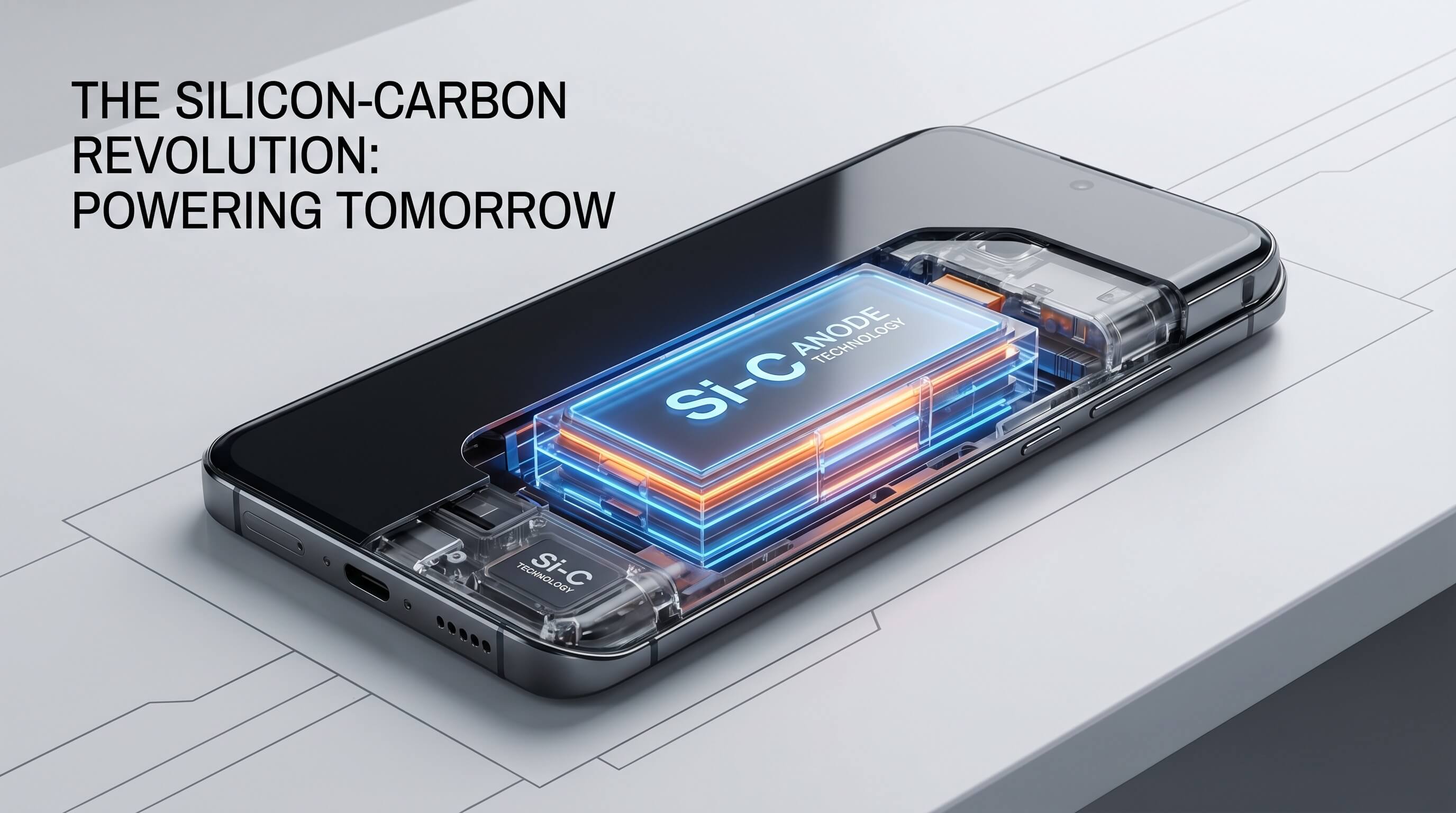
Enter silicon-carbon batteries, a quiet revolution brewing beneath the sleek surfaces of our smartphones. This isn't just an incremental upgrade; it's a significant leap forward that promises to redefine the balance between power, performance, and portability.
The Science Behind the Shift: Silicon vs. Graphite
To understand the impact of silicon-carbon batteries, we first need a quick primer on how traditional lithium-ion batteries work. At their core, these batteries rely on lithium ions moving between two electrodes: a cathode and an anode. For decades, graphite has been the material of choice for the anode due to its stability and ability to store lithium ions within its layered structure.
However, graphite has its limits. It can only store a certain amount of lithium, which directly translates to a cap on energy density – how much power can be packed into a given volume. Scientists have long known that silicon, with its remarkable ability to absorb far more lithium ions than graphite (theoretically up to ten times more!), holds immense promise. The challenge, however, has always been silicon’s tendency to expand dramatically when charged, then contract when discharged. This "breathing" effect leads to material degradation, cracking, and a rapid loss of battery capacity over time.
Silicon-carbon batteries tackle this problem head-on. By blending silicon with carbon in the anode, engineers can harness silicon's high energy storage potential while mitigating its expansion issues. The carbon acts as a buffer, providing structural integrity and improving the overall stability and cycle life of the battery. This hybrid approach significantly boosts the battery's energy density, allowing for more power to be stored in the same physical space compared to conventional graphite-heavy designs.
More Power, More Possibilities: How Design is Evolving
The immediate and most exciting consequence of this enhanced energy density is the newfound flexibility it offers smartphone designers. For years, battery capacity was a hard limit, dictating everything from phone thickness to overall weight. Silicon-carbon technology breaks through many of these constraints, opening up several compelling possibilities:
Longer Battery Life in Familiar Form Factors
Imagine a flagship phone that can comfortably last two full days on a single charge, or a mid-range device that pushes into three-day territory. With silicon-carbon, manufacturers can fit substantially larger battery capacities (e.g., 5500mAh, 6000mAh, or even more) into phone bodies that maintain their familiar slim profiles. This means less charging anxiety and more freedom to use your phone without constantly hunting for an outlet.
Thinner, Lighter Phones Without Sacrificing Power
Alternatively, designers can choose to maintain current battery life expectations but dramatically reduce the physical size and weight of the battery itself. This allows for thinner, lighter phones, or frees up precious internal space for other components – perhaps larger camera sensors, more advanced cooling systems, or even haptic motors that provide richer feedback. For consumers, this translates to devices that are more comfortable to hold and carry.
A Game-Changer for Foldables and Flagships
The impact is particularly profound for cutting-edge designs like foldable phones. These devices inherently face immense spatial constraints, often requiring two separate battery cells to power their dual screens. Silicon-carbon batteries allow for higher energy density in these limited spaces, enabling foldables to offer competitive battery life without becoming excessively thick or heavy. For all flagship phones, where every millimeter and gram counts, this technology provides a crucial advantage in the pursuit of premium design and performance.
From Lab to Pocket: The Commercial Reality
This isn't just theoretical potential; silicon-carbon batteries are already making their way into consumer devices. Leading brands are actively integrating this chemistry into their latest models. A recent industry report highlighted that a significant number of the top-selling smartphones featuring 6000mAh or larger batteries in early 2026 were utilizing silicon-carbon designs. This indicates a clear shift from experimental lab work to widespread commercial adoption, proving the technology's viability and market appeal.
For the everyday user, this means that after years of feeling like battery improvements were always just around the corner, or limited to minor gains, a truly impactful upgrade is finally here. The difference is palpable: faster charging times, longer endurance, and a general sense of relief that your phone can keep up with your demanding schedule.
The Road Ahead: Acknowledging the Challenges
While the benefits are clear, it's important to acknowledge that scaling any new battery technology globally is a complex undertaking. The journey from laboratory breakthrough to mass-market reliability is fraught with challenges. Factors like long-term durability, consistent thermal behavior across diverse operating conditions, rigorous validation cycles, and ensuring overall safety and reliability are paramount.
Battery technology is not just about raw energy density; it's about engineering a component that can withstand thousands of charge cycles, extreme temperatures, and accidental drops, all while remaining safe and performing predictably. Manufacturers must invest heavily in research, testing, and advanced manufacturing processes to ensure these new chemistries meet the stringent quality and safety standards consumers expect.
Despite these hurdles, the momentum behind silicon-carbon batteries is undeniable. The industry is clearly committed to overcoming these challenges, driven by the immense benefits this technology offers to both device manufacturers and end-users.
The Future is Charged
For years, we've accepted that smartphone battery life was a compromise, a necessary evil in the pursuit of ever-more powerful and feature-rich devices. Silicon-carbon batteries are poised to change that perception fundamentally. By offering significantly higher energy density, they empower designers to create phones that are either dramatically thinner, boast unprecedented endurance, or strike a perfect balance between the two.
This is one of those rare technological advancements that users will genuinely feel every single day. Less time tethered to a charger, more freedom to explore, communicate, and create. As this technology matures and becomes even more widespread, we can look forward to a future where battery anxiety becomes a relic of the past, allowing us to fully embrace the potential of our mobile companions.