Why orbital refueling, not bigger rockets, is the real bottleneck for getting back to the Moon
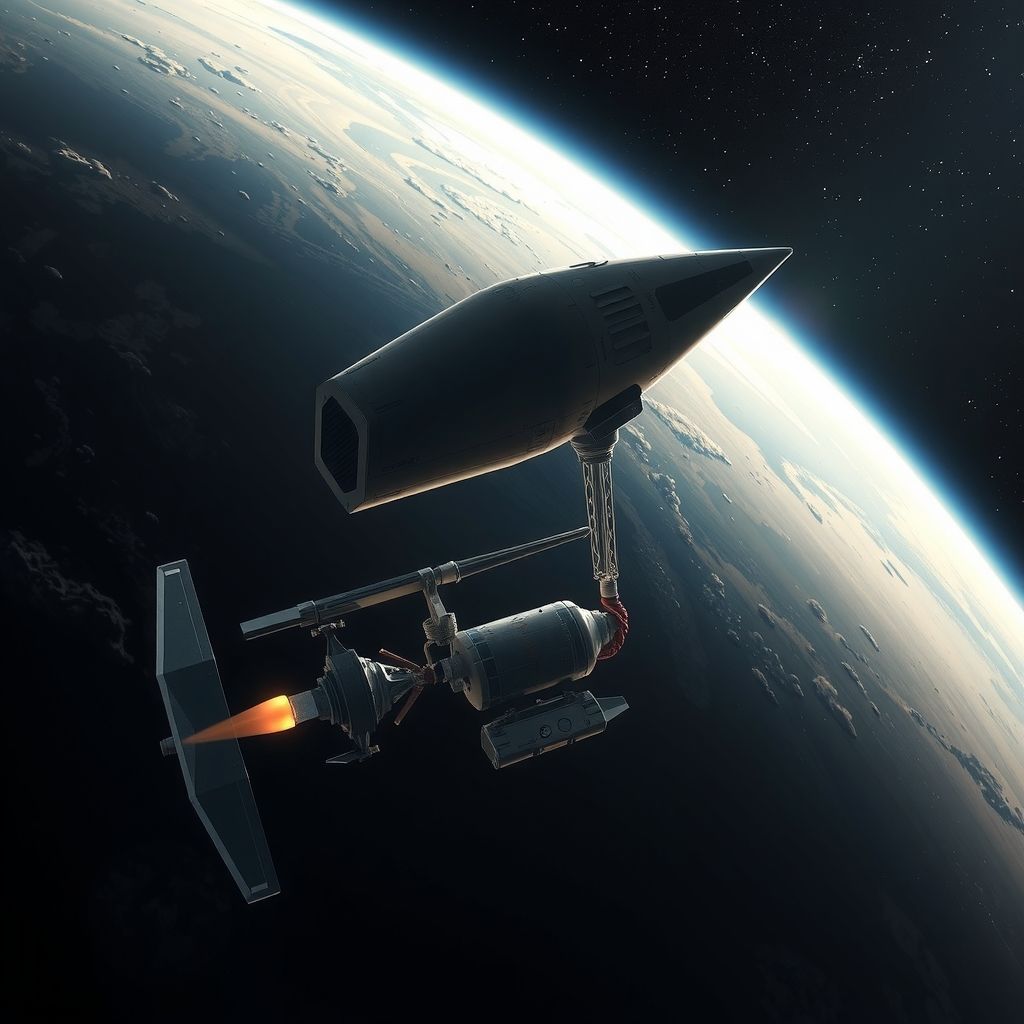
SpaceX is about to attempt its first genuine orbital insertion with Starship, a milestone nearly a decade in the making. But the rocket reaching orbit isn't the hard part of NASA's return to the Moon. The hard part is what has to happen after that: transferring hundreds of tons of super-chilled propellant between two spacecraft, in freefall, without losing it to boiloff or contamination — a step nobody has ever demonstrated at this scale, and one that keeps slipping on the calendar.
Here's the math that makes this unavoidable. Starship's Human Landing System (HLS) variant — the vehicle NASA has contracted to actually put astronauts on the lunar surface for Artemis III and beyond — is enormous by lunar lander standards. Apollo's lunar module weighed about 15 tons fully fueled. Starship HLS, even stripped down for a moon landing, is an order of magnitude heavier. That mass buys capability: more cargo, more crew, more surface stay time. But it also means the vehicle cannot launch from Earth with enough fuel left over to also land on the Moon and return to lunar orbit. It has to launch mostly empty and get topped off after it's already in space.
NASA's own mission architecture calls for roughly ten separate tanker launches to fill a propellant depot in low Earth orbit, which then transfers its cargo to the HLS vehicle before it departs for the Moon. Ten launches is itself a logistics challenge — SpaceX has to build, fuel, and fly that many Starships in a tight enough window that the propellant doesn't boil away before the mission can proceed. Liquid oxygen and liquid methane, Starship's propellants, sit at cryogenic temperatures that make them notoriously difficult to store for extended periods, especially with the sun beating down on an orbiting tank with no atmosphere to help dissipate heat.
Then there's the transfer itself. Two Starships have to dock precisely in orbit, establish a fluid connection, and move propellant from one tank to another in microgravity — where fuel doesn't naturally settle at the bottom of a tank the way it does on the launch pad. Engineers have to either spin the vehicles, use small thruster burns to settle the propellant, or rely on more exotic techniques to make sure liquid actually flows toward the transfer point instead of floating as loose droplets inside the tank. None of this is theoretical rocket science — but none of it has been demonstrated at Starship's scale, either.
The schedule reflects how hard this has proven. SpaceX originally targeted an in-orbit propellant transfer demonstration for March 2025. That slipped to March 2026. As of this writing, it's still not on the manifest with a firm date. Each slip pushes the eventual uncrewed HLS lunar landing demo — the required precursor to any crewed mission — further to the right, and with it, NASA's target of an Artemis IV crewed landing in 2028 gets harder to hold.
This is worth dwelling on because the public narrative around Starship tends to fixate on the launch itself: does the booster come back, does the ship survive reentry, does it reach orbit. Those are genuinely hard problems, and clearing them matters. But they're also the part of the problem SpaceX has the most experience solving, thanks to a decade of Falcon 9 booster landings. Orbital propellant transfer at scale is a different kind of hard — it's unglamorous, invisible from the ground, and it doesn't get resolved by a dramatic static-fire test or a spectacular landing attempt. It gets resolved by two vehicles quietly docking in orbit and successfully moving liquid between them, which is much less telegenic and much more essential.
What to watch for next: the real signal of Artemis progress in 2026 and 2027 won't be another successful Starship launch — SpaceX will likely rack up several more of those regardless. It will be whether SpaceX schedules and executes an actual propellant transfer demonstration, and whether the boiloff rates during that test come in close to prediction. If that milestone keeps slipping, expect NASA to face renewed pressure to either accept a later Artemis IV date or examine backup mission architectures that need less propellant — neither of which is a comfortable option this late in the program.