Why Lunar Infrastructure Matters Before Humans Return to the Moon
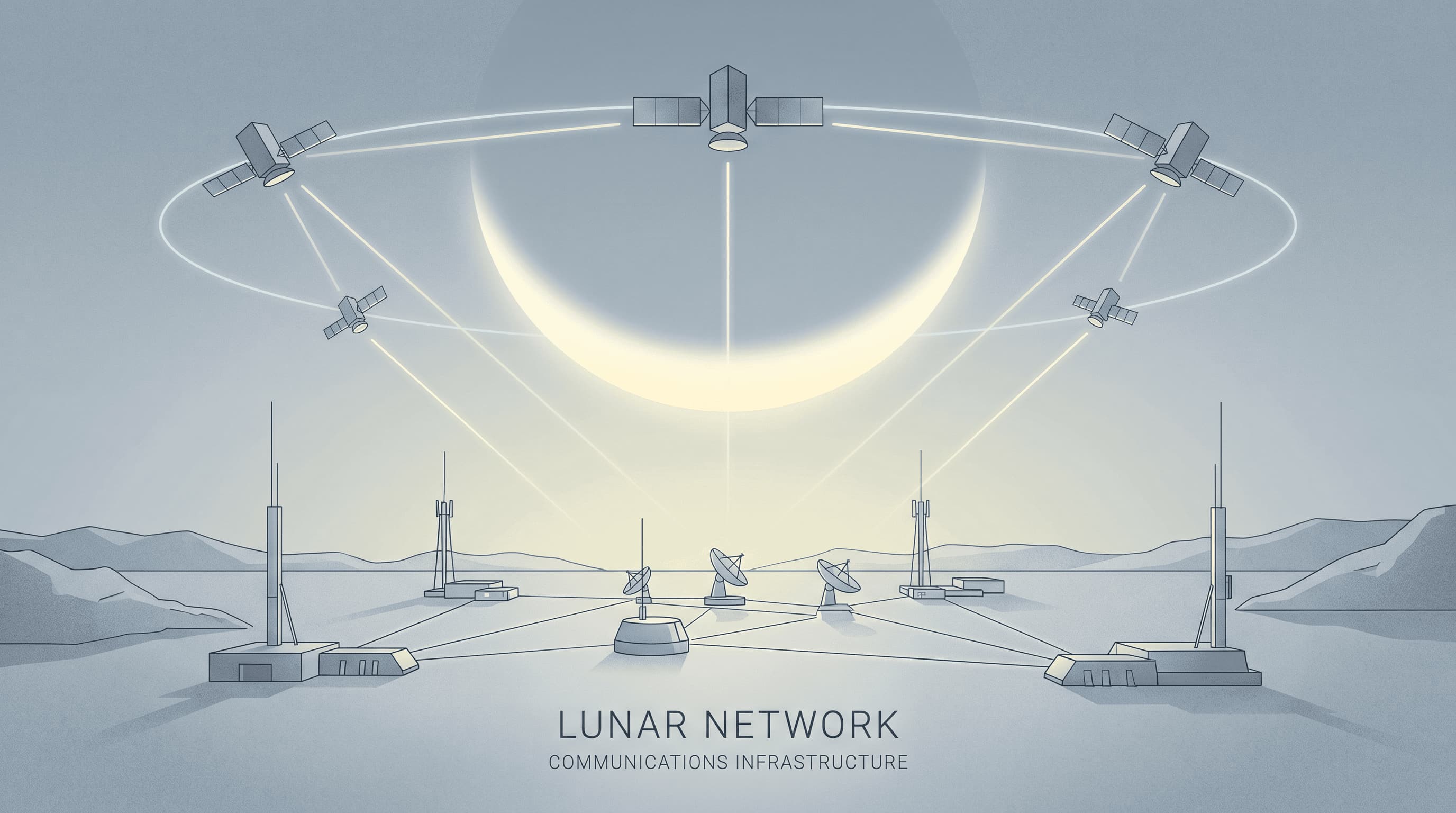
It’s 2026, and the chatter about the Moon is louder than ever. We’re not just talking about the next crewed mission or a new scientific lander. We’re talking about the silent, invisible backbone that will enable all of it: lunar infrastructure. While the headlines often focus on the spectacular – the rockets, the habitats, the boots on the regolith – the real game-changer for a sustainable lunar future lies in the mundane yet absolutely essential services of communications, navigation, and data relay.
For decades, lunar missions were largely one-off endeavors. Each probe, each lander, each Apollo mission carried its own bespoke communication systems, its own navigation methods. This approach worked for isolated forays, but it’s simply not scalable for the ambitious goals of today and tomorrow. The next "moon race" isn't just about who gets there first or who plants a flag; it's about who builds the roads, the streetlights, and the internet service providers of the lunar frontier.
The Lifeline: Communications and Data Relay
Imagine trying to run a complex scientific outpost or a mining operation on Earth without reliable internet or phone service. It’s unthinkable. The Moon presents an even greater challenge. Direct communication with Earth is often hampered by line-of-sight issues, especially for missions operating on the lunar far side or in deep craters at the poles. These areas, rich in scientific potential and resources like water ice, are precisely where many future missions are headed.
This is where dedicated lunar communications networks come into play. Instead of each mission having to carry massive, power-hungry antennas to beam data directly back to Earth, a network of relay satellites orbiting the Moon can act as intermediaries. These satellites would collect data from landers, rovers, and eventually human habitats, and then relay it efficiently to Earth. This not only lightens the load for individual missions but also ensures continuous connectivity, even in shadowed or far-side regions.
A prime example of this vision is the European Space Agency’s (ESA) Moonlight initiative, with its flagship mission, Lunar Pathfinder. Lunar Pathfinder isn't just another satellite; it's designed to be a dedicated data relay service for lunar missions. By offering "comms-as-a-service," it allows lunar explorers to focus on their primary scientific or commercial objectives, rather than spending precious mass and power on extensive communication hardware. This shift towards buying lunar data and navigation as an infrastructure service, rather than building it from scratch for every mission, is a profound change in how we approach lunar exploration.
NASA, too, is embracing this model through its Commercial Lunar Payload Services (CLPS) program, which encourages private companies to develop and offer services on the Moon. Companies like Intuitive Machines, while known for their landers, are also exploring how to contribute to a broader lunar communications network, recognizing that reliable data links are foundational for their own and others' success.
Beyond GPS: Lunar Navigation and Timing
On Earth, we take GPS and other Global Navigation Satellite Systems (GNSS) for granted. They guide our cars, track our phones, and synchronize our networks. On the Moon, Earth's GNSS signals are incredibly weak, if detectable at all, and certainly not precise enough for the demanding requirements of lunar operations. Imagine trying to navigate a rover through treacherous terrain at the lunar south pole, or docking two spacecraft in lunar orbit, without precise positioning and timing information.
Dedicated lunar navigation services are the answer. These systems will likely combine signals from lunar orbiting satellites (potentially the same ones providing communications relay) with on-board sensors and lunar surface beacons. The goal is to provide precise positioning, navigation, and timing (PNT) data, essentially a "Lunar GPS," that is robust and reliable across the lunar surface and in orbit.
We’re already seeing foundational steps in this direction. For instance, on Intuitive Machines’ Blue Ghost Mission 1, the Lunar GNSS Receiver Experiment (LuGRE) demonstrated the ability to acquire Earth GNSS signals from the Moon. While these signals are too weak for primary navigation, this experiment proves the concept of using Earth-based signals as a foundational layer, which could then be augmented by lunar infrastructure for greater precision. It reinforces the idea that positioning services will be paramount as lunar missions scale in complexity and frequency.
Why Boring Infrastructure is Essential for Spectacular Missions
The need for robust lunar infrastructure becomes glaringly obvious when we consider the types of missions planned for the coming decade:
South Pole Missions
The lunar south pole is a prime target due to its permanently shadowed regions believed to harbor significant water ice deposits – a critical resource for future human settlements and propellant production. However, these regions are also characterized by extreme lighting conditions, deep shadows, and challenging terrain. Navigating and communicating effectively in such an environment demands continuous, high-bandwidth links and precise localization, which only a dedicated infrastructure can provide.
Far-Side Operations
The lunar far side, shielded from Earth's radio interference, is an ideal location for radio astronomy and unique scientific investigations. Yet, without relay satellites, any mission operating there is completely cut off from Earth. Infrastructure provides the necessary bridge, opening up an entirely new frontier for exploration and science.
Robotic Cargo and Construction
Before humans establish permanent bases, robotic missions will be crucial for site preparation, resource extraction, and construction. These autonomous or semi-autonomous robots will require constant communication for command and control, and highly accurate navigation to perform delicate tasks, avoid hazards, and coordinate with other assets. A robust PNT and comms network is the bedrock for such advanced robotic operations.
Eventual Crewed Missions
For astronauts, reliable communications are not just convenient; they are a matter of life and death. Real-time data on habitat health, environmental conditions, and crew vital signs, along with emergency communication capabilities, are non-negotiable. Furthermore, precise navigation will be essential for landing, surface excursions, and rendezvous operations. A mature infrastructure ensures safety, efficiency, and the ability to conduct complex scientific and operational tasks.
The Road Ahead: Challenges and Opportunities
It’s important to acknowledge that lunar infrastructure is still in its nascent stages. Business models for "lunar internet" or "lunar GPS" are still maturing, and the initial investments are substantial. There will be technological hurdles, funding challenges, and undoubtedly, many timelines will slip. However, the paradigm shift is clear: the future of lunar exploration hinges on moving beyond bespoke, mission-specific systems to shared, reusable infrastructure.
This "boring" work – the satellites, the ground stations, the data protocols – is what will transform the Moon from a distant destination visited occasionally into a dynamic, accessible, and eventually, economically viable frontier. It's the unsung hero that turns spectacular one-off missions into a durable, thriving lunar ecosystem. As we look towards 2026 and beyond, remember that the true measure of our progress on the Moon won't just be the footprints we leave, but the invisible networks we build.