What On-Device AI Really Changes on Your Phone
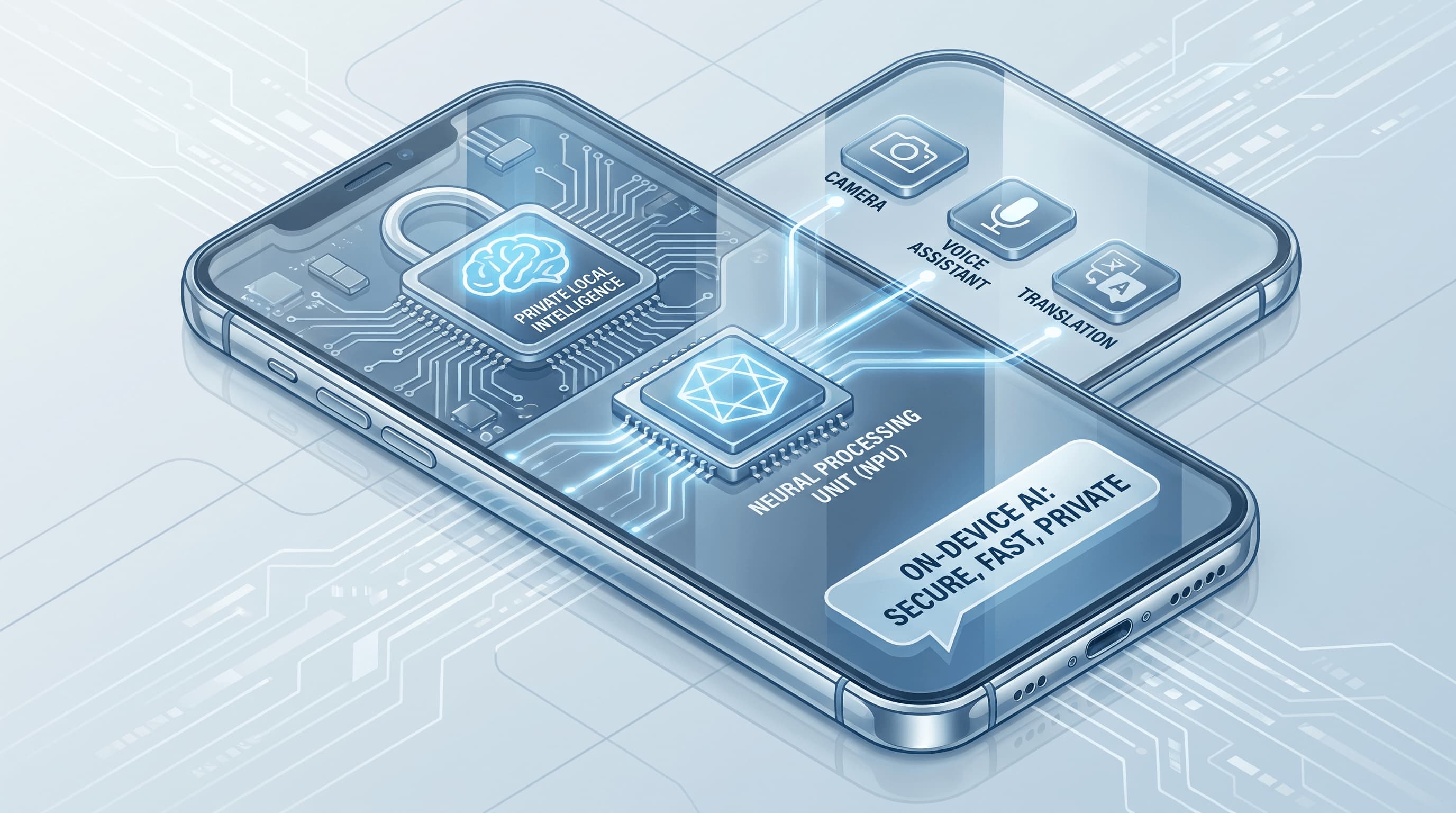
The buzz around Artificial Intelligence has reached a fever pitch, and nowhere is it louder than in the smartphone market. Every new device seems to promise "AI-powered" features, leaving many of us wondering: what does "on-device AI" actually mean for how we use our phones? Is it just marketing jargon, or is there a tangible shift happening?
As technology journalists for IRCNF, we've watched this trend closely. The truth is, on-device AI is more than just hype; it represents a significant evolution in smartphone capabilities. But it's crucial to understand what it *really* changes, and what its limitations are. Forget the vague promises – let's talk about practical impact.
What Exactly is "On-Device AI" Anyway?
For years, most sophisticated AI tasks on your phone relied on the cloud. You'd speak to a voice assistant, and your query would travel to a distant server, be processed, and then the answer would come back. This works, but it has drawbacks: latency, reliance on an internet connection, and privacy concerns as your data leaves your device.
On-device AI, conversely, means that the Artificial Intelligence models and the processing power required to run them reside directly on your smartphone. This isn't just your phone's main processor (CPU) or graphics chip (GPU) trying to do everything; modern flagship and even upper-midrange phones now feature dedicated hardware components called Neural Processing Units (NPUs) or AI Engines. Companies like Qualcomm have been instrumental in positioning their AI Engine and NPU strategy, making it possible for these complex AI workloads to run efficiently and quickly right where you are.
Think of an NPU as a specialized co-processor designed specifically for the mathematical operations that AI models thrive on. It's incredibly efficient at these tasks, far more so than a general-purpose CPU, leading to faster results and lower power consumption for AI-specific functions.
The Core Benefits: Why On-Device AI Matters to You
The industry consensus for 2025 and 2026 points to several key advantages of bringing AI local. These aren't just theoretical benefits; they translate directly into a better user experience:
1. Blazing Fast Latency
When AI models run on your device, there's no round trip to the cloud. This means near-instantaneous responses for tasks like voice commands, image recognition, or real-time translation. The milliseconds saved add up to a noticeably smoother, more responsive interaction with your phone.
2. True Offline Capability
Imagine needing to translate a sign in a foreign country without Wi-Fi or cellular data. On-device AI makes this possible. Many AI features, from advanced photo editing to intelligent text suggestions, can now function perfectly even when you're completely disconnected from the internet. This is a game-changer for travel, remote areas, or simply saving data.
3. Enhanced Power Efficiency
While running any process consumes battery, NPUs are designed to execute AI tasks with remarkable energy efficiency compared to offloading the same work to a general-purpose CPU or GPU. This means your phone can perform complex AI operations for longer without draining your battery as quickly as it would if it relied solely on less specialized hardware or constant cloud communication.
4. Unparalleled Privacy
Perhaps the most significant benefit for many users is privacy. When your data—your photos, your voice, your typing patterns—is processed on your device, it doesn't need to be sent to a company's servers. This keeps your personal information secure and under your control, reducing the risk of data breaches or unwanted surveillance. For sensitive tasks, this local processing is invaluable.
Practical Changes You'll Actually Notice
So, beyond the technical specs, what does this mean for your daily phone usage? Here's where the rubber meets the road:
Smarter Communication & Productivity
- Real-time Transcription and Translation: Imagine live captions for video calls or instantly translating a conversation as it happens, all without an internet connection. On-device AI makes these experiences faster and more reliable.
- Intelligent Summarization: Your phone could quickly summarize long articles, emails, or even recorded meetings, providing key takeaways without sending your content to the cloud.
- Context-Aware Messaging: Smarter predictive text, grammar correction, and even suggested replies that understand the nuance of your conversations, all processed locally.
Enhanced Photography & Videography
- Advanced Image Processing: From superior low-light performance to intelligent noise reduction and color correction, on-device AI refines your photos before you even see them.
- Object and Scene Recognition: Your camera can instantly identify what it's looking at—a pet, food, a landscape—and optimize settings accordingly, or even help you search for similar items online.
- Personalized Editing: Features like background blur adjustments, object removal, or even stylistic changes can be applied more intelligently and quickly, right on your device.
Personalized Assistance & Accessibility
- More Responsive Voice Assistants: While complex queries might still hit the cloud, many common commands and contextual understandings can be processed locally, making your assistant feel faster and more integrated.
- On-Device Search: Quickly find specific photos, documents, or messages based on their content, even if you're offline. Your phone learns your habits to surface relevant information faster.
- Robust Accessibility Features: Live captions for any audio, descriptive audio for visually impaired users, and more sophisticated voice control can run with greater accuracy and less delay, significantly improving usability for everyone.
Private Personal Context Features
This is a subtle but powerful shift. Your phone can now understand your routines, preferences, and frequently used apps without sending that deeply personal data off-device. This enables truly personalized experiences, like proactive notifications or optimized settings, all while respecting your privacy.
The Trade-offs: What On-Device AI *Isn't* (Yet)
While the benefits are clear, it's important to set realistic expectations. On-device AI isn't a silver bullet that replaces the cloud for *every* model or workflow:
- Memory and Model Size Limits: Smartphones have finite memory and processing power. This means on-device models are typically smaller and less complex than their cloud-based counterparts. They excel at specific, optimized tasks rather than open-ended, highly generative AI.
- Battery Impact: While NPUs are efficient, running intensive AI tasks still consumes power. Developers and device manufacturers are constantly optimizing, but it's not entirely free from battery drain.
- Uneven App Support: For you to benefit, app developers need to integrate these on-device AI capabilities. This adoption takes time, so not every app will immediately leverage your phone's NPU.
- Hybrid Designs Rule: The future is likely a hybrid approach. Simpler, latency-critical, or privacy-sensitive tasks will stay local. More complex, computationally intensive, or knowledge-intensive queries (like asking a broad factual question) will still likely be offloaded to powerful cloud servers. Your phone intelligently decides which task goes where.
The Ecosystem Shift: A New Era for Smartphones
Major players like Apple, Google, and Qualcomm are heavily invested in this shift, signaling a broader industry movement. It's not just about a single feature; it's about building a foundation for a new generation of intelligent, responsive, and private mobile experiences. This collective push ensures that on-device AI capabilities will become a standard expectation, not a niche luxury.
The Bottom Line: Smarter, Faster, More Private – For Specific Tasks
So, when you hear about "AI phones," understand that it's not about your device becoming a sentient supercomputer. It's about a fundamental architectural change that brings intelligence closer to you. On-device AI makes your phone smarter, faster, and more private for a growing array of *specific* tasks. It enhances existing features and enables new ones that were previously impossible or impractical without an internet connection.
It's an evolution that's making our daily interactions with our most personal device more seamless, secure, and genuinely helpful. Keep an eye on how your favorite apps begin to leverage these capabilities – that's where you'll truly see the difference.