What On-Device AI Actually Changes on Smartphones
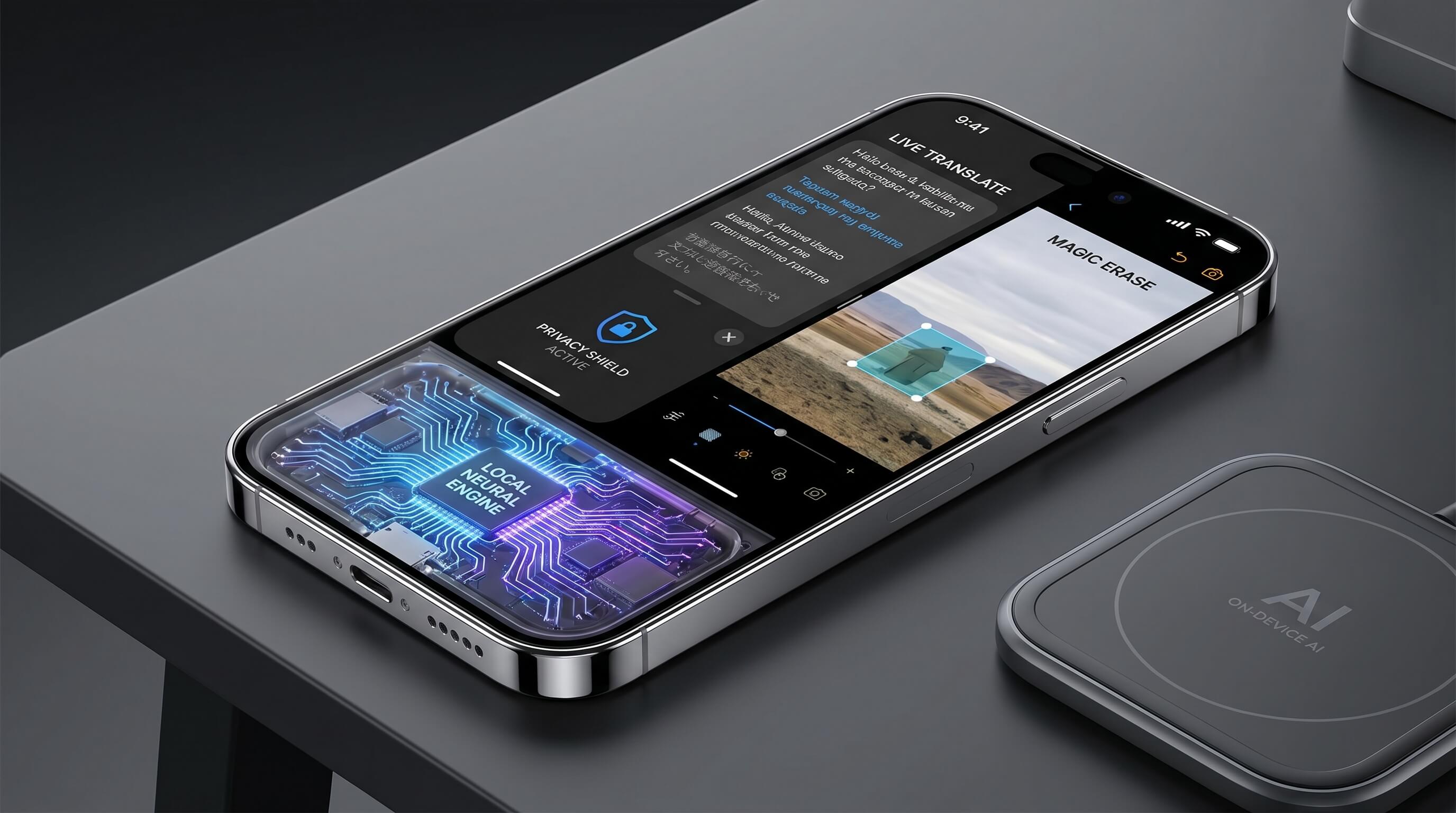
For years, artificial intelligence on our smartphones largely meant tapping into powerful cloud servers. When you asked your voice assistant a complex question, translated a webpage, or got smart photo suggestions, your phone was essentially a sophisticated terminal, sending your data to remote data centers for processing and then receiving the results. But things are changing, rapidly. The term "on-device AI" is now everywhere, promising a new era of smarter, more private, and more responsive smartphones. But what does it actually mean for you, the user?
The real story isn't that your phone is suddenly a standalone genius, capable of replacing a supercomputer. Instead, it's about a fundamental shift in where intelligence processing happens. Manufacturers are now making deliberate design decisions about whether a task is best handled directly on your phone, in a specialized "private cloud," or by traditional, broader cloud services. This decision profoundly impacts trust, responsiveness, and even battery life.
What Exactly is On-Device AI?
At its core, on-device AI refers to artificial intelligence models and algorithms that run directly on your smartphone's hardware, without needing to send data to the internet for processing. This capability is largely thanks to specialized components within modern mobile processors, often called Neural Processing Units (NPUs) or neural engines. These dedicated AI accelerators are designed to efficiently handle the mathematical operations required for machine learning tasks, such as recognizing patterns in images, understanding speech, or generating text.
Think of it this way: instead of sending a raw photo of your pet to a distant server to identify the breed, your phone's NPU can analyze the image locally. The AI model, which has been trained on millions of images, resides on your device. This isn't to say cloud AI is disappearing; far from it. Many complex or knowledge-intensive tasks, like generating elaborate images from text prompts or answering obscure trivia questions, still rely on the immense computational power of the cloud. However, the boundary is blurring, with some companies even introducing a "private cloud compute" model, where more complex, sensitive tasks are offloaded to specialized, secure cloud servers designed to process data without storing it or using it for training, ensuring a higher degree of privacy than traditional cloud services.
The Tangible Benefits You'll Actually Notice
The shift to on-device AI isn't just a technical curiosity; it translates into concrete advantages you'll experience every day.
Enhanced Privacy
This is arguably the most significant benefit. When AI processing happens on your device, your sensitive data – your photos, your personal messages, your voice recordings, your location – never has to leave your phone. This is crucial for tasks like summarizing personal notes, suggesting replies to private conversations, or analyzing your health data. You maintain greater control over your information, reducing the risk of it being intercepted, stored, or used for purposes you didn't intend.
Blazing Speed and Responsiveness
Eliminating the need to send data over the internet and wait for a server response dramatically reduces latency. Imagine live translation that keeps up with a conversation in real-time, or instant suggestions as you type. Image edits, like object removal or background blurring, can happen almost instantaneously. This immediate feedback makes your smartphone feel more intuitive and powerful, transforming previously clunky features into seamless experiences.
Reliability and Offline Capability
No internet? No problem. Features powered by on-device AI continue to function even when you're in an area with poor connectivity or completely offline. This is invaluable for travelers needing instant language translation, photographers editing images in remote locations, or anyone relying on smart features during a network outage. Your phone becomes a more dependable tool, less reliant on external infrastructure.
Improved Efficiency for Supported Tasks
While running AI models locally consumes power, it can often be more energy-efficient for specific tasks than constantly sending and receiving data over cellular or Wi-Fi networks. Dedicated NPUs are designed to perform these calculations with high efficiency. For tasks that are well-suited to on-device processing, this can translate into better battery life, as your phone spends less energy on radio transmissions.
Where On-Device AI Shines in Everyday Use
These benefits manifest in a growing array of features that are subtly (and sometimes overtly) changing how we interact with our phones.
Smarter Communication and Productivity
On-device AI is revolutionizing how we write and communicate. Expect more sophisticated writing assistance that goes beyond basic grammar checks, offering tone adjustments, rephrasing suggestions, and even summarizing lengthy emails or articles based on your personal context. Smart replies will become more nuanced and relevant. Live transcription of voice notes or calls, and instant translation during conversations, will become faster and more accurate, all while keeping your private exchanges private.
Enhanced Photography and Videography
Your phone's camera is already an AI powerhouse, but on-device processing takes it further. Real-time scene recognition, advanced computational photography for stunning HDR and low-light shots, and sophisticated video stabilization are all becoming more robust and efficient. Expect features like local object removal, background manipulation, and even basic generative fills to become faster and more precise, allowing for creative edits without sending your precious memories to the cloud.
System Intelligence and Automation
From more effective spam and scam call detection to personalized suggestions for apps, settings, or routines, on-device AI makes your phone feel like it truly understands you. It can learn your habits, anticipate your needs, and automate tasks based on your context, all without broadcasting your daily routines to external servers. Voice assistants will also become more capable of handling complex, multi-turn conversations and understanding context locally.
The Limits and Nuances
It's important to be honest about the current state of on-device AI. While powerful, it's not a magic bullet that makes cloud AI obsolete. Phones are still constrained by memory, thermal limits, and battery capacity. This means that truly massive, general-purpose AI models that require vast amounts of data and computational power will continue to reside in the cloud. Tasks like generating highly detailed images from vague prompts, performing complex scientific simulations, or accessing the entirety of human knowledge will still be offloaded.
Furthermore, not every "AI feature" marketed by phone companies is truly running on-device. Some are still primarily cloud-powered, with the phone acting as an interface. The distinction between fully on-device processing, privacy-focused cloud compute, and traditional cloud services is crucial for understanding what level of privacy and responsiveness you're actually getting.
The Strategic Shift: A Design Decision
The most profound change isn't just the existence of NPUs, but the strategic decision-making by manufacturers. They are now actively choosing which AI tasks should run locally, which should leverage a private cloud, and which are best suited for the broader internet cloud. This isn't just about technical capability; it's about balancing performance, privacy, and power consumption to create the best user experience. It's about building trust by keeping sensitive information close to home, while still offering the expansive capabilities of cloud AI when needed. The boundary between local and cloud intelligence is no longer fixed; it's a fluid design choice that defines the character of a smartphone.
Conclusion: Who Benefits Most?
On-device AI is a foundational shift, not a fleeting trend. It's particularly beneficial for users who prioritize privacy, frequently find themselves without reliable internet access, or demand instant, seamless interactions with their devices. If you value knowing your personal data stays on your phone, or if you rely on features like live translation or complex photo editing in diverse environments, then a smartphone with robust on-device AI capabilities will offer a significantly improved experience.
While the hype often outpaces current reality – your phone isn't going to write your novel or manage your entire life with purely local AI just yet – the groundwork is being laid for a future where our devices are far more intelligent, personal, and trustworthy. The evolution of on-device AI means your smartphone is becoming less of a window to the cloud and more of an intelligent companion in its own right, making decisions and performing tasks with unprecedented speed and privacy, right in the palm of your hand.