Warehouses Are Retrofitting Old Robots With AI Vision Instead of Buying New Ones
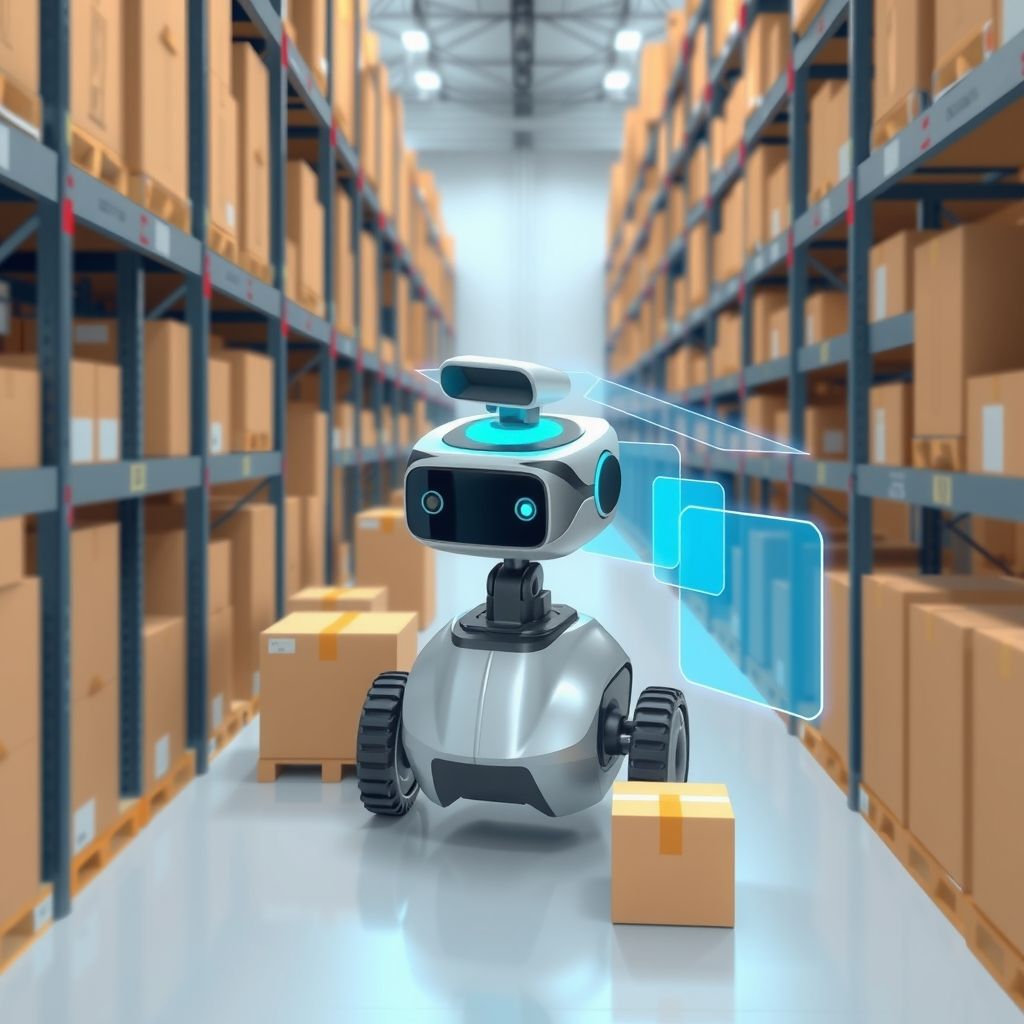
A warehouse operator who bought a fleet of autonomous mobile robots (AMRs) in 2021 is not, in most cases, buying a new fleet in 2026. Instead, a growing share of logistics operators are bolting AI vision modules onto the robots they already own — swapping out the perception stack while keeping the chassis, motors, and navigation hardware that were the expensive part of the original purchase. The retrofit approach is spreading faster than fleet replacement, and it says something specific about where the real bottleneck in warehouse automation has been sitting.
The reason is a hardware mismatch that's been building for years: the mechanical parts of a warehouse robot — wheels, motors, battery packs, chassis — have a useful life of seven to ten years and haven't changed much. The perception stack — cameras, LiDAR, and the onboard compute running the vision models — has improved on a much faster cycle, closer to the pace of consumer smartphone cameras and GPUs. A robot bought five years ago with 2021-era stereo cameras and a modest edge-compute board is mechanically fine but functionally blind by 2026 standards. Swapping the sensor module and compute board costs a fraction of a new robot and gets most of the capability gain.
What the retrofit actually changes
Modern AI vision retrofits give existing AMRs three capabilities their original perception systems didn't have: real-time item-level recognition (identifying a specific SKU on a shelf rather than just detecting an obstacle), dynamic re-mapping (adapting to a warehouse layout that's changed since the robot was commissioned, instead of relying on a fixed map), and anomaly detection (spotting a misplaced pallet or a box that's fallen off a shelf and flagging it rather than colliding with it or ignoring it). None of this requires new wheels or a new drivetrain — it requires a camera module with more resolution and dynamic range, plus enough onboard inference compute to run a vision model locally instead of relying on round-trip latency to a warehouse server.
Brightpick and similar vendors have pushed this further with robots that navigate aisles and pick items directly from shelves using computer vision and real-time mapping, rather than working from fixed paths or pre-programmed scripts. That's the ceiling case — a robot with LiDAR, 3D cameras, and real-time learning that adapts to layout changes on the fly. Most retrofits aim lower: keep the existing transport robot doing what it already does well, but stop it from needing a facilities team to remap the warehouse every time a shelf moves.
Who's selling the retrofit path
Locus Robotics, GreyOrange, Geekplus, Bastian Solutions, and Seegrid — the established AMR vendors — are all now selling perception upgrade paths alongside new hardware, a shift from five years ago when the sales pitch was almost entirely about the drivetrain and the fleet-management software. Seegrid Corporation showed an "all robots, one platform" approach at MODEX 2026, positioning fleet-wide software and perception upgrades as a unifying layer that works across robot generations rather than requiring a single-vendor hardware refresh. That's a meaningful shift in how these companies make money: recurring perception-software revenue on an installed base, instead of one-time hardware sales.
The market numbers back up the shift in emphasis. The physical AI market — the software and perception layer that sits on top of robotic hardware — is projected to grow from roughly $1.5 billion in 2026 to $15.24 billion by 2032, a compound annual growth rate above 47%, according to MarketsandMarkets research. Hardware unit sales for AMRs are growing far more slowly than that. The money is migrating toward the perception and software layer, which is exactly where a retrofit spends its budget.
The economics that make retrofitting attractive
A new AMR with modern AI vision built in typically costs in the same range as it did three years ago — the hardware hasn't gotten dramatically cheaper. A vision-and-compute retrofit kit for an existing robot costs a fraction of that, because it isn't paying for the chassis, motors, or battery system again. For an operator running a fleet of 40 or 100 robots, the difference between "replace the fleet" and "upgrade the fleet's sensors" is the difference between a capital project that needs board approval and an operating expense that a facilities manager can greenlight directly. That difference in who can approve the spend, more than the raw dollar savings, is why retrofit adoption has moved faster than replacement-cycle forecasts predicted three years ago.
There's a labor-market angle too. Warehouse operators aren't retrofitting robots instead of hiring — they're retrofitting robots because the item-level accuracy of AI vision reduces the manual QA pass that human workers were doing to catch what older robots missed. A robot that can positively identify a SKU and catch a misplaced pallet on its own removes a verification step that used to require a person walking the same aisle behind it.
What this means for operators evaluating fleets in 2026
If you're running or evaluating a warehouse robot fleet right now, the retrofit trend changes the calculus on two fronts. First, ask any AMR vendor whether their current-generation perception stack is field-upgradable on your existing hardware — vendors who built modular perception mounts into their robots from the start (rather than integrating cameras and compute permanently into the chassis) are the ones positioned to sell you a retrofit instead of a replacement in three years. Second, weight vendor selection toward companies investing in the software/perception layer rather than purely the mechanical platform — that's where the capability gains are actually showing up, and it's the layer you'll be paying to upgrade again in another three to four years regardless of which chassis you own.