Warehouse Robots After Kiva: What Amazon, Walmart, and Ocado Actually Built
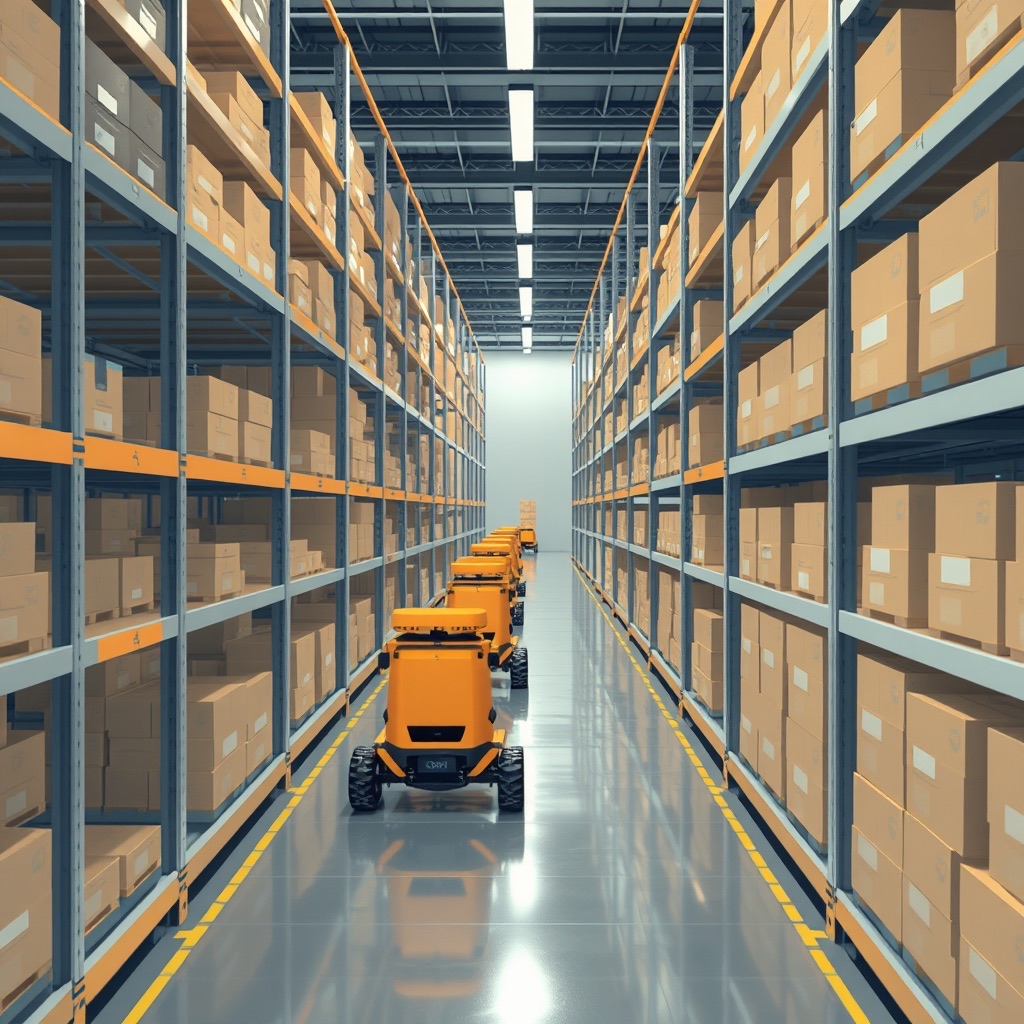
In 2012, Amazon paid $775 million for Kiva Systems — a startup building small orange robots that carried entire shelving units to human pickers rather than sending pickers to walk miles of warehouse aisles each shift. The purchase was widely treated as a curiosity at the time. Amazon was spending close to a billion dollars on a robot company that barely anyone outside of warehouse operations had heard of. Fourteen years later, it looks like one of the most prescient industrial acquisitions in recent history. Amazon Robotics now operates over 750,000 robots across its fulfillment network, and the warehouse automation industry it helped catalyze is projected to pass $30 billion by 2030.
The scale of the transformation masks significant variation in what has actually worked, what is still maturing, and where the automation gap remains substantial. Understanding that variation is more useful than the headline number.
Amazon's Approach: Layers, Not Monoliths
Amazon's system is not a single robot type. It is a layered architecture where different machines handle specific tasks at each stage of fulfillment. The Sequoia system — Amazon's current-generation fulfillment system, rolling out across US sites through 2025–2026 — combines several robot types into an end-to-end workflow:
- Drive units (the Kiva descendants) carry pods of merchandise to stationary human workers, eliminating most of the walking. A typical fulfillment worker previously walked 15 miles per shift; drive unit systems bring that under 2 miles.
- Sparrow is Amazon's robotic arm designed specifically to pick individual items from pods and sort them into order containers. It handles over 200 million item types using computer vision and trained grasping models. Sparrow is where AI vision is most critical — picking unstructured, varied objects reliably at production speed remains genuinely hard.
- Proteus is Amazon's fully autonomous drive unit that navigates freely alongside people, unlike earlier drive units that required segregated zones. It handles tote movement in outbound areas.
- Digit (from Agility Robotics, in which Amazon invested) is a bipedal humanoid robot currently in pilot deployment for moving empty totes. Humanoid form factor is necessary for tasks in spaces designed for humans, but Digit at scale is still years away.
Sequoia-enabled sites process orders up to 25% faster than earlier-generation sites and reduce errors significantly. But they also require substantial capital investment — a greenfield Sequoia fulfillment center runs several hundred million dollars to build and equip.
Walmart and Symbotic: The High-Speed Alternative
Walmart took a different path. Rather than acquiring a robot company outright, Walmart signed a $3.5 billion contract with Symbotic to deploy its automation system across Walmart's 42 regional distribution centers. Symbotic's approach centers on a dense, high-bay storage system where small autonomous bots move at high speed through a structured 3D grid — somewhat like AutoStore, but optimized for the higher throughput demands of a general-merchandise retailer serving thousands of stores.
The Symbotic system can operate 24/7 without lighting or climate control (robots don't need either), handles mixed pallets of disparate SKUs, and dramatically reduces the labor required to move product from inbound receiving to outbound store replenishment. Walmart's distribution centers after Symbotic deployment reportedly operate with roughly 30% fewer workers for equivalent throughput — though those workers tend to be higher-paid technicians and system monitors rather than manual pickers.
Symbotic went public via SPAC in 2022 and has since expanded into a joint venture with SoftBank to offer its platform as a service to third-party logistics customers beyond Walmart — a significant strategic shift from single-customer deployment.
Ocado: Grocery's Specific Problem
Grocery automation is harder than general merchandise because SKU variability is extreme (a grocery fulfillment center handles 50,000+ SKUs with wildly different shapes, weights, and fragility requirements) and order cycles are compressed (grocery orders often need to pick in under an hour). Ocado, the UK online grocer, spent years building its own solution and then licensed it to competitors.
Ocado's "smart platform" uses a 3D grid of small bots that move across the top of a dense storage cube, lowering grippers to retrieve individual items with remarkable efficiency — a 600,000 sq ft Customer Fulfillment Center (CFC) can process over 65,000 orders per week with a fraction of the labor a conventional grocery warehouse requires. The platform is now licensed to Kroger in the US (several CFCs operating), Sobeys in Canada, and Morrisons in the UK.
The challenge for Ocado is capital intensity: building a CFC costs $50–80 million. For regional grocers or markets with lower density, the economics are difficult. Ocado's US expansion with Kroger has been slower than initially announced as a result.
AutoStore and the AMR Middle Ground
Not every warehouse needs a Sequoia or a Symbotic. AutoStore — a Norwegian company that is now publicly traded — offers a modular cube storage system where hundreds of small robots crawl across a grid, retrieving bins from below. The system works in existing warehouse spaces (it can be retrofitted into almost any building with a structurally sound floor), requires no special lighting or HVAC, and scales from a few dozen robots to several thousand.
AutoStore is deployed at over 1,100 customer installations across 50 countries, including major customers like DB Schenker, H&M, and Puma. It sits in an interesting middle market: more sophisticated than simple conveyor systems, less capital-intensive than a full Symbotic or Ocado grid, and flexible enough for fashion, pharma, and spare parts applications where SKU variety is high but throughput demands are moderate.
Collaborative autonomous mobile robots (AMRs) — units from Locus Robotics, 6 River Systems, Geek+ and others — address a different segment again: deployments where a full grid system is too expensive or the facility is too variable, but where some automation is viable. These robots navigate freely using LiDAR and cameras rather than fixed tracks, and work alongside human pickers. Installation is measured in weeks rather than months, and the investment is orders of magnitude below a Sequoia deployment.
Where the Hard Problems Remain
Robotic picking of unstructured items is still not fully solved. Amazon's Sparrow handles 200+ million item types, which sounds impressive — but the long tail of SKUs that are awkwardly shaped, very soft, very small, or in unusual packaging still stumps robotic arms. Human pickers remain more dexterous and adaptable than any commercial robotic arm at the volumes required in fulfillment centers. The gap is narrowing, but it has not closed.
Returns processing is almost entirely manual. Processing a returned item — inspecting it, deciding whether to restock, refold, re-package, or discard it — requires dexterity, judgment, and sensory inspection that current robots handle poorly. E-commerce return rates averaging 20–30% mean returns processing is a significant operational cost that automation has barely touched.
Last-mile delivery is a separate problem entirely. Robots can optimize fulfillment center operations, but getting a package to a doorstep still requires a human driver in most markets. Drone delivery pilots (Amazon Prime Air, Wing from Alphabet) are in limited commercial operation but have not scaled beyond specific geographies and product weight classes. Ground-based autonomous delivery robots are operating in some university campuses and planned communities but face significant regulatory and infrastructure hurdles at city scale.
The Employment Question
The narrative that warehouse robots eliminate jobs is partially wrong and partially right, in ways that depend heavily on the time horizon. Amazon's fulfillment workforce grew from roughly 88,000 in 2014 to over 1.5 million in 2022 — a period of massive robot deployment. Automation allowed Amazon to fulfill far more orders with proportionally fewer people, but absolute headcount grew because the business grew faster than the productivity improvement.
The pattern is now shifting. Amazon's fulfillment headcount has plateaued and in some years declined even as fulfillment volume continues to grow. Automation is beginning to show up in employment statistics in a way that earlier-stage deployment did not. For workers, the composition is also changing: fewer picker jobs, more robot maintenance, systems technician, and logistics coordination roles — typically better-paid, but requiring different skills.
The practical takeaway for anyone building logistics infrastructure is that the capital investment in warehouse automation pays back primarily through throughput improvement and error reduction, not through near-term labor elimination. The ROI case rarely rests on headcount reduction alone. Facilities that adopted early automation are now on their second and third generation of systems — and the compounding advantage over non-automated competitors is substantial.