Warehouse robotics is getting more flexible, but humanoids still have to prove their economics
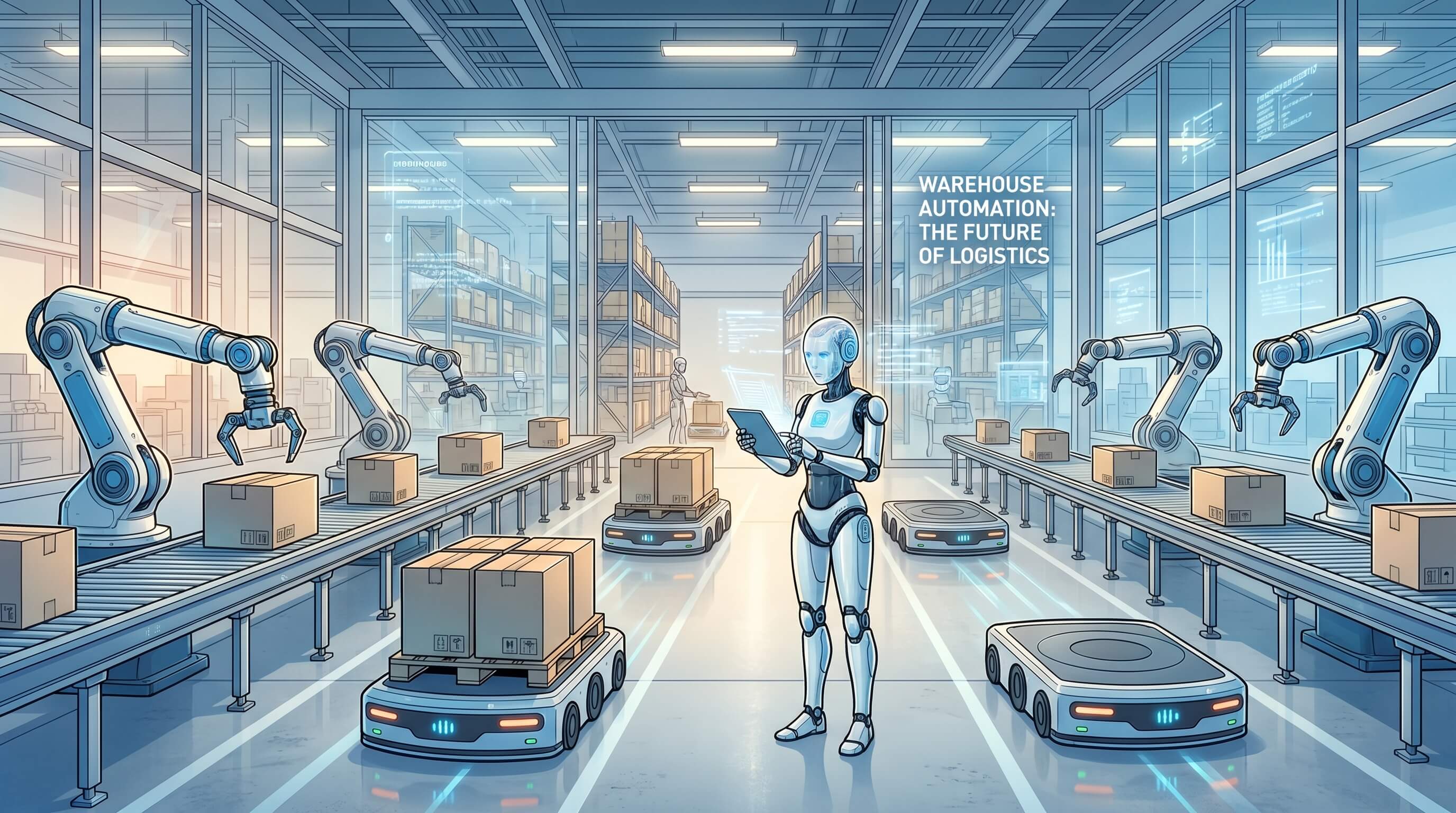
Warehouse automation is no longer a single story about conveyor belts and fenced-off robotic arms. The market is expanding into a more flexible mix of autonomous mobile robots, vision-guided picking systems, goods-to-person workflows, software orchestration layers, and, increasingly, early humanoid pilots. That breadth is exciting, but it can also blur an important distinction. A lot of warehouse robotics is already practical. A lot of humanoid robotics is still trying to prove that it belongs in the same sentence economically.
This is the right lens for the category in 2026. The automation conversation has matured past a simple “robots are coming” narrative. Operators now care about payback periods, layout constraints, labor availability, uptime, integration cost, retraining, and whether a system handles peak volatility gracefully. In other words, the market is being decided less by spectacle and more by unit economics.
Why flexible warehouse automation is winning now
Traditional fixed automation remains powerful in high-volume, stable environments. If a warehouse has predictable product flows and enough throughput to justify major capital expenditure, conveyors, sortation, and fixed material-handling systems still make a lot of sense. But many operations do not look like that anymore. E-commerce variability, seasonal surges, SKU proliferation, and tighter service expectations have made flexibility far more valuable than it used to be.
That is why autonomous mobile robots and modular robotic systems have gained so much ground. They can be introduced in stages, redeployed as layouts change, and expanded without rebuilding an entire facility around a single workflow assumption. For operators, that means automation can become more incremental and less existential. The purchase is still meaningful, but it no longer always feels like a one-shot bet on a warehouse design that may age badly.
That flexibility also changes who can buy. Large enterprises still dominate the market, but modular systems make automation more accessible to mid-sized operators that could never justify a massive fixed buildout. The category becomes broader when automation can start small and scale with operational confidence.
Why humanoids attract attention anyway
Humanoid robots attract capital and headlines because warehouses and factories were built for humans. In theory, a general-purpose machine that can walk into an existing environment, use human-oriented tools, and perform varied manual tasks would reduce the need to redesign infrastructure around automation. That is an alluring proposition, especially for labor-intensive operations with chronic staffing shortages.
RBC Capital Markets’ long-range analysis of humanoid robotics argues that industrial use cases will likely arrive well before broad household adoption, precisely because repetitive, labor-constrained settings can support narrower early deployments. That logic is sensible. Warehouses are among the first places where even partial humanoid capability could create value.
But it is one thing for an industrial setting to be a plausible first market. It is another for the economics to work at scale today. Reliability, maintenance, safety validation, task speed, and supervision overhead still matter more than demo videos. A warehouse manager does not buy a robot because it looks general-purpose. They buy it because it consistently moves the cost and throughput equation in the right direction.
The real competition is not human versus robot
One mistake in the public conversation is treating the decision as a direct battle between people and machines. In practice, the competition is often between different forms of automation. If a fixed picker, an AMR fleet, or a goods-to-person system can solve the problem more cheaply and more reliably than a humanoid, then the humanoid is not competing with labor alone. It is competing with more specialized robots that already work.
This is why the warehouse sector is a brutal proving ground for general-purpose robotics. Warehouses reward systems that are boring in the best sense: reliable, predictable, easy to service, and legible to operations teams. A humanoid has to beat not only human labor scarcity but also the mature economics of narrower machines. That is a high bar.
Where humanoids could actually fit
The strongest case for humanoids is not that they replace every existing automation category. It is that they fill the awkward gaps between them. Tasks that are too variable for fixed automation, too physical for pure software, and too fragmented for one-purpose robots are the most plausible near-term openings. Think exception handling, mixed-item movement, odd retrieval tasks, light pallet interaction, or overnight operations where labor is especially hard to schedule.
If humanoids succeed, it will probably happen through constrained workflows first, not through instant generality. Operators do not need science-fiction versatility. They need dependable productivity in a narrow enough slice of work to justify deployment.
What buyers should measure now
For buyers, the useful question is not whether humanoids are the future. It is what level of flexibility is worth paying for today. Automation decisions should be grounded in cycle time, error rates, uptime, onboarding effort, facility fit, service requirements, and payback windows. Any proposal that relies too heavily on future software improvement rather than current operational evidence deserves skepticism.
That does not mean operators should ignore humanoids. Pilot programs can be rational, especially for companies trying to understand where future labor constraints will bite hardest. But those pilots should be compared against the boring alternatives, because boring alternatives are often exactly what operations teams need.
The practical takeaway
The warehouse robotics market is clearly moving toward more adaptable automation. That is real, and it is one reason the category keeps expanding. But the humanoid portion of the story is still early. The excitement is understandable, yet the hard work remains proving that a general-purpose form factor can beat specialized systems often enough to earn its place on the floor.
In other words, flexibility is winning. Generality is not the same thing as viability. The next important phase of robotics in warehouses will be decided by who can convert attention into dependable economics.