Surgical robots gain supervised autonomy for suturing sub-tasks, but full autonomy remains years away
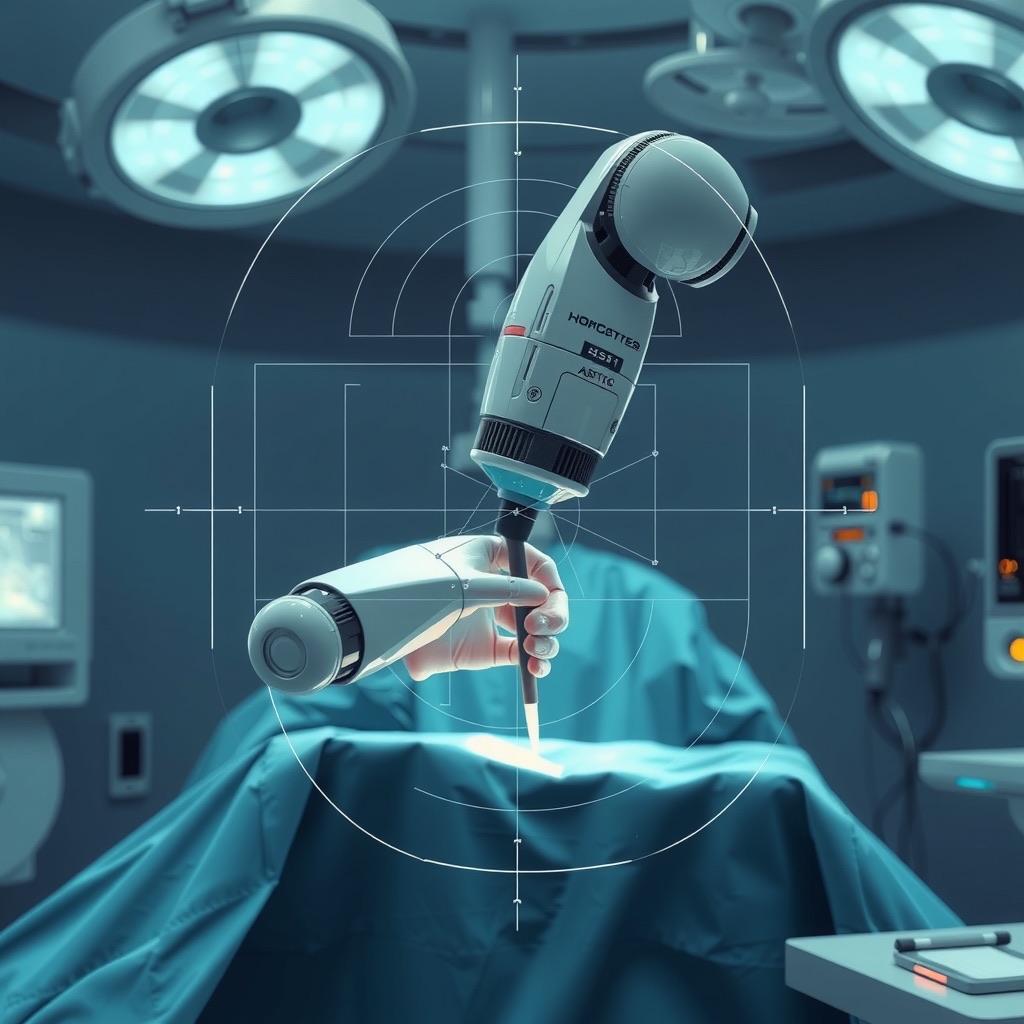
Surgical robotics crossed a real inflection point in the past two years, but not the one most headlines imply. The technology hasn't leapt to robots operating on patients unsupervised. What's actually happened is narrower and more interesting: robots can now complete specific, well-defined sub-tasks — most notably suturing — with AI assistance, while a surgeon watches, corrects by voice, and retains full authority to intervene at any point.
That distinction matters because it separates genuine clinical progress from the speculative "robot surgeon" narrative that circulates every few months. The real story is about where autonomy is safely useful today, and why the harder problem — full procedural independence — is likely still a decade or more away, if it arrives at all in general surgery.
What actually changed
Two regulatory and product milestones anchor the current state. Medtronic's Hugo system received FDA clearance in December 2025, joining Intuitive Surgical's da Vinci 5, cleared in March 2024. In May 2025, the FDA formally recognized the updated IEC 80601-2-77 standard for robotically assisted surgical equipment — a technical standard that now explicitly covers modular systems, open microsurgery platforms, and systems with the user interface positioned in the sterile field itself.
None of these clearances certify autonomous operation. They certify better tools: improved tactile feedback (long a weak point of robotic surgery, where surgeons lost the sense of touch that guides manual technique), sharper computer vision for identifying anatomical structures in real time, and platforms flexible enough to support the software layer that enables sub-task automation.
What supervised sub-task autonomy looks like in practice
The clearest published demonstrations involve suturing — closing an incision with a needle and thread, a repetitive, mechanically well-understood motion that's easier to model than, say, dissecting tissue around a tumor. In these demonstrations, the robot completes a suturing sequence that it has learned from training data, while the supervising surgeon can interrupt or correct the action verbally at any point. If the robot deviates from expected behavior, the surgeon's voice command halts it immediately.
This is fundamentally different from full autonomy. It's closer to adaptive cruise control in a car: the system handles a repetitive, well-bounded task competently, but a human remains actively engaged and ready to take over. Researchers publishing systematic reviews of FDA-cleared surgical robots have consistently classified current systems at low levels of autonomy on established scales — nowhere near the level required for a robot to plan and execute an entire procedure independently.
Why full autonomy is further away than the marketing suggests
Surgery is not suturing repeated in isolation. A real procedure involves judgment calls that don't reduce cleanly to a learned motion: recognizing when anatomy deviates from the expected layout, deciding how much tissue to remove, responding to unexpected bleeding, adapting a plan mid-procedure based on what's found. These are exactly the scenarios where current AI systems — trained on pattern recognition from prior cases — struggle most, because they involve genuine judgment under novel conditions rather than execution of a known motion.
Medical AI researchers surveying the field have been explicit: fully autonomous surgery is not expected in 2026, not in 2027, and probably not by 2030, except in very narrowly constrained procedures where the anatomy and steps are highly standardized. That's a meaningfully different timeline than the "robots will replace surgeons" framing that circulates in general tech coverage.
Why the incremental path is the right one
The FDA's approach — clearing individual sub-task capabilities and improved sensing hardware rather than approving end-to-end autonomous procedures — reflects appropriate caution for a domain where errors are irreversible. Each cleared capability (better tactile feedback, more precise instrument control, validated sub-task completion) compounds into a platform that's measurably safer and more capable, without requiring anyone to certify a system's judgment across the full space of surgical scenarios at once.
For hospitals evaluating these systems, the practical takeaway is to separate marketing claims about "AI-powered surgery" from what's actually cleared and validated. A robot that completes a suturing sub-task under supervision is a genuine capability worth adopting where it improves consistency and reduces surgeon fatigue on repetitive steps. A robot marketed as capable of autonomous decision-making mid-procedure is not something current regulatory clearances support, and claims to the contrary deserve scrutiny.
The technology is advancing. It's just advancing in the direction of better-assisted humans, not replaced ones — and that distinction will matter for how healthcare systems plan adoption over the next several years.