Starship Reaches Orbit: How SpaceX Fixed the Hardware, Caught the Booster, and Built a Rocket That Actually Works
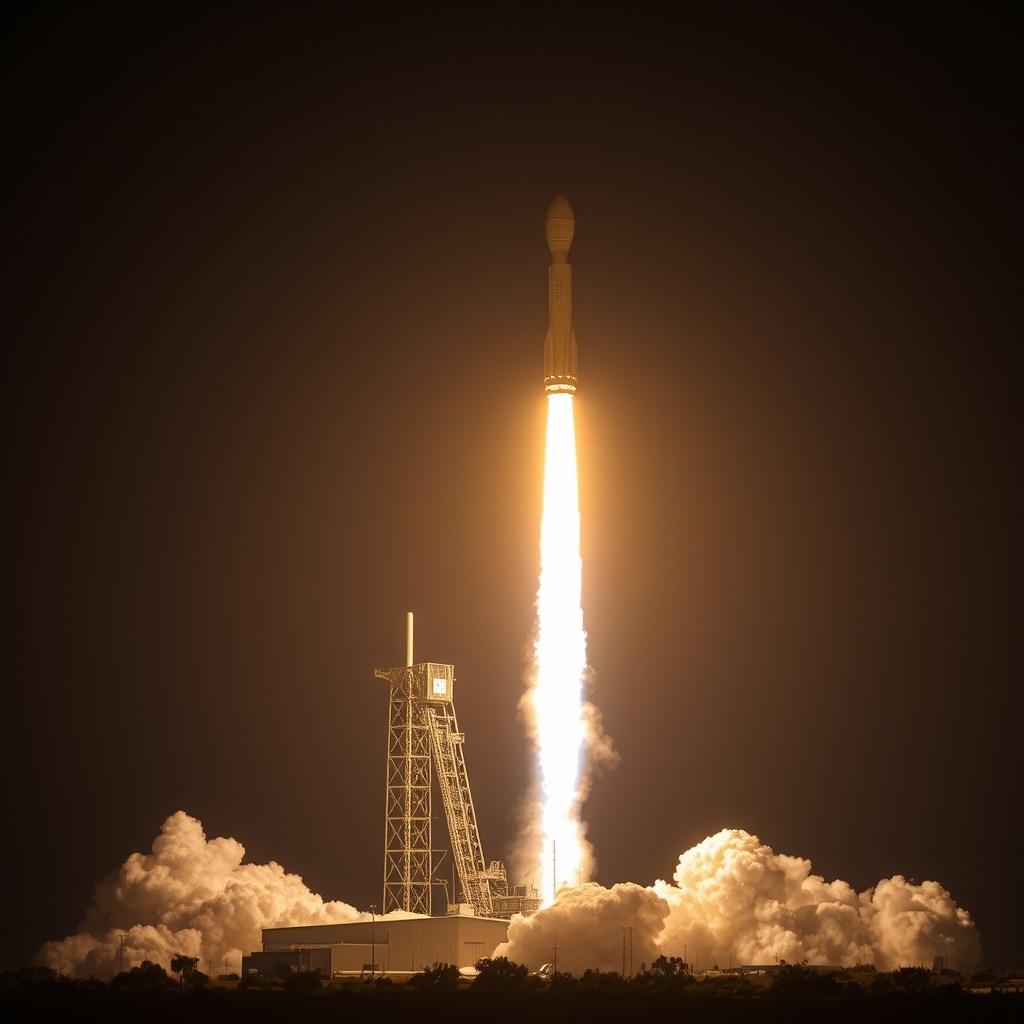
On a clear morning at Boca Chica, Texas, in November 2025, SpaceX's Starship vehicle lifted off on its sixth integrated flight test — and for the first time, everything went right. The 121-meter-tall stack climbed to a peak altitude of approximately 212 kilometers, completed a controlled half-orbit, reentered over the Indian Ocean, and splashed down precisely within its target zone. More dramatically, the 71-meter Super Heavy booster returned to the launch site and was caught mid-air by the mechanical arms of the Mechazilla tower — a maneuver SpaceX had rehearsed twice before but never fully completed.
This was not simply another test. It was the first time the world's largest rocket demonstrated the complete sequence SpaceX has always promised: launch, stage separation, booster recovery without expendable hardware, upper-stage reentry, and controlled landing. The flight validated a design philosophy that had taken four years, three complete vehicle losses, and over $3 billion in development spending to reach. SpaceX now has a rocket that can realistically be turned around for a second mission.
What Changed Between Flight 1 and Flight 6
The original Starship stack, tested in April 2023, destroyed its own launch pad during ignition due to a lack of a flame deflection system. The vehicle reached max-q and then suffered an uncontrolled rapid disassembly at 39 kilometers altitude. SpaceX treated each subsequent test as a data-gathering exercise, not a failure — a framing that proved accurate as hardware changes compounded rapidly.
The most significant engineering change was the hot-staging system introduced on Flight 3 in March 2024. Rather than waiting for Super Heavy's 33 Raptor engines to shut down before igniting Starship's six upper-stage engines, SpaceX fires the upper stage while the booster is still burning. This reduces gravity losses during the separation event and adds roughly 10% to payload margin. The booster's aft heat shield was redesigned to handle the plume impingement from above.
The Raptor 3 engine, which began appearing on vehicles in 2025, delivers 280 metric tons of thrust per unit — up from 230 tons on the original Raptor 1 — while eliminating roughly 1,000 individual parts through aggressive design consolidation. The engine now runs at 350 bar chamber pressure, a figure no other operational rocket engine approaches. SpaceX's internal data shows Raptor 3 achieves a specific impulse of 350 seconds at sea level, extending to 380 seconds in vacuum.
The Tile Problem and How SpaceX Solved It
Early flights showed catastrophic tile loss during reentry. Starship's hexagonal PICA-X thermal protection tiles — there are approximately 18,000 of them covering the leeward side of the upper stage — were delaminating at the edges under aerothermal stress. The fix involved two changes: a new tile bonding compound with a higher thermal expansion coefficient matched to the stainless steel substrate, and a revised reentry angle that reduces peak heating flux by about 18% at the cost of a slightly longer reentry corridor.
SpaceX also introduced active transpiration cooling for the flap hinges — small amounts of liquid methane are bled through porous channels in the stainless steel flap actuator housings, providing localized cooling at precisely the spots that were burning through. This was first successfully demonstrated on Flight 5 in October 2025 and held up through Flight 6's more demanding reentry profile.
What Starship Can Actually Do Right Now
In its current Block 1 configuration, Starship is rated for approximately 100 metric tons to low Earth orbit (LEO) in expendable mode — meaning without attempting booster or ship recovery. With full reuse of both stages, the payload drops to roughly 40–50 metric tons to LEO, depending on the mission profile. This is still double what the Falcon Heavy delivers in full-reuse mode and more than six times what a Falcon 9 can lift in expendable configuration.
The upper stage's internal pressurized volume is approximately 1,000 cubic meters. NASA's Space Launch System (SLS) has a payload fairing volume of about 300 cubic meters. This difference is not academic: large space telescopes, space station modules, and entire satellite constellations in a single launch become feasible at Starship's scale. SpaceX has already manifested 40+ Starlink V3 satellites per Starship flight, compared to 22 per Falcon 9.
Propellant Transfer and Deep Space Capability
For missions beyond LEO — including NASA's Artemis lunar landings — Starship requires on-orbit propellant transfer. The Starship Human Landing System (HLS) variant, contracted by NASA under a $2.89 billion deal (later expanded), needs multiple tanker flights to fill its methane and liquid oxygen tanks before departing for the Moon. SpaceX conducted its first cryo propellant transfer demonstration in early 2025, successfully moving approximately 10 metric tons of liquid oxygen between two Starship vehicles in orbit.
The full HLS mission architecture calls for 8–16 tanker flights per lunar landing attempt. This is operationally complex, but SpaceX argues that once Starship reaches a cadence of 40+ flights per year — which they target for 2027 — pre-positioning propellant depots in orbit becomes a logistics problem, not an engineering one. The company has proposed a permanent propellant depot at 400 km altitude that tankers refill continuously.
The NASA Artemis Timeline
NASA's Artemis III, which will land astronauts on the Moon's south polar region for the first time since Apollo 17 in 1972, is currently scheduled for no earlier than 2027. The mission depends on Starship HLS being human-rated and completing a successful uncrewed lunar landing demonstration first. That uncrewed demonstration is targeted for 2026.
Artemis IV, planned for 2028, will deliver the first module of the Lunar Gateway station to orbit around the Moon using a Space Launch System rocket, with a Starship HLS again serving as the descent vehicle. SpaceX has committed to a minimum of two Starship lunar landers under the current NASA contract structure.
Point-to-Point Earth Transport: The Math and the Reality
SpaceX has long marketed Starship as a vehicle for Earth-to-Earth transport — flying passengers from New York to Sydney in under 40 minutes. The physics are sound. The economics and regulatory environment are not, at least not yet. A single Starship flight consuming roughly 3,400 metric tons of propellant (1,200 tons of liquid methane, 2,200 tons of liquid oxygen) at current industrial prices costs approximately $900,000 in propellant alone — before vehicle amortization, launch infrastructure, or FAA overflights approval for supersonic flight over populated areas.
SpaceX's own internal projection, leaked in a 2024 investor briefing, estimated a per-seat cost of $250,000–$500,000 at 100 passengers per flight in a 2030 scenario. For ultra-premium business travel that replaces 20-hour long-haul flights, there is a plausible market. Major air freight operators including FedEx and DHL have held preliminary talks with SpaceX about high-value cargo routing. Point-to-point service will not be available before 2030 at the earliest, and regulatory approval for overland supersonic trajectories remains an unsolved problem.
Mars Architecture: What SpaceX Has Committed To
Elon Musk has stated publicly that SpaceX aims to launch uncrewed Starship missions to Mars in 2026, coinciding with the next Mars transfer window, which opens in November 2026. These would be demonstration missions carrying minimal payloads — proving that Starship can execute the 6–9 month transit and land propulsively on Mars's thin atmosphere without Earth-based assistance.
The crewed Mars mission target remains 2029–2031 in SpaceX's stated roadmap. A Mars transit requires Starship to carry approximately 100–150 metric tons of payload including crew, life support, and surface equipment over 80 million kilometers. The vehicle would need to produce its own return propellant on Mars using the Sabatier reaction — combining atmospheric CO2 with hydrogen (electrolyzed from water ice) to produce methane and oxygen. SpaceX has designed the ISRU (In-Situ Resource Utilization) equipment that would do this but has not yet demonstrated it in a relevant environment.
Three Concrete Takeaways
- Starship is production-ready for LEO commercial missions starting in 2026. SpaceX has 30+ Starship flights on its internal manifest for 2026, predominantly Starlink V3 and commercial satellite customers. The vehicle is no longer experimental — it is operational.
- The NASA Artemis lunar landing depends entirely on Starship HLS. If the uncrewed lunar demo slips past 2026, Artemis III moves with it. Tracking SpaceX's propellant transfer demonstration schedule is the most reliable leading indicator of whether a 2027 crewed lunar landing is realistic.
- Mars in 2026 is aspirational; Mars in 2031 is a serious engineering target. The 2026 uncrewed flights will generate irreplaceable entry, descent, and landing data for the Martian atmosphere. Whether those flights succeed or fail, SpaceX will learn something that cannot be simulated. Expect the first crewed Mars landing no earlier than 2031, and plan accordingly if you are tracking space industry investments or government contracts.