SpaceX Starship After the Orbital Tests: Where the Program Actually Stands
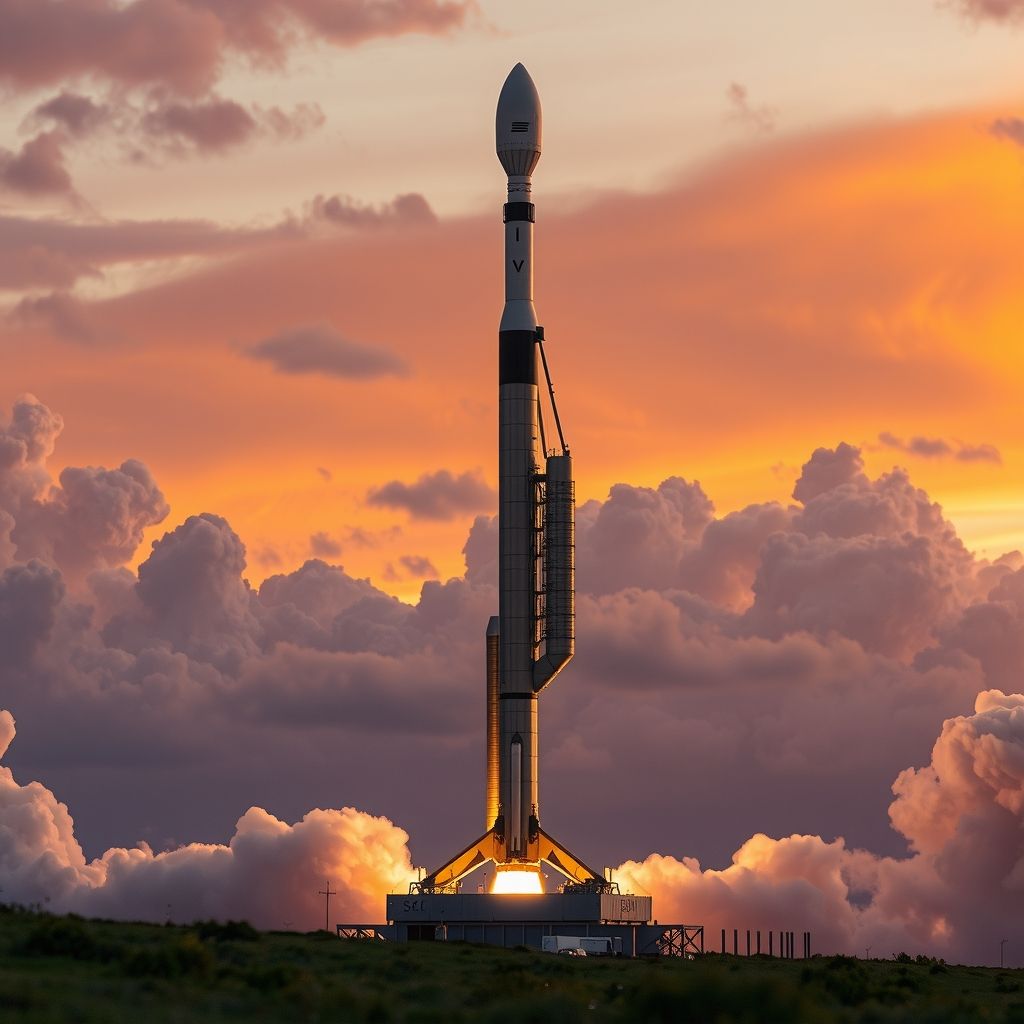
The Moment That Changed the Program
On November 19, 2024, SpaceX completed Integrated Flight Test 6 (IFT-6) — the first time Starship's Super Heavy booster and the Ship upper stage were both caught by the Mechazilla arms at the launch tower. It was not a stunt. It was proof of a reuse architecture that the entire economics of the program depend on. Heading into 2026, the question is no longer whether Starship can fly. It is whether the company can reach the cadence and reliability needed to deliver on its contracts and justify the hardware.
Why Catching Matters More Than Landing on Legs
SpaceX designed the catch system — officially called the Mechazilla arms on the Starbase launch tower — to eliminate the turnaround penalty of conventional landing. A Falcon 9 first stage that lands on legs must be transported back to the launch site, inspected, and re-stacked. That process takes days at minimum. A booster caught by the tower arms never leaves the launch mount area. The goal is a refueling and relaunch cycle measured in hours, not days.
Getting the system working took more than a year of development after the tower was built. SpaceX had to solve: precise booster deceleration to within meters of the target, real-time communication between the vehicle's flight computers and the tower actuators, and structural load distribution across the arms to handle a vehicle weighing hundreds of tonnes at catch. IFT-5 in October 2024 caught the booster on the first attempt. IFT-6 added the Ship catch to make both stages recoverable in a single flight. The current demonstrated catch success rate stands at two for two for the booster, with Ship catch validated once.
Flight Test History: IFT-1 Through IFT-6
- IFT-1 (April 2023): The first integrated launch ended in rapid unscheduled disassembly four minutes after liftoff. The vehicle cleared the pad — which itself was damaged — but did not reach stage separation. It validated that the 33-engine Raptor cluster could produce enough thrust for liftoff.
- IFT-2 (November 2023): Stage separation was achieved for the first time. Both vehicles were lost — the booster during automated flight termination, Ship during reentry — but the test confirmed the hot-staging ring concept worked and that the second stage could reach high altitude.
- IFT-3 (March 2024): Ship survived reentry and reached the Gulf of Mexico splashdown zone, validating the heat shield's ability to handle orbital-velocity reentry temperatures. The booster performed a flip and burn but was lost before landing.
- IFT-4 (June 2024): Both Super Heavy and Ship executed controlled splashdowns. This was the first time both vehicles survived the full flight profile. It confirmed that the guidance, navigation, and control systems were mature enough to target landing zones accurately.
- IFT-5 (October 2024): Super Heavy was caught by the Mechazilla arms on the first attempt — the first time any orbital-class booster had been caught in flight. Ship splashed down in the Indian Ocean as planned.
- IFT-6 (November 2024): Both Super Heavy and Ship were caught. The full rapid-reuse architecture was demonstrated end-to-end for the first time.
Where the Program Stands in 2026
SpaceX is working through FAA licensing for orbital flights — missions that complete a full orbit rather than the suborbital arcs flown in IFT-1 through IFT-6. The FAA's environmental review process and vehicle modification licensing have been the primary regulatory bottlenecks. As of mid-2026, the agency is evaluating SpaceX's license application for higher-frequency launches from Boca Chica, with decisions expected to hinge on environmental impact assessments for the South Texas site.
The NASA Human Landing System (HLS) contract is the program's highest-profile external commitment. Under the Artemis program, Starship is the selected lander to carry astronauts from lunar orbit to the Moon's surface. The first crewed lunar landing under Artemis III has been targeted for no earlier than 2027, though the schedule has shifted repeatedly. The mission requires a Starship variant that can operate in lunar orbit, which in turn requires propellant transfer demonstrations — one of the key remaining technical milestones. SpaceX has committed to demonstrating on-orbit propellant transfer with a dedicated Starship-to-Starship docking and transfer test.
Ship Block 2 and Hardware Upgrades
The Starship vehicles used in IFT-1 through IFT-6 were development test articles. Ship Block 2 introduces several changes that matter for operational missions. The heat shield has been redesigned: SpaceX moved from individual hexagonal tiles to larger, more uniform tiles with improved bonding methods. The early test flights lost tiles during reentry at rates that would be unacceptable for a crewed vehicle. Block 2 targets significant tile retention improvements.
The propellant header tanks, which feed the engines during landing burns, have been redesigned for higher reliability. The Raptor engine itself has gone through multiple iterations — Raptor 2 and Raptor 3 variants offer higher thrust and improved reliability over the original Raptor flown on IFT-1. Block 2 is also designed with internal volume and structural provisions for cargo and eventually passenger configurations.
Starlink V3 and the Launch Cadence Need
Starship is the only vehicle SpaceX has designed that can carry the next generation of Starlink satellites — Starlink V3. These larger, more capable satellites do not fit in Falcon 9's fairing. The entire upgrade of the Starlink constellation to V3 depends on Starship achieving operational launch cadence. SpaceX's internal projections have called for dozens of Starship flights per year to maintain and expand the Starlink network at the V3 generation. This is not a secondary goal — Starlink is SpaceX's primary revenue source, and the V3 network is necessary to remain competitive against growing satellite internet competitors.
The Economics: Why Rapid Reuse Is the Entire Business Model
SpaceX has publicly targeted a cost per kilogram to orbit of approximately $100 for Starship at scale. Falcon 9 currently delivers payload at roughly $2,700 per kilogram. That 27x reduction does not come from cheaper materials or simpler engineering — it comes entirely from reuse cadence. A Falcon 9 first stage might fly 20 times over two years. SpaceX's stated goal for Starship is a turnaround measured in hours between flights, with each vehicle flying hundreds of times.
The Mechazilla catch system is essential to that math. Every day a booster spends being transported and inspected is a day it is not generating revenue. The catch-and-relaunch architecture is designed to keep vehicles in the active launch cycle with minimum downtime. Until SpaceX demonstrates multi-flight reuse with short turnaround times, the $100/kg figure remains a projection rather than a result.
The Competition: What Everyone Else Is Actually Doing
New Glenn, Blue Origin's heavy-lift orbital rocket, completed its first successful orbital flight in early 2025. It is a credible vehicle with a reusable first stage, but its payload capacity of approximately 45 metric tons to low Earth orbit is less than one-third of Starship's 100+ metric ton target. Vulcan Centaur from ULA has completed initial certification flights and is carrying national security payloads, but it is not reusable and targets a different market segment. Ariane 6 from ESA finally entered service after years of delays, providing Europe with independent heavy-lift access — again, not reusable, and at payload capacities well below Starship.
No vehicle currently in service or in near-term development approaches Starship's combination of payload capacity, full reusability, and launch-cost target. The gap in ambition is significant.
The Mars Architecture: What Actually Has to Happen First
SpaceX's stated long-term mission is establishing a self-sustaining city on Mars. The engineering path between IFT-6 and that goal is long and specific. Several things have to work before humans go to Mars:
- On-orbit propellant transfer: A Mars mission requires fully fueling a Starship in Earth orbit using multiple tanker flights. This has never been demonstrated at scale. The physics require efficient transfer of cryogenic methane and liquid oxygen between vehicles in microgravity — a technically demanding operation that will require dedicated test missions.
- In-situ resource utilization (ISRU): A crew on Mars cannot return to Earth on the propellant they brought. They need to manufacture methane and liquid oxygen from Martian resources — CO2 from the atmosphere and water ice from the subsurface. SpaceX's architecture assumes a Sabatier process reactor operating on Mars before any crewed landing. Robotic precursor missions would need to demonstrate this works at scale.
- Radiation shielding: The six-to-nine month transit to Mars exposes crew to radiation levels that exceed current NASA career limits. Adequate shielding either requires significant vehicle mass (which trades against payload) or pharmacological countermeasures that are not yet approved for spaceflight use.
- Life support reliability: A Mars transit vehicle must operate life support systems for six to nine months without resupply or emergency rescue capability. Current ISS life support experience is a starting point, but the closed-loop reliability required for Mars is substantially beyond what has been demonstrated.
Elon Musk has described timelines for human Mars missions ranging from the late 2020s to the early 2030s. These timelines depend on all of the above being solved in parallel with Starship reaching operational maturity. The more grounded assessment from Mars mission planners outside SpaceX puts a realistic crewed landing no earlier than the mid-2030s, contingent on propellant transfer demonstrations and ISRU validation going smoothly.
Milestones to Watch in 2026
- FAA orbital launch license: Whether SpaceX receives approval for full orbital flights — completing a loop around Earth — will determine how quickly operational missions can begin.
- Propellant transfer demonstration: A dedicated Starship-to-Starship refueling test in orbit is a prerequisite for the NASA Artemis HLS mission. SpaceX has indicated this is a near-term priority.
- IFT-7 and beyond: Additional integrated flight tests will show whether the catch-and-relaunch turnaround can be compressed and whether Block 2 hardware performs as designed.
- Starlink V3 first deployment: The first operational Starlink V3 launch on Starship would mark the transition from test program to revenue-generating operations.
- Artemis III timeline: NASA's decisions on Artemis III scheduling will reflect how confident the agency is in Starship HLS readiness.
Starship has moved from exploding on the pad to catching both stages in about 18 months of integrated flight testing. That rate of progress is real. The distance between where the program is now and where it needs to be — for Artemis, for Starlink V3, and certainly for Mars — is also real. The 2026 milestones will show whether SpaceX can close that gap at the pace the business model requires.