Solar-powered field robots are replacing herbicide with mechanical weeding on real farms now
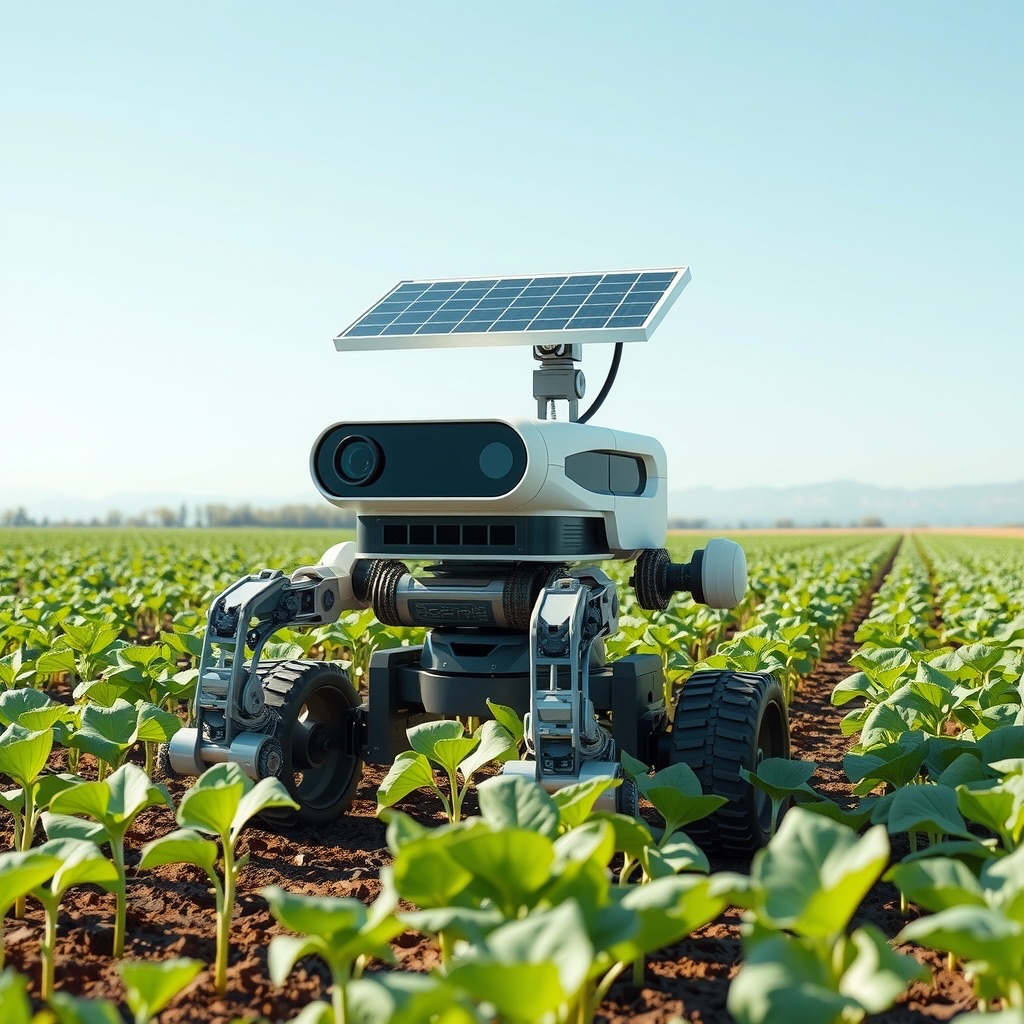
Autonomous field robots have quietly moved past pilot programs and into commercial farm operations. Danish manufacturer FarmDroid's solar-powered FD20 unit — which plants seeds using ultra-precise GPS and then mechanically weeds around them without herbicide — is now distributed in the UK by agricultural equipment dealer Opico and has featured on Jeremy Clarkson's farm, operating on Diddly Squat Farm as documented on the Prime Video series Clarkson's Farm. Separately, Dutch manufacturer AgXeed has sold four of its fully autonomous AgBot 5.115T2 tracked units to UK buyers, with on-farm delivery scheduled. These are not demo units; they are working farm equipment doing real seasonal labor.
The core thesis is straightforward: mechanical weeding robots are solving two problems simultaneously — herbicide dependency and farm labor shortages — and they are doing it with a business model that looks nothing like the humanoid-robot narrative dominating most robotics coverage. There is no dexterous hand here, no general-purpose ambition. These are single-task machines, and that narrowness is exactly why they work in the field today rather than remaining a lab demo.
How the mechanical weeding actually works
FarmDroid's approach centers on a deceptively simple insight: if a robot places every seed at a precisely recorded GPS coordinate during planting, it can return later and mechanically remove everything growing in between those coordinates — no image recognition needed to distinguish crop from weed, because the robot already knows exactly where every crop plant is. This sidesteps one of the hardest open problems in agricultural computer vision (weed-versus-crop classification in real field lighting conditions) by making the problem unnecessary. The FD20 runs entirely on solar power, adding zero fuel cost and zero emissions to the weeding pass, which is typically one of the more labor- and chemical-intensive stages of row-crop farming.
AgXeed's AgBot takes a different but complementary approach: a tracked, fully autonomous tractor platform designed to swap implements, meaning the same base unit can pull a seeder, a mechanical weeder, or other tools depending on the season. That flexibility matters for smaller and mid-sized farms that can't justify a fleet of single-purpose machines the way a large industrial operation might.
Why herbicide reduction matters commercially, not just environmentally
Herbicide-resistant weeds are a growing, expensive problem for row-crop farmers — resistance builds when the same chemical mode of action gets applied year after year, eventually requiring more expensive chemical rotations or higher application rates to achieve the same result. Mechanical weeding sidesteps that arms race entirely: a robot pulling weeds mechanically doesn't create selection pressure for herbicide resistance, because there's no chemical involved. For farms already dealing with resistant weed populations, that's not a sustainability talking point — it's a real cost reduction and a way to keep a field productive without escalating chemical inputs indefinitely.
The labor shortage is the other half of the story
South Korea's government has moved to actively fund agricultural robot and drone development specifically to address what it describes as chronic labor shortages and an aging farming workforce — a direct government response, not just a private-market bet, and government backing at that level suggests this is now viewed as agricultural policy infrastructure, not a startup curiosity. The same demographic pressure — fewer young workers entering farm labor, an aging existing workforce — shows up across most developed agricultural economies, including the UK and much of Western Europe, which is part of why UK distributors are actively bringing in both Danish and Dutch autonomous platforms rather than waiting for domestic alternatives.
What this means for farm operators evaluating the technology
For a farm operator actually considering this technology, three practical factors determine whether it makes sense right now:
- Row-crop compatibility matters more than raw capability. GPS-guided precision seeding-and-weeding systems like FarmDroid work best on crops planted in structured rows with consistent spacing — sugar beet and similar row crops are the natural fit. Irregular or densely broadcast-sown crops don't benefit from the same precision-coordinate approach.
- Solar-powered units have real operating limits. A solar-powered robot's working hours and torque are constrained by sunlight and battery capacity, which matters for farms in lower-light regions or those needing to cover large acreage on a tight seasonal window.
- Multi-implement platforms like AgBot amortize better on mid-sized farms. A single-task robot like FarmDroid makes sense when a farm has enough dedicated acreage in one crop type to justify a dedicated machine; a swappable-implement platform like AgXeed's spreads the capital cost across more of the season and more crop types, which matters more for diversified mid-sized operations than for large single-crop industrial farms.
The humanoid robot headlines get the attention, but the actual commercial traction in agricultural robotics right now belongs to narrow, purpose-built machines solving one job extremely well. That's usually how automation actually lands in an industry — not with a general-purpose breakthrough, but with unglamorous, task-specific hardware quietly replacing a specific, expensive, physically demanding job one field at a time.