Seven-year phone support is changing what a good upgrade looks like
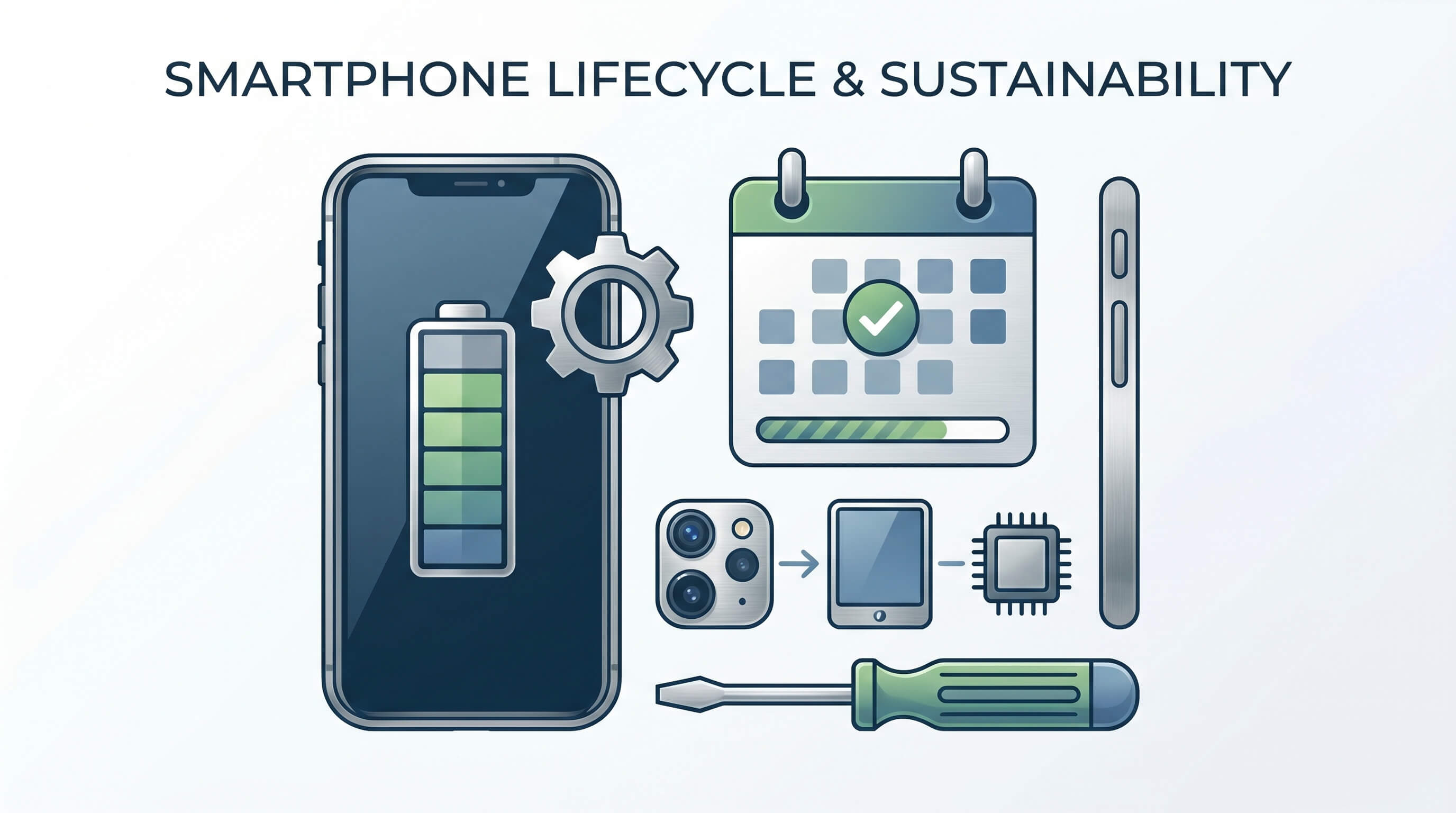
For a long time, smartphone buying advice was built around a simple assumption: your phone is a temporary object. It might last physically for years, but software support, battery health, and manufacturer incentives would push you toward another upgrade much sooner. That logic is now under pressure. In 2026, seven-year support commitments are no longer a niche talking point. They are becoming one of the most meaningful changes in the mobile market.
Google’s current Pixel policy is the cleanest example. According to Google’s own support documentation, Pixel 8 and later phones receive seven years of OS and security updates, while Pixel 6 and Pixel 7 generation devices receive five years. Samsung has made similar long-support commitments for recent flagship phones. Fairphone, meanwhile, continues to pressure the market from a different angle by tying longevity to repairability and parts access rather than only software branding. Together, those moves are changing what buyers should expect from a serious smartphone purchase.
Why update policy suddenly matters more
The obvious answer is security. Phones hold identity, banking access, private media, work accounts, passkeys, health data, and more. A device that stops receiving patches is no longer just old. It becomes harder to trust. That alone makes long support valuable. But the story is bigger than patching. Longer support changes resale value, sustainability, procurement cycles, and the psychology of ownership.
Once a buyer believes a phone will remain supported for most of a decade, the upgrade decision stops being tied mainly to fear of software abandonment. That shifts the conversation toward battery condition, camera needs, repairability, and whether new features are actually useful. In other words, longer support helps make smartphone purchases more rational.
The industry is finally catching up with how expensive phones became
Flagship phones have been priced like long-term devices for years while often being treated like short-term ones by the software support model. That mismatch was always awkward. It made little sense for a thousand-pound handset to age out of serious support long before many owners felt the hardware was truly finished. Extended update promises close part of that gap. They make the economics of premium phones easier to defend.
There is also a competitive dynamic here. Apple benefited for years from the perception that iPhones simply lasted longer in practice, even when support policy was not stated with the same kind of neat public guarantee now seen on some Android devices. Google and Samsung are responding not just with better hardware, but with more legible long-term commitments. That matters because support policy has become a headline spec in its own right.
Seven years is impressive, but not sufficient
There is a trap in treating update years as the whole story. A phone can receive updates for a long time and still become frustrating if battery replacement is expensive, repair parts are scarce, thermal behavior worsens, or storage limitations age the experience badly. Software support extends life, but it does not magically preserve comfort or performance.
This is why repairability deserves equal attention. A long-supported phone with poor repair economics still nudges users toward replacement. Fairphone understands this better than most. Its design philosophy keeps pushing the industry to confront a basic question: what good is software longevity if the hardware becomes financially irrational to maintain? The best version of long-life mobile design combines updates, parts, documentation, and reasonable serviceability.
What buyers should now ask before upgrading
Support length should be one of the first questions, but not the last. Buyers should also ask when the support clock begins, whether it covers both OS and security updates, how difficult battery replacement is, what the manufacturer’s parts and repair network look like, and whether the device will still feel usable near the end of that window. A seven-year promise that starts at launch date is different from a seven-year promise that begins when you buy the phone two years later. Policy details matter.
There is also a difference between being technically supported and being strategically cared for. Some manufacturers deliver years of updates with real feature improvements and security cadence. Others technically maintain devices while making the experience feel second tier. Consumers, reviewers, and enterprise buyers are getting better at spotting that difference.
Why this changes the upgrade market
Longer support has knock-on effects. Carriers and retailers can market refurbished devices more confidently. Enterprises can stretch deployment schedules. Families can hand phones down to younger users with less risk. Used-device marketplaces become healthier because software relevance lasts longer. Even app developers benefit from a less chaotic support landscape if more devices remain secure and current for longer periods.
That shift could also reduce the annual pressure on manufacturers to invent bigger reasons to upgrade. If customers expect to hold devices longer, the winning features may become durability, serviceability, battery replacement, and consistent software quality rather than pure launch-week novelty. That would be a healthier market than the old cycle of small camera changes and forced urgency.
The practical takeaway
If you are buying a phone in 2026, treat support policy as a core part of the product, not a footnote. Compare update windows the way you compare camera systems and chip performance. Then go one step further and ask whether the phone is realistically maintainable for that long. A long promise on paper is valuable. A long usable life in practice is better.
Seven-year support does not end the upgrade cycle, and it will not rescue weak hardware design on its own. But it does change the standard. A good phone is no longer just fast on day one. It is a device that stays secure, repairable, and worth owning for far longer than the industry once expected. That is one of the most meaningful mobile shifts in years.