Robot Dexterity Is the Real Bottleneck, Not Mobility: Inside 2026's Manipulation Problem
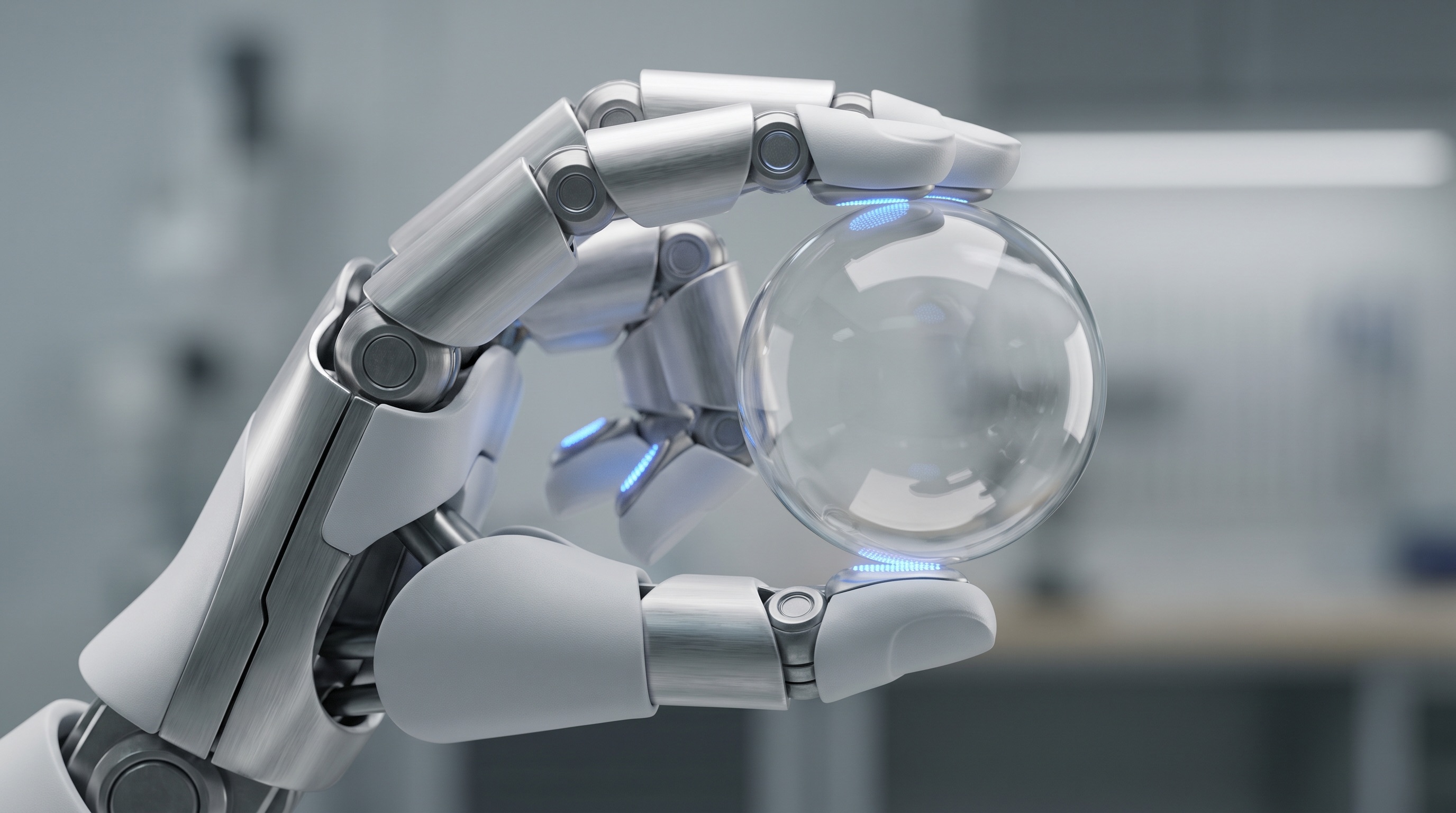
Humanoid robots solved locomotion faster than almost anyone predicted. Boston Dynamics' Atlas does backflips. Tesla's Optimus walks factory floors. UBTech shipped a mass-produced humanoid at scale in 2026. But ask any of these machines to pick up a loose cable, peel a piece of tape, or adjust its grip on a wine glass mid-lift, and the illusion of competence collapses. Manipulation, not mobility, is the bottleneck standing between today's humanoids and genuinely useful robots.
This isn't a minor engineering gap. It's the difference between a robot that can walk into a warehouse and one that can actually do the job waiting for it there. Most physical work — assembly, sorting, cooking, caregiving, cleaning — depends on hands, not legs. And hands are dramatically harder to solve.
Why Hands Are Harder Than Legs
Walking is a relatively constrained problem: a robot needs to balance its center of mass over a small number of contact points, and physics gives clear feedback (fall or don't fall) that reinforcement learning can optimize against efficiently. Manipulation has none of that structure. A human hand has 27 degrees of freedom and roughly 17,000 mechanoreceptors packed into the skin of the fingertips alone, feeding a continuous stream of pressure, shear, texture, and slip data to the brain.
Robots attempting the same tasks are working with a fraction of that sensory bandwidth. Vision alone — the default sensing modality for most robotic manipulation systems — simply cannot resolve what's happening at a contact point once an object is gripped and occluded from the camera. A robot that relies purely on cameras to manipulate objects is, functionally, operating with numb hands.
The Tactile Sensing Race
2026 has become the year tactile sensing moved from research curiosity to commercial necessity. XELA Robotics upgraded its uSkin platform with six-axis force-sensitive nails and multiple tri-axial sensing points distributed across the fingertip pulp, pushing detectable force thresholds down toward 5 millinewtons — closing in on the roughly 3 millinewton sensitivity of human fingertips. That resolution matters: it's the difference between a robot that can tell an egg is about to crack and one that finds out after the fact.
The more interesting shift is multimodal sensing — fusing pressure, texture, thermal signal, and even acoustic vibration into a single tactile read. A hand that can distinguish a plastic bottle from a glass one by touch, or detect the onset of slip before an object actually moves, doesn't need to re-plan a grasp from scratch every time. It can correct in real time, the same way a human hand instinctively tightens its grip on a slipping mug.
Hardware Is Catching Up to the Sensing Problem
Sensing alone doesn't solve manipulation — the hand also has to physically respond to what it feels, quickly and precisely. Tesla's latest Optimus hand carries 22 degrees of freedom, aiming for human-like fluidity of motion. Sanctuary AI has taken a different mechanical approach, building 21-degree-of-freedom hands driven by miniaturized hydraulic valves for smoother, more continuous finger control than typical servo-driven designs allow. Wuji Hand 2 uses direct-drive actuation with a tendon-free design specifically to reduce the gap between how a grasp is trained in simulation and how it performs on real hardware — a persistent failure mode known as the sim-to-real gap.
None of these approaches has become the clear industry standard, and that's telling. Unlike bipedal locomotion, where most serious humanoid programs converged on broadly similar leg architectures within a few years, dexterous hand design is still in an open experimentation phase. There's no consensus yet on whether hydraulics, tendons, or direct-drive actuators will win out for general-purpose manipulation.
What This Means for Deployment Timelines
The practical consequence is that humanoid robots are being deployed today primarily in tasks that minimize manipulation demands — palletizing, simple pick-and-place with known object geometries, walking-based inspection — rather than the open-ended manipulation tasks (folding laundry, assembling varied products, food prep) that would make them broadly useful in homes and flexible manufacturing.
Companies pitching near-term humanoid deployment for complex manipulation tasks should be treated with skepticism until they can demonstrate blind picking — identifying and grasping unfamiliar objects by touch alone, without relying on pre-mapped geometries or unobstructed camera views. That capability, more than any locomotion demo, is the real signal of manipulation maturity.
Actionable Takeaways
If you're evaluating humanoid robotics for an operational deployment, prioritize demonstrations that stress-test manipulation under partial occlusion and object variability, not just locomotion or scripted pick-and-place sequences on fixed object types. Ask specifically whether the system uses tactile sensing or vision alone — vision-only manipulation systems will fail predictably on deformable, reflective, or partially hidden objects. And if you're tracking the sector as an investor or technologist, watch tactile sensor suppliers like XELA Robotics as closely as you watch the humanoid platform makers themselves — the sensing layer, not the chassis, is where the next real breakthrough is most likely to originate.