Lunar Power Is Becoming the Hard Constraint on Moon Exploration
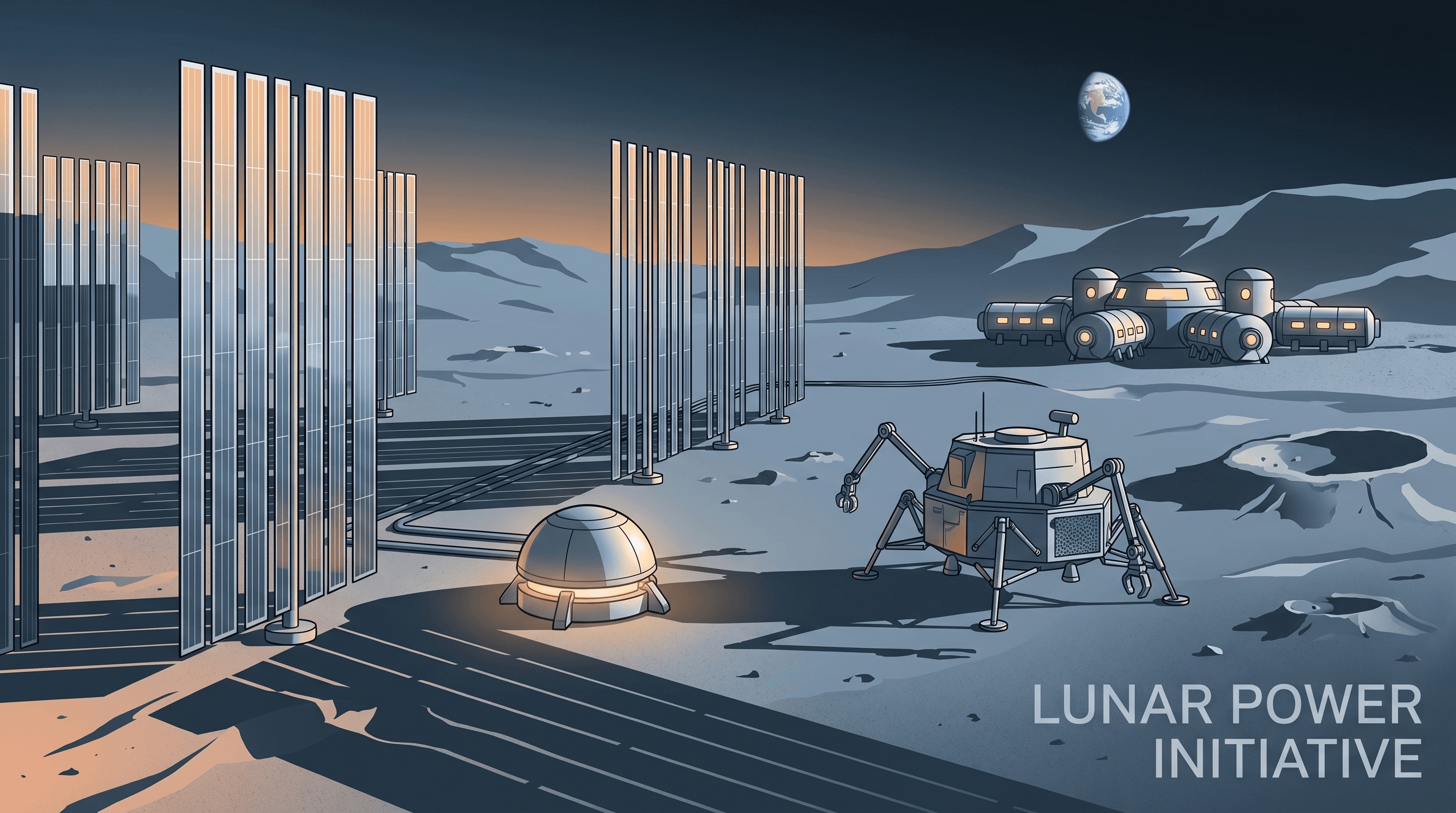
For decades, the primary hurdle to lunar exploration was simply reaching the Moon. Launch capabilities, orbital mechanics, and precision landing were the dominant engineering challenges. However, as launch costs decrease and mission frequency increases, a new, more profound bottleneck is emerging: dependable power architectures capable of supporting repeated, useful, and eventually commercial operations on the lunar surface. The era of transient visits is giving way to aspirations of sustained presence, and with it, the critical need for robust, continuous power is becoming the hard constraint on Moon exploration.
The shift in focus from launch vehicle capacity to surface power infrastructure marks a pivotal moment in space exploration. While getting payloads to the Moon is becoming more routine, ensuring they can operate effectively for extended periods, survive the harsh lunar environment, and support human crews or complex scientific instruments demands a fundamental re-evaluation of energy strategies. Without reliable, scalable power, ambitious goals like permanent lunar bases, in-situ resource utilization (ISRU), and a thriving lunar economy remain theoretical constructs, tethered by the limitations of current energy solutions.
The Unforgiving Lunar Environment and Its Power Demands
The Moon presents an exceptionally challenging environment for power generation and storage. Unlike Earth, it lacks a substantial atmosphere or a protective magnetosphere, exposing surface assets to extreme temperature swings, micrometeoroid impacts, and high levels of radiation. These factors alone complicate the design of any long-duration system, but the most significant power-related challenges stem from the lunar day-night cycle and the pervasive lunar dust.
The Long Lunar Night: A Solar Blackout
A lunar day lasts approximately 29.5 Earth days, meaning a lunar night endures for about 14 Earth days. For missions relying solely on solar power, this extended period of darkness is a critical vulnerability. Without sunlight, solar panels cease to generate electricity, forcing systems to rely entirely on battery reserves. Surviving the lunar night requires robust battery technology capable of storing immense amounts of energy and enduring extreme cold (down to -173°C or -280°F) without degradation. Many early lunar landers and rovers were designed for short operational windows, often failing to survive the first lunar night, underscoring the limitations of solar-only approaches for sustained presence.
Lunar Dust: An Abrasive, Conductive Menace
Lunar regolith, or dust, is far more than just dirt. It is an abrasive, electrostatically charged, and highly adhesive material composed of sharp, jagged particles. This dust poses a severe threat to power systems. It can coat solar panels, drastically reducing their efficiency; abrade moving parts in mechanisms like solar array deployment systems; infiltrate seals and bearings; and even cause electrical shorts due to its conductive properties when agitated. Mitigating dust accumulation and its detrimental effects requires sophisticated design solutions, including self-cleaning mechanisms, protective covers, and materials resistant to abrasion, adding significant complexity and cost to power system development.
The Unique Challenges of the Lunar South Pole
The lunar South Pole, a prime target for future missions like NASA's Artemis program, offers the promise of water ice in permanently shadowed regions (PSRs). However, its unique lighting geometry presents a paradox for solar power. While some elevated ridges and crater rims receive near-constant sunlight, offering potential "peaks of eternal light," the vast majority of the terrain experiences long, deep shadows that shift throughout the lunar day. This necessitates complex power strategies, often requiring mobile power units or a distributed network to harvest sunlight from optimal locations and transmit it to operational sites, or a complete reliance on non-solar solutions for continuous operation.
Current and Evolving Power Solutions: Limitations and Innovations
Historically, lunar missions have relied on two primary power sources: solar panels with batteries and Radioisotope Thermoelectric Generators (RTGs).
Solar Panels and Batteries: The Workhorse with Constraints
Solar panels coupled with rechargeable batteries have been the backbone of most robotic lunar missions and the Apollo program. They are relatively straightforward to deploy and operate during the lunar day. However, their reliance on sunlight and vulnerability to dust and extreme temperatures during the lunar night inherently limit their utility for long-duration, high-power applications. As mission objectives expand beyond short scientific surveys to include habitats, large-scale ISRU, and industrial activities, the power output and endurance of solar-battery systems become insufficient.
Radioisotope Thermoelectric Generators (RTGs): Reliable but Low Power
RTGs convert the heat from radioactive decay (typically Plutonium-238) into electricity. They offer continuous, reliable power output regardless of sunlight or dust, and have proven invaluable for deep-space probes and long-duration Mars rovers. However, RTGs produce relatively low power (typically tens to hundreds of watts), making them unsuitable for the multi-kilowatt demands of a lunar base or ISRU operations. Furthermore, the limited availability of Plutonium-238 and the political sensitivities surrounding radioactive materials restrict their widespread application for a burgeoning lunar economy.
The Imperative for Fission Surface Power (FSP)
To overcome the limitations of existing technologies and meet the escalating power demands of sustained lunar operations, nuclear Fission Surface Power (FSP) is emerging as the most promising solution. FSP systems utilize a small nuclear reactor to generate electricity, providing continuous, high-power output (tens of kilowatts, scalable to hundreds) independent of solar cycles, dust, or location (including PSRs). This capability is transformative for lunar exploration.
NASA, in collaboration with the Department of Energy (DOE) and industry partners, is actively developing a 40-kilowatt class FSP system. The goal is to demonstrate such a system on the Moon by the early 2030s. A 40-kilowatt system could power multiple lunar habitats, support extensive scientific payloads, and enable significant ISRU operations, such as extracting water ice and processing regolith for construction materials or propellants. The continuous nature of FSP drastically simplifies mission planning and enables uninterrupted research and development on the lunar surface.
Towards Integrated Power Architectures and Grids
While FSP offers a robust solution for baseline power, a truly resilient and scalable lunar power infrastructure will likely involve a hybrid approach. This "mixed architecture" would combine FSP for continuous baseload power, solar arrays for supplementary daytime power and redundancy, and advanced energy storage systems (batteries, fuel cells) for peak loads or localized needs. This strategy is particularly relevant for the lunar South Pole, where FSP could provide foundational power, supplemented by solar arrays placed on sunlit ridges, with power transmitted across the surface.
The development of lunar power grids is also critical. Instead of each lander or habitat operating in isolation, a networked power system would allow for efficient power distribution, load balancing, and increased resilience. Missions like Firefly Aerospace's Blue Ghost Mission 2, planned for late 2026, are already incorporating payloads that explicitly support future lunar infrastructure, including power-network demonstrations. Operating on the lunar far side, this mission will also include a communications relay, highlighting the integrated nature of future lunar infrastructure requirements.
The Future of Lunar Exploration Hinges on Power
The ability to establish reliable, scalable, and continuous power on the Moon is not merely an engineering challenge; it is the foundational requirement for unlocking the next era of lunar exploration and utilization. Without it, ambitious programs like Artemis, which aim to return humans to the Moon and establish a sustained presence, cannot achieve their full potential.
Permanent Habitats and Human Presence:
Sustaining life support, environmental controls, and operational equipment for extended periods.Advanced Scientific Research:
Powering sophisticated instruments, observatories, and laboratories for continuous data collection and analysis.In-Situ Resource Utilization (ISRU):
Providing the substantial energy required to extract and process lunar resources, transforming them into water, oxygen, propellants, and construction materials. This is crucial for reducing reliance on Earth-supplied resources.Enhanced Mobility and Logistics:
Charging rovers, excavators, and other surface vehicles, enabling extensive exploration and construction activities.Commercial and Industrial Development:
Facilitating private ventures in lunar mining, manufacturing, and even space tourism, creating a self-sustaining lunar economy.
The journey to the Moon is no longer the primary impediment. The true frontier now lies in mastering the lunar environment through innovative power solutions. As launch capabilities mature, the focus must decisively shift towards developing and deploying the robust energy infrastructure that will transform the Moon from a destination for fleeting visits into a permanent outpost for humanity. The success of future lunar endeavors, from scientific discovery to economic expansion, will ultimately be measured by our ability to keep the lights on.