Lightweight App Distribution Is Returning Through App Clips, Instant Apps, and Mini-Workflows
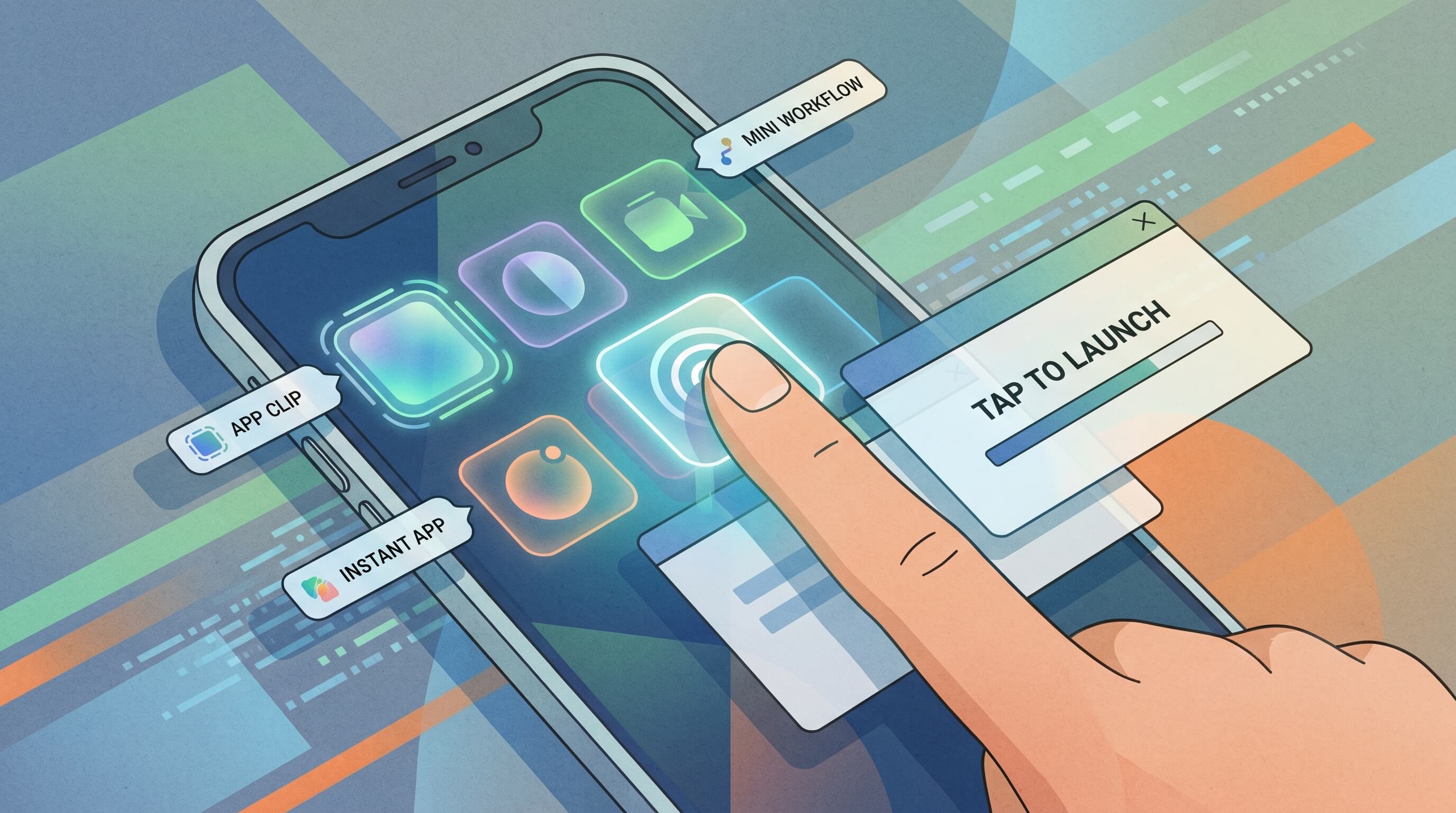
For much of the smartphone era, the dominant assumption was simple: if a service mattered, users would install the full app. That assumption shaped product teams, growth strategies, and platform economics for more than a decade. In 2026, it looks less universal than it once did. A quieter shift is underway toward lightweight app distribution models that let people complete useful tasks without committing to a full install first.
App Clips on iPhone, Instant Apps on Android, QR-triggered utility flows, wallet-linked actions, chat-based entry points, and other mini-workflows all point in the same direction. Users still install major apps they use every day, but they are increasingly resistant to downloading a heavyweight application for a single parking payment, food pickup, venue check-in, loyalty action, quick purchase, or one-time document step. Mobile software is rediscovering the value of low-commitment entry.
Users are tired of app overhead
The appeal of lightweight distribution starts with basic user fatigue. Phones are crowded. Notifications are exhausting. Permissions prompts feel invasive. Storage is better than it used to be, but attention is scarcer. Many mobile interactions are occasional by nature, and full installation is often too much ceremony for too little payoff.
That mismatch is obvious in real life. A person standing at a transit gate, café counter, stadium entrance, hotel desk, charging point, or medical kiosk usually wants one thing done quickly. They do not want to create an account, wait through onboarding, grant half a dozen permissions, and decide whether this is an app they will remember next month. They want a focused interaction that starts instantly and disappears when the task is over.
App Clips and Instant Apps anticipated the shift
Apple and Google both introduced lighter app-entry models years ago, but the broader market often treated them as secondary features rather than primary product strategy. That is starting to change. The original idea was strong: allow a small, task-specific slice of an app to launch when triggered by a link, NFC tag, QR code, map listing, or other contextual prompt. The user gets utility first, while full installation becomes optional.
The concept was sound even before habits caught up with it. Now the environment fits better. Consumers are more selective about what deserves a permanent home screen slot. Businesses are more motivated to reduce drop-off at the top of the funnel. Platforms are more willing to support flows that connect identity, payments, passes, and location-aware actions without requiring the full software bundle every time.
The bigger trend is not just “mini apps”
It would be a mistake to reduce this trend to a single feature category. The deeper pattern is that mobile software is breaking apart into more contextual entry points. A lightweight experience may live inside a web wrapper, a messaging flow, a QR-linked screen, a wallet pass, an in-car interface, or a share sheet action. The common thread is not format. It is reducing the amount of commitment required before the user sees value.
That matters because distribution friction directly affects conversion. If the first step is too heavy, many users simply abandon the interaction. A frictionless micro-experience can recover demand that would otherwise vanish before the app store page even loads. In commerce, transport, hospitality, and local services, that can translate into meaningful revenue differences.
Mobile is becoming more transactional again
The smartphone did not lose its role as a platform for rich, persistent apps. Banking, messaging, navigation, editing, entertainment, and work software still benefit from deep installed relationships. But a large share of mobile activity is transactional rather than ongoing. People want to rent, unlock, verify, reserve, scan, confirm, reorder, collect, or pay. For those moments, the best product is often the shortest path, not the most feature-complete container.
This is why mini-workflows feel timely. They fit the reality that many mobile sessions are situational. A user may love a brand and still not want another full app on the device. Lightweight distribution respects that distinction instead of forcing every interaction into the same install funnel.
Platform economics are shifting too
There is also a business angle. Full-app installs became a prized growth metric in the app-store era because they created repeat access, pushed engagement, and strengthened platform lock-in. But installs are expensive to acquire, easy to lose, and not always necessary for the task at hand. For some businesses, a smaller, faster entry point can outperform a traditional acquisition model because it reduces abandonment and improves conversion at the moment of intent.
That does not mean the installed app disappears. In many cases, the lightweight flow becomes the top of a smarter funnel. Let the user finish the immediate task first, then earn the deeper relationship. That sequence often matches real user psychology better than asking for commitment upfront.
Where this model works best
The clearest use cases share a few traits. The task is immediate, location-based, occasional, or low-frequency. The user already has context and does not need a full feature set. Payment or identity can be handled through existing platform primitives. The value of speed is obvious. Parking, ticketing, transit access, retail pickup, venue services, guest check-in, appliance pairing, loyalty redemption, support intake, and simple healthcare or education interactions all fit well.
These are not minor categories. They represent a large amount of everyday phone usage where distribution friction has long been tolerated rather than solved. A more modular mobile stack can make those moments feel better without requiring users to manage dozens of semi-abandoned apps.
The limitations are real
Lightweight app distribution is not a universal replacement for full apps. Rich account management, offline capability, heavy personalization, creator tools, advanced messaging, and long-duration workflows still benefit from complete installed software. Some products also want the retention advantages of a home-screen presence. Others run into platform constraints, analytics gaps, or design tradeoffs when trying to compress too much into a mini-surface.
The point is not that lightweight always wins. The point is that many teams overestimated how often users wanted the full bundle first. In 2026, successful mobile product strategy increasingly starts by asking which parts of the experience deserve permanent installation and which parts should feel as disposable and immediate as the task itself.
The practical lesson for mobile teams
Mobile teams should treat low-commitment entry as a product decision, not just a growth hack. If someone encounters the service in a real-world moment of intent, what is the fastest trustworthy path to completion? Can identity, payment, confirmation, and follow-up happen without dragging the user through a complete app lifecycle before value appears?
That is why lightweight app distribution is quietly returning. It aligns better with how people actually use phones: frequently, contextually, and with little patience for unnecessary setup. In the next phase of mobile software, the winners will not always be the apps that ask for the deepest commitment first. Often they will be the ones that let the user do one useful thing immediately, then decide whether anything more is worth installing.