Industrial Inspection Robots Are Getting Useful Because Machine Vision Is Finally Improving
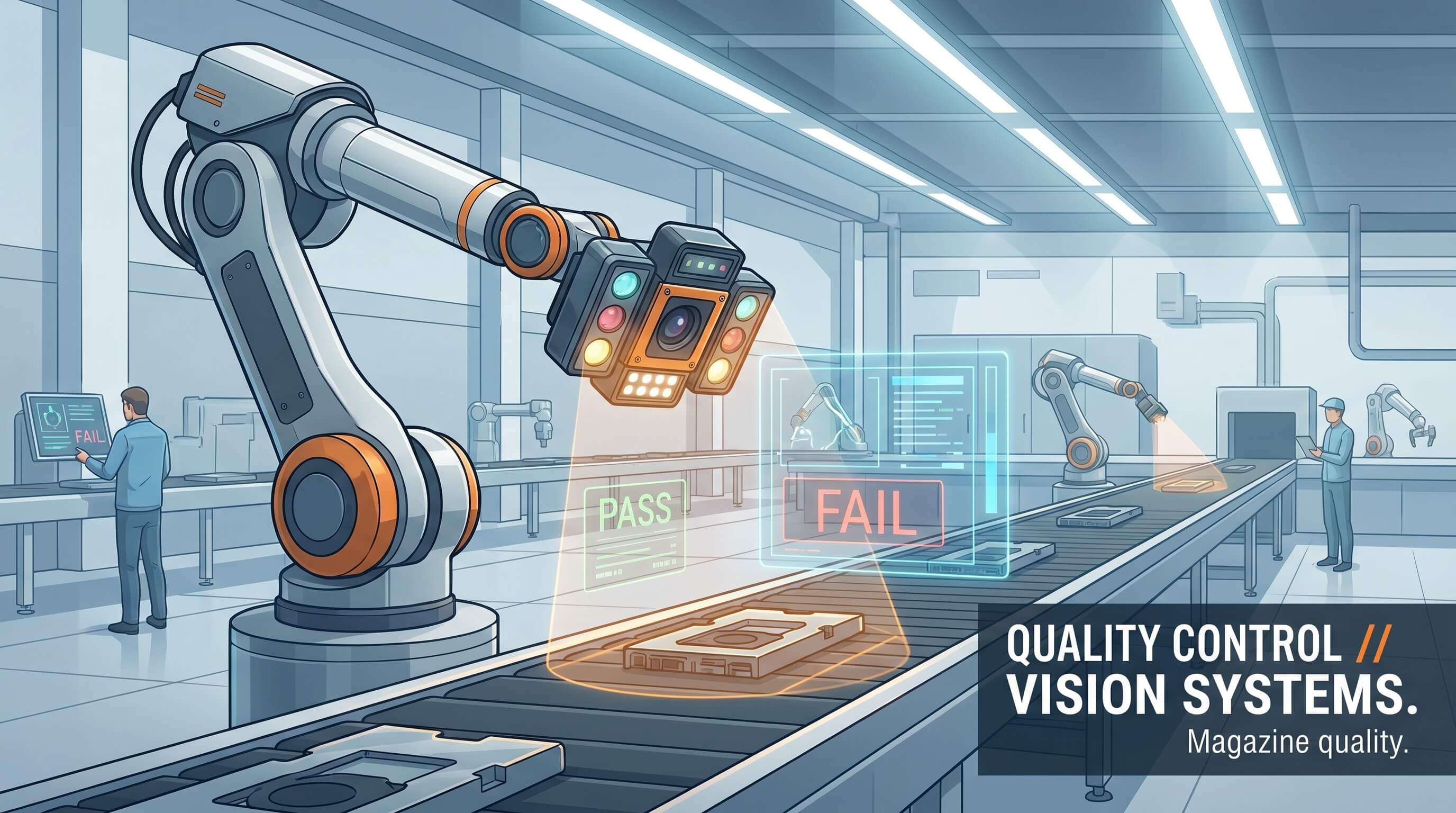
Industrial inspection robots have been easy to demo for years. A robot arm can hold a camera, move through a repeatable path, and identify obvious defects under controlled conditions. What has been much harder is turning that demo into a production tool that quality teams trust across real shifts, changing lighting, variable parts, and the messy exceptions that define factory life. That is finally changing, and the main reason is not a sudden leap in robotic charisma. It is that machine vision is getting more reliable in the conditions that actually matter.
This is an important distinction because inspection automation succeeds or fails on false confidence. A dramatic robot cell that works beautifully in a sales video but misses intermittent defects, floods operators with false positives, or requires constant retuning does not save labor. It creates a new supervision burden. The current wave of useful inspection robotics is different because the market is learning that reliability, calibration discipline, and workflow fit matter more than autonomy theater.
Why earlier inspection systems disappointed
The historical problem was not that cameras could not see. It was that industrial vision systems often saw too narrowly. They performed well on a known part under stable conditions, then degraded when part orientation drifted, surfaces reflected differently, components varied by supplier lot, or ambient lighting changed. In quality environments, that fragility quickly destroys trust. Operators would rather inspect manually than depend on a system that misses defects unpredictably.
Another issue was integration. Even when image classification worked decently, the system often sat awkwardly outside the broader quality process. It could flag an anomaly but not connect it to traceability records, rework queues, line stops, or pass-fail thresholds that operations leaders could tune with confidence. A vision model alone is not an inspection solution. It becomes useful only when it plugs into how factories actually decide, escalate, and document quality outcomes.
What improved in machine vision
The progress is real but specific. Vision models have become better at combining classical inspection discipline with learned pattern recognition. Teams are using more robust lighting setups, better synthetic and edge-case data, improved segmentation, and tighter calibration practices alongside modern models. The result is not perfect general vision. It is more dependable task-specific vision.
That matters because inspection is usually a bounded problem. A manufacturer does not need a robot that understands the world. It needs one that can detect a bad weld, missing fastener, surface blemish, assembly misalignment, unreadable code, or packaging defect with known confidence thresholds. When the problem is framed that way, recent gains in model accuracy, sensor quality, and deployment tooling start to translate into actual plant value.
Multi-modal inspection is helping too. Systems increasingly combine RGB cameras with depth sensing, thermal imaging, structured light, or force feedback when appropriate. That lets robots move beyond a brittle single-signal view. A defect that is ambiguous in color space may become obvious in depth or heat. Reliability improves when the system has more than one way to know something is wrong.
Where inspection robots work now
The best current use cases are repetitive, high-volume environments where defect categories are relatively well understood and the cost of inconsistency is high. Electronics assembly, packaging verification, automotive subassembly, pharmaceutical labeling, and food-line compliance checks are all strong candidates. In these settings, a robot can follow a repeatable path, capture consistent viewpoints, and compare outcomes against narrow quality rules faster than a human inspector can sustain over time.
Inspection robots also make sense where human ergonomics are poor. Looking into confined areas, checking hot components, handling hazardous environments, or sustaining concentration over thousands of near-identical parts are tasks where automation has an obvious labor and safety argument. The robot does not need to replace every inspector. It needs to take over the segments where fatigue and inconsistency are expensive.
Where they still break
The limitations are just as important as the gains. Inspection robots still struggle in high-mix, low-volume contexts where defects are rare, appearance varies widely, and labeled failure data is thin. They also struggle when upstream process instability is extreme. If parts arrive in unpredictable states and tolerances are loosely controlled, the vision system ends up learning noise rather than quality.
They can also fail organizationally. Plants sometimes buy inspection automation expecting labor elimination, then underinvest in maintenance, retraining, and exception handling. A useful system still needs ownership. Someone must review drift, manage false positives, update thresholds, and connect inspection outputs to root-cause analysis. Reliability is not a feature you install once. It is a performance standard you maintain.
Why reliability matters more than autonomy claims
This is why the most credible vendors are talking less about humanoid futures and more about measurement stability, uptime, and defect escape rates. In inspection, the glamorous claim is rarely the valuable one. A robot that reliably catches a narrow class of faults and integrates cleanly with plant systems is worth more than a highly flexible platform that still requires constant babysitting.
For buyers, the key metric is not how impressive the demo looks. It is whether the system reduces defect escapes, shortens audit cycles, and lowers the cost of quality without creating a parallel troubleshooting department. That is a harsher standard, but it is the one that separates pilots from production.
What manufacturers should ask before buying
Manufacturers evaluating inspection robots should start with process discipline, not vendor slides. What defect types matter most, what is the current escape rate, how stable is part presentation, and how are quality outcomes recorded today? If those answers are fuzzy, automation will inherit the fuzziness. The best deployments begin with a tightly scoped inspection target and a clear economic reason to automate it.
Vendors should also be pushed on drift handling, retraining workflows, sensor calibration, explainability for rejects, and handoff paths for human review. A system that cannot explain why it failed a part or how thresholds are maintained will become politically fragile inside the plant. Quality teams need evidence, not magic.
The larger point is encouraging. Inspection robotics is becoming useful not because factories suddenly want robot spectacle, but because the supporting vision stack is maturing into an operational tool. As that reliability improves, more plants will automate inspection in narrow, valuable slices. The winners will be the ones who treat machine vision as quality infrastructure, not as a flashy autonomy story looking for a factory to impress.