In-Space Satellite Refueling Is Becoming a Real Business, Not a Demo
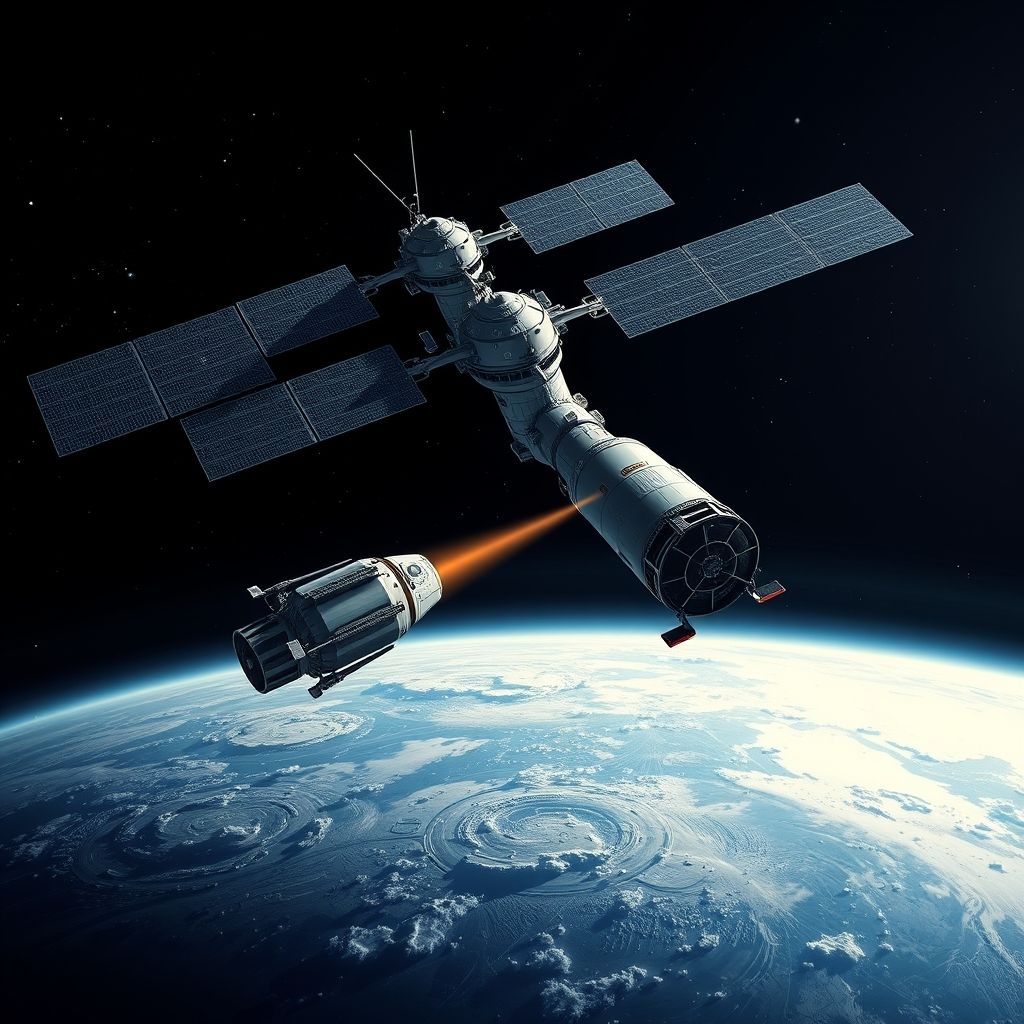
For over a decade, in-space satellite servicing has been the perennial "someday" technology of the space industry — always a few years from commercial reality. That's changing in 2026. Astroscale U.S.'s Refueler spacecraft is manifested to launch this summer, and it will conduct the first-ever on-orbit refueling mission supporting a U.S. Department of Defense asset, while a related commercial fuel-sale agreement between Astroscale and Orbit Fab has already been signed. This is the year the business model stops being theoretical.
What Astroscale Is Actually Doing
The Astroscale U.S. Refueler is a 300-kilogram spacecraft carrying a refillable hydrazine tank. Its mission profile reads like an orbital relay race: it will fly to just above geosynchronous orbit, refuel a Space Force satellite, then refuel itself from a spacecraft built by fellow startup Orbit Fab, and finally refuel a second Space Force satellite. That sequence — servicer refuels client, then servicer refuels from depot, then servicer refuels another client — is the first real demonstration of an end-to-end orbital refueling ecosystem involving three independently built spacecraft rather than a single point-to-point transfer.
Orbit Fab's role illustrates the emerging division of labor in this market: rather than building the servicer spacecraft that does the docking and maneuvering, Orbit Fab operates the depot side — what the company describes as simple, large satellites full of propellant, paired with fuel shuttles that ferry propellant from depot to customer. Orbit Fab's RAFTI (Rapidly Attachable Fluid Transfer Interface) standardizes the physical docking connection, functionally playing the role a fuel nozzle standard plays for gas stations on Earth. The company has separately agreed to resupply Astroscale's LEXI servicer in GEO with up to 1,000 kilograms of xenon propellant, and is pricing hydrazine refueling services at roughly $20 million for 100 kilograms.
Northrop Grumman's Parallel Track
Northrop Grumman is pursuing a similar capability on a separate timeline. The U.S. Space Systems Command awarded Northrop a contract for a program called Elixir — a satellite bus and refueling payload designed to perform rendezvous and proximity operations and dock with a Space Force "Tetra-6" satellite. That demonstration isn't expected before 2028, putting Northrop roughly two years behind Astroscale and Orbit Fab's 2026 timeline, though Northrop brings deeper defense-contracting relationships that could matter once the Pentagon moves from demonstrations to sustained procurement.
Why the Military Is the First Customer
It's not a coincidence that the Space Force is funding these initial missions rather than commercial satellite operators footing the bill first. Military satellites in GEO are exceptionally expensive to replace — often costing hundreds of millions of dollars and years to build and launch — and many were never designed with refueling in mind, since propellant depletion has historically just meant planned retirement. A satellite that runs low on station-keeping fuel today gets decommissioned even if every other system aboard is functioning perfectly. Refueling capability directly extends the operational life of assets that are otherwise irreplaceable on short notice, which is precisely the kind of resilience the Space Force has been prioritizing amid growing concern about counterspace threats to exquisite, hard-to-replace satellites.
The Market Case Beyond Defense
A recent industry study estimates the global in-orbit refueling market will approach $1.1 billion by 2032 — a modest number by space-industry standards, but one that undersells the structural shift underway. If refueling becomes routine and affordable, satellite designers can stop over-provisioning propellant tanks at launch (which adds mass and cost) and instead plan for periodic top-offs, the same way airlines don't build planes to fly nonstop around the world. That changes the economics of GEO communications and Earth-observation satellites, potentially extending useful operational lifespans from roughly 15 years to indefinitely, provided the servicing economics hold.
What to Watch
The real test isn't whether Astroscale's summer refueling mission succeeds technically — early demonstrations in this industry usually work. The test is whether the Space Force follows up with a sustained procurement contract rather than a one-off demo, and whether commercial GEO operators like SES or Intelsat sign their own refueling agreements once military validation derisks the technology. If both happen within the next 18 months, expect the in-orbit servicing market estimate to look conservative in hindsight. If the pipeline stalls at demonstration missions, this becomes another example of promising space technology that never crosses into sustained commercial deployment.