Humanoid Robots Are Leaving the Demo Stage, but Warehouses Are the Real Test
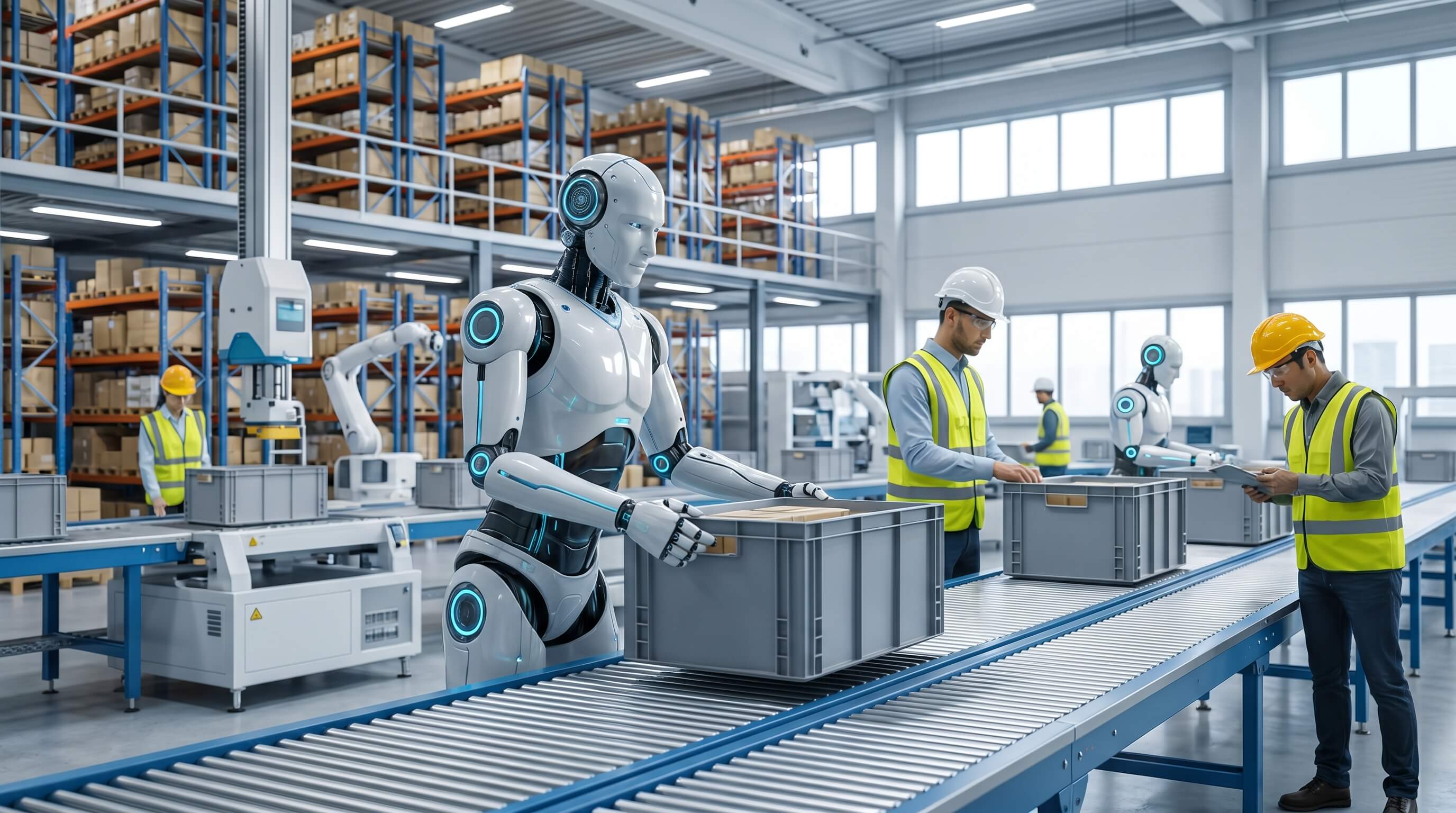
Humanoid robots are having a very public moment. Every few weeks there seems to be a new demo: a machine walking more smoothly, lifting boxes, sorting parts, or completing a task that used to belong in science fiction. The excitement is understandable. A robot built in human form promises something powerful, at least in theory. Instead of redesigning every factory, warehouse, and back room around automation, companies could deploy machines into environments already built for people. That is the dream. The reality in 2026 is more grounded, and more interesting.
Why warehouses matter so much
If you want to know whether humanoid robots are moving beyond spectacle, warehouses are one of the best places to look. Logistics environments are repetitive enough to test automation seriously, but messy enough to expose weakness fast. A warehouse contains changing inventory, uneven packaging, narrow spaces, human workers, deadlines, and constant exceptions. It is a brutal environment for any machine that cannot handle variability.
That is exactly why warehouses have become such an important proving ground. If a humanoid robot can work safely and consistently in picking, sorting, pallet movement, tote handling, or other basic internal logistics tasks, the category becomes easier to take seriously. If it struggles with uptime, battery management, dexterity, or safety, the gap between demo and deployment becomes obvious immediately.
The case for humanoids is real, but specific
The best argument for humanoid robots is not that human shape is universally optimal. Often it is not. Specialized automation still wins where tasks are highly structured and volumes justify purpose-built machinery. A conveyor system, robotic arm, or autonomous mobile robot can be cheaper, simpler, and more reliable than a general humanoid platform for many jobs.
Humanoids become compelling when the environment is already designed around human movement and tools, and when companies want flexibility without a costly redesign. That is why they are attracting attention in manufacturing support, warehousing, and internal logistics. A robot that can navigate familiar spaces, use standard fixtures, and switch between adjacent tasks may unlock automation in places where bespoke systems are hard to justify.
What 2026 actually looks like
The most credible reading of the market is that humanoids are leaving the pure demo stage, but they are still early. Pilot deployments are expanding. Vendors are talking more concretely about task scope, fleet management, and return on investment. Industry groups such as the International Federation of Robotics are also treating humanoids as part of the real robotics conversation rather than an entertainment sideshow.
At the same time, companies evaluating these systems are asking very practical questions. Can the robot complete a shift without becoming an energy headache? Can it hit useful cycle times, not just occasional successes? How expensive is supervision? What happens when an object is slightly damaged, misplaced, reflective, soft, or unexpectedly heavy? How often does the system need intervention? These questions sound mundane, but they are the difference between industrial equipment and a publicity event.
Software is becoming the real battleground
One reason the category feels closer than before is that progress is not coming from hardware alone. Simulation, vision models, policy learning, teleoperation, and better tooling for training robots are improving the software stack around physical autonomy. That does not solve everything, but it gives vendors a better shot at handling the long tail of warehouse tasks that used to break brittle automation.
This is also why comparisons to large language models can be misleading. Robotics is embodied. A planning model can be impressive, but a robot still has to balance, perceive accurately, grip objects, avoid collisions, and recover gracefully from mistakes. The software stack matters because it coordinates these realities, not because it erases them. In warehouses especially, good autonomy is really good exception handling.
The real barriers: safety, reliability, and economics
Safety remains the biggest issue, especially when humanoids work near people. A warehouse can tolerate some friction from new systems, but it cannot tolerate unsafe behavior. Standards, testing, human override, and liability frameworks are all becoming more important as pilot programs widen. This is one of the clearest signs that the market is maturing. Serious buyers are not dazzled by walking videos. They want validation.
Reliability and economics matter just as much. A warehouse operator does not care whether a robot is philosophically elegant. They care whether it lowers labor bottlenecks, keeps throughput stable, and does not create a maintenance burden larger than the problem it was meant to solve. That is why many facilities still find that autonomous mobile robots, cobots, and classic automation deliver better near-term returns. Humanoids need to earn their place task by task.
Why this stage is healthy for the industry
In some ways, this more skeptical phase is exactly what humanoid robotics needed. The technology is too important to be judged only by viral clips. Warehouses force the category into contact with operational reality. They reveal whether the product can handle repetition, fatigue, ambiguity, and coexistence with human teams. That is hard, but it is productive. Industries become real when they survive procurement, not applause.
So the most honest way to describe 2026 is this: humanoid robots are no longer just a fantasy, but they are not yet a default choice either. They are entering the test that matters most, the one where logistics teams, safety managers, and operations leaders decide whether the value is real. If humanoids succeed there, they will deserve the attention they are getting. If they fail, the market will learn quickly. Either way, warehouses are where the future stops being a demo and starts becoming a business.