eSIM Travel Is Useful Now, but Carrier UX Is Still the Bottleneck
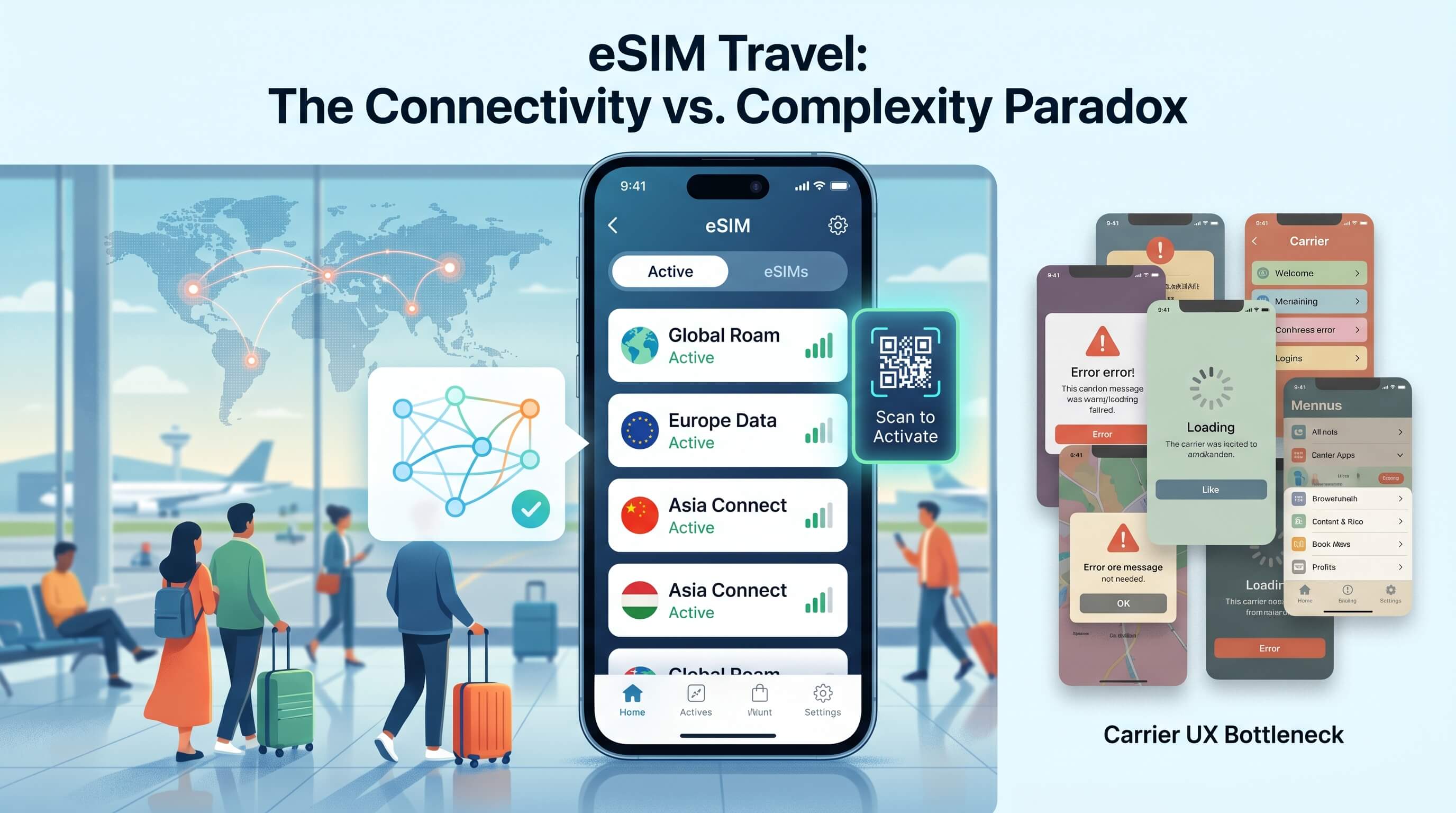
eSIM has finally crossed the line from clever feature to genuinely useful travel tool. A traveler can land in another country, buy a short-term data plan in minutes, keep their primary number active for banking codes, and avoid hunting for a kiosk that may or may not support their phone. That is a real improvement over the old physical SIM workflow, especially for people who travel often, manage two numbers, or want a cleaner separation between work and personal connectivity.
But the mainstream barrier is no longer eSIM itself. The bottleneck is carrier UX. Too many operators still treat activation, transfer, and recovery as edge cases instead of core product flows. The result is a strange market where the technology is elegant, but the surrounding experience is still full of lock-in, vague instructions, device checks, broken QR flows, and poor fallback options when a trip goes sideways.
What eSIM already solved for travelers
The wins are easy to see. Secondary lines are much easier to manage than they were three years ago. A founder can keep a domestic number active for calls and SMS while running cheap local data abroad. A student spending a semester overseas can install a regional plan without giving up their home line. A family can preload connectivity before takeoff instead of depending on airport Wi-Fi after landing.
Fast switching is the second big improvement. On modern iPhone and Android devices, users can store multiple eSIM profiles and move between plans without touching the SIM tray. That matters because travel connectivity is often situational. A traveler might want a five-day data pass in Turkey, switch back to their main plan during a layover in Germany, then enable a regional Europe plan for the rest of the week. Physical SIMs could do that, but not gracefully.
The third improvement is pricing transparency, at least from travel-first providers. Airalo, Nomad, Holafly, Ubigi, and carrier-owned travel brands trained users to expect visible prices, defined data caps, and app-based top-ups. Even when those plans are not the absolute cheapest option, they are dramatically better than surprise roaming bills.
Where the experience still breaks
The problem is that activation is only smooth when everything goes right. Many carrier experiences still assume the user is at home, on stable Wi-Fi, with access to another device, a working email inbox, and enough battery to troubleshoot. That is not how travel failures happen. They happen in transit, under time pressure, with weak connectivity, and often after a phone reset, upgrade, or theft.
A common failure case looks like this: someone upgrades phones the night before a trip, tries to move their main line, hits a transfer limit, and discovers the carrier wants an SMS code sent to the line that is currently inactive. Another traveler arrives abroad, scans the QR code for a prepaid eSIM, and finds that roaming is enabled but the APN is missing, the installation instructions were written for an older OS version, or the plan started counting down before the plane landed. None of these are hard radio problems. They are product design problems.
Carrier lock-in is still stronger than it should be
eSIM should reduce friction, but in many markets it still gives carriers a new control point. Some operators restrict easy transfer between devices. Others force customers through store visits or support chats for actions that should be self-serve. In the US, financing arrangements, device whitelists, and opaque unlock policies still shape whether eSIM feels flexible or captive. In other regions, prepaid eSIM availability remains much narrower than prepaid physical SIM availability, which defeats the convenience story.
This matters because travelers do not judge connectivity on architecture. They judge it on recoverability. If a physical SIM stopped working, people at least understood the fallback: remove it, replace it, borrow one, or buy another locally. With eSIM, the fallback can be much less obvious. If a device is lost, factory-reset, or stuck in a half-activated state, users need a clean path to restore service from another device. Many carriers still do not offer that path well.
The real UX gap is fallback design
The most important eSIM feature is not quick activation. It is graceful recovery. Carriers should assume that users will lose phones, break screens, forget passwords, change devices on travel days, and need service restored from a laptop in a hotel lobby. That means clear account recovery, portable installation records, multiple activation methods, and honest messaging about what happens when a transfer fails.
Good fallback design would include at least four basics. First, self-serve reissue from a trusted account without waiting for chat support. Second, a backup activation path that does not depend only on scanning one QR code from one email. Third, explicit status messaging that tells users whether a plan is installed, activated, expired, or merely purchased. Fourth, a temporary emergency mode, such as limited SMS or account-authenticated activation over Wi-Fi, so users can restore their main number without circular verification loops.
Travel examples show the difference immediately
Consider two travelers landing in Tokyo. The first installs a regional eSIM before departure, opens the provider app on arrival, sees signal within two minutes, and buys a top-up later that week. The second buys from a legacy carrier site, receives a PDF with outdated steps, cannot tell whether the plan is active, and burns 45 minutes on airport Wi-Fi reading support threads. Both technically used eSIM. Only one had a product that respected the real travel context.
Or take a business traveler who keeps a primary UK line, a local Gulf data plan, and a separate number for marketplace verifications. eSIM makes that setup realistic on one phone. But if the primary carrier makes device transfer slow or support-only, the entire stack becomes fragile. One bad recovery flow can erase the convenience of ten successful activations.
What carriers should fix next
Carriers do not need another ad campaign about digital convenience. They need boring operational improvements. Publish unlock rules clearly. Make eSIM transfer self-serve. Support app, QR, and manual activation methods. Show plan state in plain language. Keep prepaid eSIM inventory and coverage information honest by country and device. Test the flows on current iPhone and Android builds every month, not once per launch cycle.
They should also measure the right thing. Success is not just eSIM activations completed. It is time to first connection, recovery success after device change, support tickets per thousand activations, and percentage of users who can restore service without human assistance. Those metrics reflect what travelers actually feel.
Actionable advice for travelers
If you rely on mobile service abroad, do a small preflight checklist. Confirm your phone is unlocked. Install and test the travel eSIM before departure if the plan allows it. Save QR codes offline, but also save manual activation details if available. Keep screenshots of your carrier account, IMEI, and plan details in a secure password manager or encrypted note. If your main line matters for banking or work logins, do not switch devices the day before travel unless you have already tested the transfer flow.
eSIM is finally useful enough to recommend without caveats for many travelers. That is the good news. The harder truth is that mainstream adoption now depends less on chip support and more on whether carriers can design humane onboarding and recovery. The next phase of the market will be won by the operators and travel providers that make failure states as smooth as first-time activation.