Drone Delivery at Commercial Scale: The Numbers Behind Amazon, Wing, and Zipline in 2026
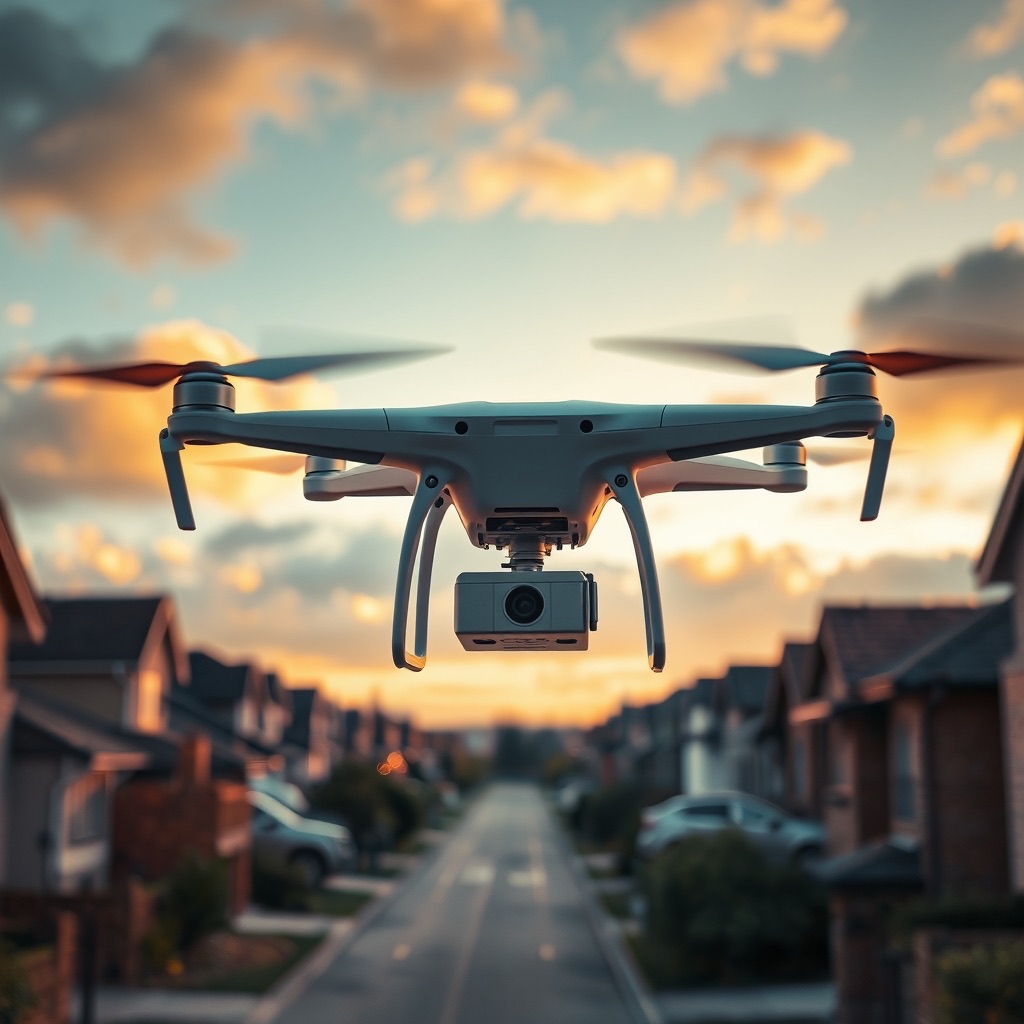
Drone delivery spent most of the 2010s as an announcement sport. Every six months brought a splashy press release, a carefully staged demo video, and a projected launch date that quietly slipped. In 2026, that era is over. Amazon Prime Air, Google Wing, and Zipline are now collectively completing several million deliveries per year across the United States, Australia, Ghana, Rwanda, and parts of Europe. The gap between promise and operational reality has finally closed — not because of a single breakthrough, but because a cluster of incremental improvements in battery energy density, onboard autonomy, airspace management, and regulatory clarity all matured at roughly the same time.
The Operational Numbers That Matter
Wing, Alphabets drone delivery subsidiary, surpassed 350,000 commercial deliveries globally in 2024 and accelerated sharply in 2025, crossing the one-million cumulative mark in the first quarter. Its primary markets are the Dallas-Fort Worth metro in Texas and the Logan area of Brisbane, Australia, where it operates through partnerships with retailers including Walgreens, Lowes, and local grocery chains. Wings fleet currently averages a delivery time of under 12 minutes from order placement to drop — a figure that makes even the fastest gig-economy couriers look slow for sub-5-pound packages.
Amazon Prime Air moved more cautiously but at larger eventual scale. After receiving Federal Aviation Administration (FAA) Part 135 air carrier certification in 2020 and spending years in limited trials in Lockeford, California and College Station, Texas, Amazon expanded Prime Air service to Phoenix, Arizona and parts of Italy and the UK in late 2024. Internal Amazon figures cited in its 2025 shareholder letter indicate the program completed over 500,000 deliveries in the U.S. alone during calendar year 2025, with a target of 500 million annual deliveries globally by the end of the decade.
Zipline operates on a different model but at the largest humanitarian and commercial scale of the three. Founded in 2014, Zipline pioneered fixed-wing drone delivery in Rwanda starting in 2016, using catapult-launched aircraft to deliver blood, vaccines, and medical supplies to hospitals across difficult terrain. By 2025, Zipline had completed over 1 million medical deliveries in Africa and expanded into commercial retail delivery in the U.S. through its Platform 2 Zip system — a hovering delivery drone that lowers packages on a tether from 300 feet, capable of serving customers in standard suburban yards. Zipline now operates in Ghana, Ivory Coast, Nigeria, Kenya, Japan, and multiple U.S. states, with a fleet executing roughly 600 deliveries per day per hub.
What Changed: Battery, Navigation, and the BVLOS Unlock
Three technical factors made commercial-scale drone delivery viable in 2025 that were not reliably achievable in 2020.
Battery Energy Density
The limiting factor for delivery drones has never been flight control software — its been energy storage. Lithium-ion cells in 2020 delivered around 250-270 Wh/kg. By 2025, production-grade cells optimized for discharge cycles in drone applications routinely exceed 300 Wh/kg, with some suppliers shipping at 320 Wh/kg. That improvement — roughly 20% over five years — extends practical range from 10-12 km round-trip to 18-22 km, enough to serve a meaningful suburban catchment area from a single hub. Amazons MK30 drone, introduced in late 2024, weighs 25% less than its predecessor while carrying the same 5-pound payload limit, directly because of cell improvements combined with composite airframe redesigns.
Onboard Autonomy and Detect-and-Avoid
Beyond Visual Line of Sight (BVLOS) operations — flying drones further than a human operator can see — was the key regulatory unlock. The FAA requires any BVLOS operator to demonstrate reliable detect-and-avoid (DAA) capability, meaning the drone must autonomously identify and maneuver around other aircraft, birds, and obstacles without human intervention. Wings DAA system, which combines stereo cameras, acoustic sensors, and radar, demonstrated a false-negative rate below 0.001% in FAA-reviewed testing in 2023, clearing the path for its Texas BVLOS waiver. Amazons MK30 uses a similar multi-sensor fusion approach with onboard neural inference running at 30Hz. The real breakthrough was not any single sensor but the integration of real-time weather data, air traffic feeds, and obstacle maps into a unified flight management layer that makes go/no-go decisions autonomously.
Regulatory Framework: BVLOS Rulemaking
The FAA published its final BVLOS rulemaking framework in late 2023, creating a defined pathway for operators to obtain scalable BVLOS authorizations rather than one-off waivers. This was the single most consequential policy event for the industry. Before that rule, each new geography required a bespoke waiver application that could take 18-36 months. The new framework allows operators with demonstrated safety records to apply for area-wide authorizations. Wing received its first multi-city BVLOS authorization in February 2024. Amazon followed in June 2024. Both subsequently expanded service footprints at a pace that was simply not possible under the old waiver-by-waiver regime.
The Business Model That Finally Works
Drone delivery economics are counterintuitive. The fixed cost of a drone hub — roughly 1-3 million dollars depending on capacity — looks expensive until you compare it to the operational cost of last-mile ground delivery. Amazons internal cost-per-delivery for ground logistics in suburban areas runs 8-12 dollars depending on route density. Drone delivery, once a hub is running at capacity (typically 50-100 deliveries per day per drone, per drone fleet of 10-30 units), brings that cost below 3 dollars per delivery according to figures Wing disclosed to investors in 2024.
The catch is volume. The unit economics only work above a density threshold, which is why every operator has focused on dense suburban markets first rather than rural areas (Ziplines medical model being the deliberate exception). Wing charges retail partners a delivery fee and takes a share of incremental sales; Amazon builds it into Prime membership value. Zipline in the U.S. charges consumers a flat 3-7 dollar delivery fee depending on distance.
Ziplines Platform 2 economics deserve separate attention. Unlike multirotor drones that hover near the ground, Ziplines system keeps the aircraft at 300 feet, dramatically reducing collision risk with people, pets, and property, while the tethered drop mechanism handles package placement. This architecture allows Zipline to operate at higher altitude with simpler airspace integration. Its U.S. hubs in Salt Lake City, Utah and Dublin, Ohio were profitable at the hub level within 14 months of launch — the fastest profitability milestone in the companys history.
What Drone Delivery Still Cannot Do
Commercial-scale does not mean universal coverage. All three operators are restricted to packages under 5 pounds (2.3 kg), which covers roughly 75-80% of e-commerce items by count but a much smaller percentage by revenue. Alcohol, hazardous materials, and temperature-sensitive items requiring active cooling remain excluded from most drone programs. Urban cores with dense high-rise construction pose airspace management challenges that suburban programs sidestep entirely. And consumer adoption, while growing, is still selective: a 2025 McKinsey survey found that 61% of consumers who had used drone delivery reported satisfaction scores above 8/10, but only 22% had ever tried it — awareness and availability remain the bottleneck, not the technology.
Practical Takeaways
- Wing, Amazon Prime Air, and Zipline are operating commercially today in specific geographies — if you live in Dallas-Fort Worth, Phoenix, Brisbane, or Salt Lake City, you can order drone delivery now.
- Battery improvements drove the range expansion that made the economics viable; this improvement curve has not stalled, with 350 Wh/kg cells expected in volume production by 2027.
- The FAAs 2023 BVLOS rulemaking was more important than any single hardware breakthrough — policy unlocked scale that technology alone could not.
- Hub-level profitability is achievable at 50+ deliveries per drone per day; operators who reach that density threshold have demonstrated sustainable unit economics.
- The 5-pound payload ceiling is the clearest near-term limitation; operators and regulators are working on certified pathways for heavier delivery classes, but no commercial deployments exist yet above that threshold.
- Ziplines tethered high-altitude model offers a different safety-economics tradeoff than multirotor systems — worth watching as it scales U.S. retail operations through 2026.