Direct-to-cell satellites are turning coverage gaps into a mobile platform race
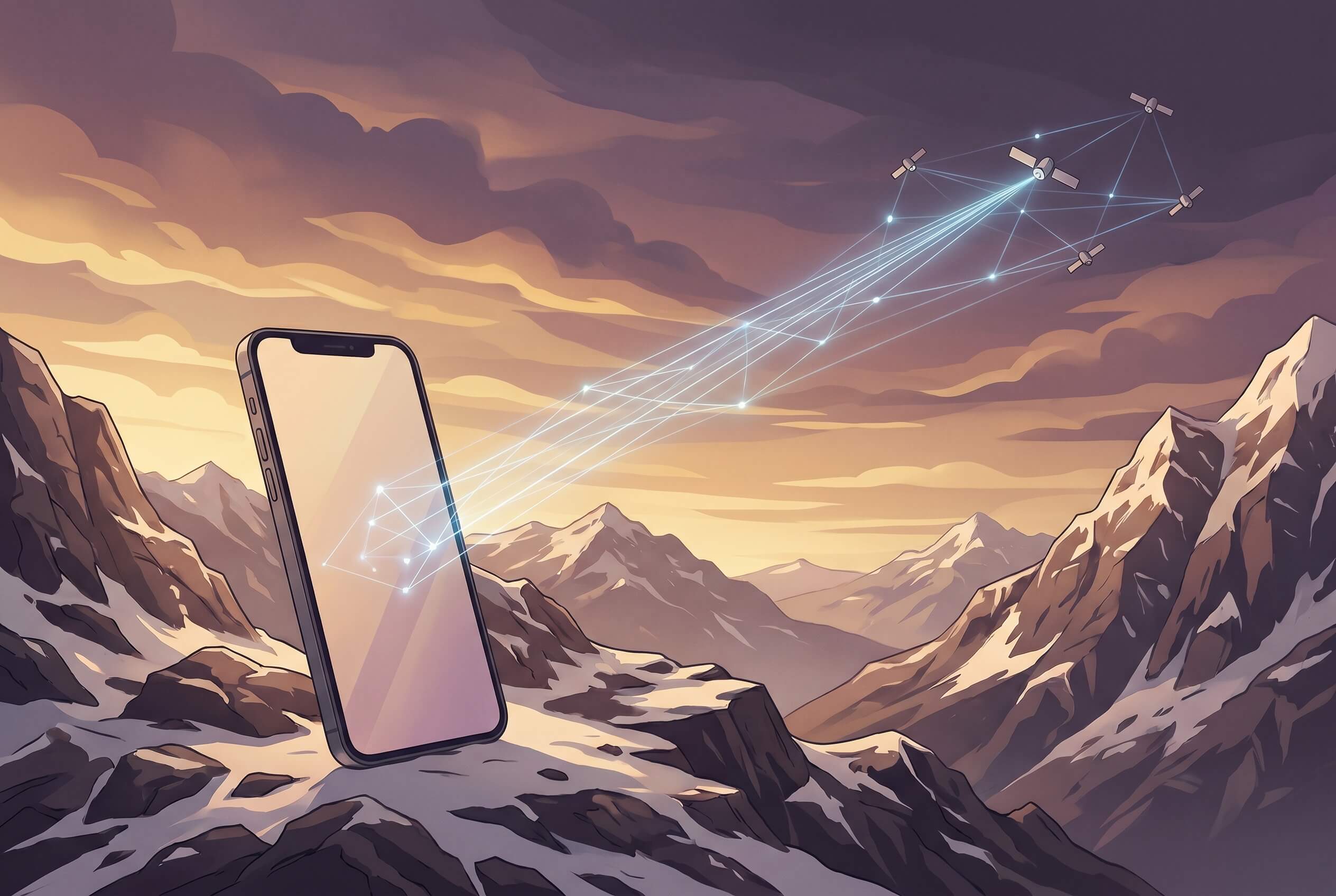
For years, satellite connectivity on phones sounded like a niche emergency feature. Useful, impressive, but ultimately peripheral to the main mobile market. That framing is getting outdated fast. Direct-to-cell networks are still early, still technically constrained, and still unevenly available, yet they are already becoming strategically important. The reason is simple. Once a phone can connect beyond the reach of terrestrial towers, coverage stops being just a tower-density problem and starts becoming a platform contest between carriers, satellite operators, operating-system vendors, and spectrum owners.
The technology is not mature enough yet to replace conventional cellular networks, and nobody serious claims otherwise. Most current services are focused on messaging and light data. Latency, throughput, device compatibility, regulatory approvals, and business-model questions all remain real constraints. But early traction matters because it shows the market is no longer hypothetical. Ookla said global direct-to-device connections in its measurements grew about 24.5 percent between July 2025 and March 2026, with the United States accounting for 45.9 percent of global samples in March 2026. That is still tiny relative to the overall mobile base, but it is large enough to reveal where the market may go next.
Why carriers suddenly care about dead zones again
The old mobile logic treated dead zones as an unfortunate but accepted part of national coverage maps. Rural mountains, remote highways, oceans, and wilderness areas were expensive to serve with conventional infrastructure, and the business case was often weak. Direct-to-cell changes that equation because it offers a way to fill at least some of those gaps without building a full terrestrial footprint in every hard location. That is especially attractive to carriers that want a broader coverage story without the capital intensity of additional towers.
It also changes customer expectations. Once users see satellite texting or limited data as a built-in capability instead of a specialist gadget feature, they may start treating terrestrial dead zones less like an inevitability and more like a solvable product flaw. That raises the strategic value of partnerships between carriers and satellite operators. In effect, direct-to-cell can turn coverage quality into a software-and-spectrum layer rather than a purely physical network problem.
The fight is not only about connectivity, it is about control
The most interesting part of this market is that several different business architectures are competing at once. Apple helped legitimize the category through Globalstar-backed satellite messaging on iPhone, but that approach ties the experience closely to a device ecosystem and a managed emergency-first use case. Starlink Mobile, Lynk, Skylo, AST SpaceMobile, and others are exploring different mixes of carrier partnerships, spectrum access, and device compatibility. Some models aim to work across existing smartphones with minimal hardware changes. Others rely on deeper device integration or more tightly controlled service layers.
That distinction matters. The company that owns the user relationship, the billing flow, and the service defaults may end up with more leverage than the company that merely provides orbital capacity. In other words, this looks less like a simple wholesale connectivity market and more like a stack battle. Satellite operators want carrier deals. Carriers want broader coverage with minimal churn risk. Platform companies want their devices to feel safer and more capable. Regulators want assurance that spectrum and interference problems remain manageable. Everyone wants a piece of the same value chain.
Performance is still the reality check
It is important not to overstate where the technology stands right now. RootMetrics testing cited by Ookla on Starlink’s direct-to-device service for T-Mobile in rural New York showed a 60 percent success rate for send-and-receive text tests in a moving car, with an average successful round-trip time of 1 minute and 17 seconds. That is a useful proof point, but it is not mainstream mobile quality. This is still a fragile layer compared with ordinary cellular service, especially when motion, visibility, congestion, or limited service design get in the way.
That gap between promise and present performance is exactly why the next phase matters. More satellites, more optimized protocols, tighter integration with terrestrial carriers, and better spectrum arrangements will determine whether direct-to-cell remains a premium safety feature or becomes a normal part of mobile expectations. The winning platforms will be the ones that make the handoff between terrestrial and non-terrestrial networks feel less exceptional and more invisible.
Space is becoming part of telecom infrastructure
There is a broader industry implication here. Space companies have long pitched connectivity as a giant addressable market, but direct-to-cell takes them into a different competitive arena than traditional satellite broadband. Instead of selling a dedicated dish or enterprise link, they are trying to insert orbital infrastructure into the everyday phone experience. That changes procurement, partnership structure, and regulatory politics. It also makes space infrastructure relevant to mainstream consumer telecom strategy, not just to specialized remote-access markets.
This is why even small usage numbers matter. A fraction of one percent of users connecting to satellites is enough to tell carriers, handset makers, and investors that behavior exists, demand exists, and brand value exists. Once those signals are visible, the competitive response accelerates even before the technology is fully mature.
What could slow the market down
Regulation is still a serious brake. Non-terrestrial mobile service raises cross-border coordination questions, spectrum-interference risks, and concerns from astronomy and incumbent operators. Device support also remains uneven, and economics are not settled. Carriers may struggle to package the feature in a way that feels valuable without turning it into a costly premium add-on that few users pay for. If the service remains slow or inconsistent, consumers may like the idea more than the actual experience.
There is also a subtle market risk. If each ecosystem fragments the feature into its own narrow implementation, users could end up with a confusing landscape of which phones, regions, carriers, and message types work under which sky conditions. That would slow adoption by making the capability feel unreliable or overly conditional.
The practical takeaway
Direct-to-cell satellite connectivity matters now not because it is already a full mobile substitute, but because it changes who gets to define the future edge of coverage. The companies building this layer are not merely filling blank spots on a map. They are deciding whether non-terrestrial connectivity becomes an operator feature, a handset moat, a wholesale utility, or a new hybrid platform shared across all three.
The likely end state is not that towers disappear. It is that mobile coverage becomes a blended system where terrestrial and orbital networks work together more often than users realize. When that happens, the most important competitive question will not be who launched first. It will be who turned occasional satellite access into a dependable part of the mobile experience.