Commercial Space Stations Are Racing to Replace the ISS Before It Deorbits in 2031
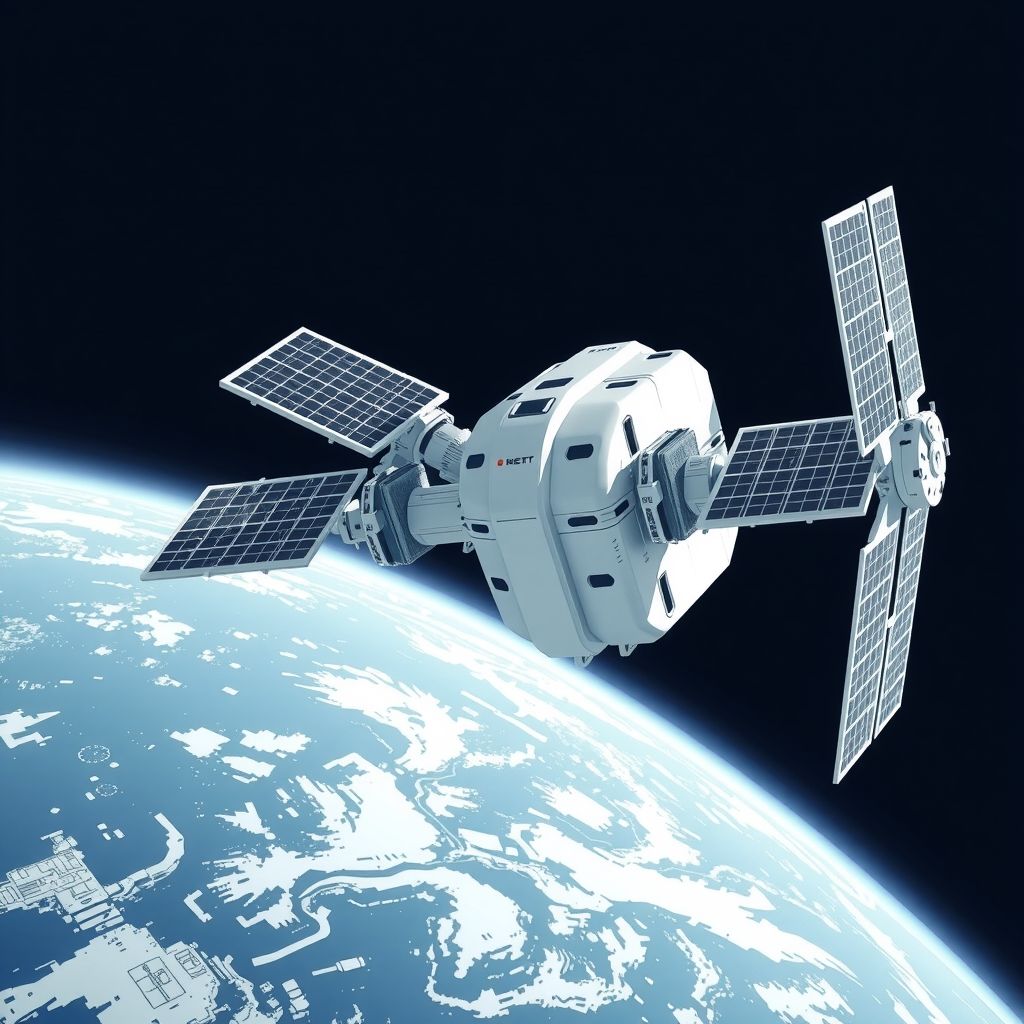
NASA and its partner agencies have committed to deorbiting the International Space Station around 2030-2031, using a SpaceX-built deorbit vehicle contracted specifically for the job. That date is not a rumor or a budget threat — it is official agency planning, driven by a station that has been continuously occupied since 2000 and is reaching the end of its structurally certified life. What makes this moment unusual is what NASA is doing instead of building a direct successor: rather than designing and operating the next station itself, the agency is funding multiple competing commercial companies through its Commercial LEO Destinations program and betting that at least one of them produces a station NASA can simply buy access to, the same way it buys cargo and crew transport from SpaceX today.
Why NASA Is Not Building the Next One Itself
The ISS cost an estimated $150 billion to build and has run on multibillion-dollar annual operating budgets for two decades, funded primarily by NASA with international partner contributions. Congress and the agency both want low-Earth-orbit research capability to continue without that cost structure, and the commercial crew and cargo programs gave NASA a template that worked: fund multiple competitors through development, let market competition handle operating costs, and buy services rather than own hardware. Applying that model to a full space station is a bigger bet than a cargo capsule, because unlike cargo runs to an already-built destination, a private company here has to build the entire habitat, prove it is safe for long-duration crewed stays, and find enough non-NASA revenue to keep the lights on — all before the ISS actually comes down.
Who Is Actually Building Something
Axiom Space has the most advanced plan: the company is attaching its first module directly to the ISS before the station's retirement, then detaching that module to operate independently once ISS comes down, which sidesteps the hardest part of the problem by not needing a brand-new standalone station on day one. Starlab, a joint venture originally formed by Voyager Space and Airbus with Northrop Grumman and others involved at various points, is targeting a single-launch monolithic station rather than Axiom's incremental module approach. Blue Origin's Orbital Reef concept, developed with Sierra Space, has positioned itself as a mixed-use «business park» in orbit aimed at both research customers and commercial tenants. Vast, a newer and smaller entrant, has pursued a different strategy entirely — building a small single-module station, Haven-1, to fly and generate revenue sooner rather than waiting for a larger design to be fully funded. No company in this group has flown a crewed habitat module yet; all of this competition is currently happening on the ground.
The Business Model Problem Nobody Has Solved
NASA's anchor tenancy — the agency committing to buy a guaranteed amount of crew time and research capacity — is the revenue floor every one of these companies is counting on, and it is explicitly structured as a bridge rather than a permanent subsidy; NASA has said it expects to be one customer among several, not the primary funder indefinitely. That leaves each company needing to find paying customers beyond NASA: other national space agencies, pharmaceutical and materials companies interested in microgravity manufacturing research, and a still-nascent space tourism market. None of those revenue streams has been proven at the scale needed to cover a station's operating costs on its own, and the ISS itself never had to answer that question because it was built and run as a government program from the start. A private station that cannot find enough non-NASA revenue within a few years of flying is a company burning investor capital against a shrinking runway, not a sustainable piece of orbital infrastructure.
The Timeline Risk Is the Part Getting Less Attention
The quieter risk is a gap: if the ISS deorbits on schedule and no commercial successor is flying and crew-rated yet, the United States has no continuous human presence in low-Earth orbit for an unknown stretch of time, while China's Tiangong station continues operating on its own schedule. NASA has flagged this gap risk explicitly in its own planning documents, which is part of why the agency is funding several competitors in parallel rather than betting the whole program on one company's schedule holding. Space hardware development has a long history of slipping years past initial target dates, and a crewed orbital habitat is a harder certification problem than a cargo capsule or even a crew capsule, because it has to sustain life support, radiation shielding, and structural integrity continuously for years rather than for the length of a single mission.
What to Watch Between Now and 2031
Three milestones will tell you more than any press release. First, whether Axiom actually attaches and operates its first module on the ISS on the timeline it has described — that is the lowest-risk path in the field and the best early signal for whether the whole commercial-station model can work on schedule. Second, whether any of these companies announces a paying non-NASA customer at a scale that is actually disclosed, rather than a general partnership announcement with no committed revenue attached. Third, whether NASA's own statements about the ISS retirement date start to soften — a slip in the deorbit schedule would be the clearest signal that the commercial pipeline is not ready, and would be far more informative than anything a company says about its own progress.