Cloud Gaming on Mobile Has Finally Caught Up
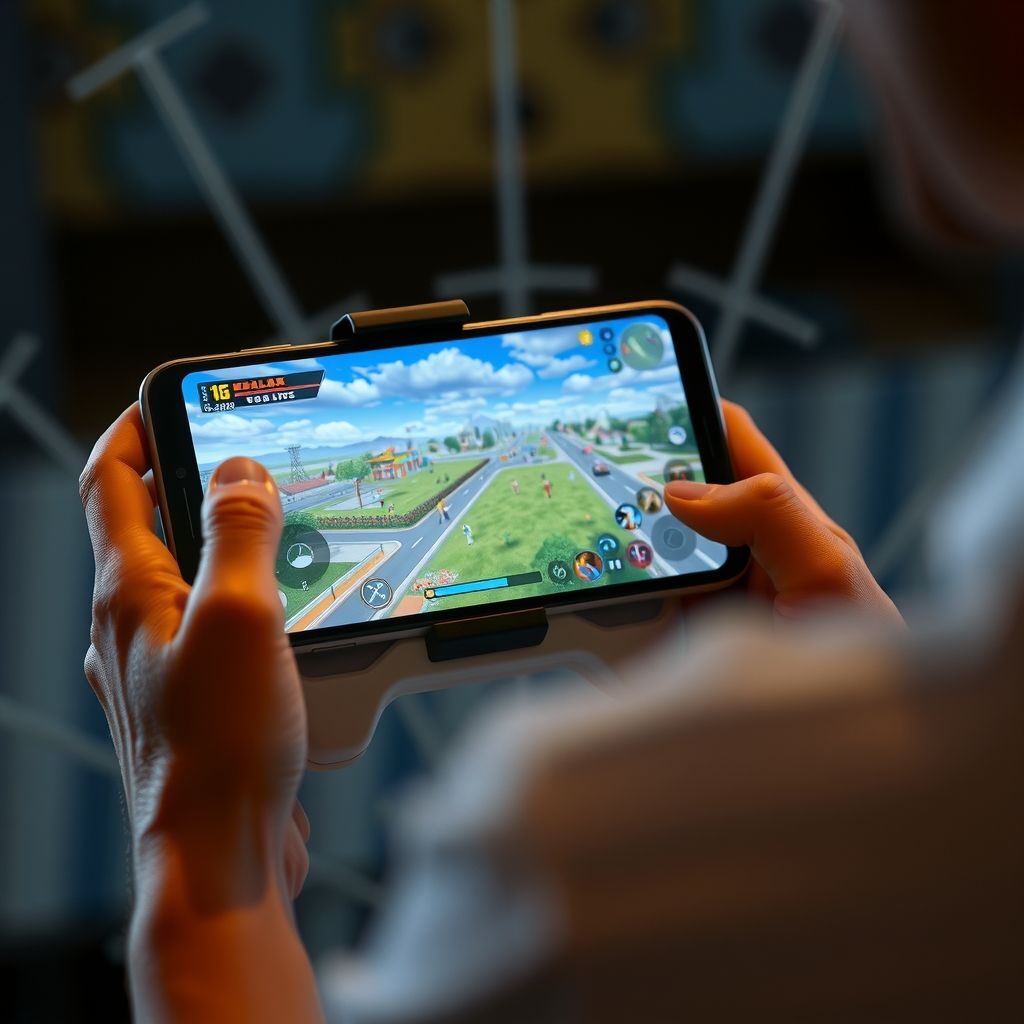
5G and Server Infrastructure Have Changed Everything
For years, cloud gaming on mobile was a promise that never quite delivered. Lag spikes, blurry video compression, and unreliable connections turned what should have been a revolution into a frustration. That era is over. In 2026, sub-30ms round-trip latency on 5G mmWave connections is achievable in major metro areas, and the server infrastructure behind Xbox Cloud Gaming, NVIDIA GeForce Now, and Sony's streaming services has matured enough to make mobile cloud gaming a legitimate primary gaming platform — not just a fallback when your console isn't nearby.
The math that changed everything: 5G mmWave delivers median latencies of 8–12ms between your phone and the nearest cell tower. Combined with edge computing nodes that Microsoft, NVIDIA, and Sony have deployed closer to population centers, total round-trip latency from controller input to rendered frame now reliably sits below 30ms in covered areas. That's the threshold where human perception stops registering input lag as a problem.
Xbox Cloud Gaming in 2026
Microsoft's Xbox Cloud Gaming, included with Game Pass Ultimate at $19.99/month, now streams over 500 titles including day-one releases across Xbox and PC Game Pass. The library spans everything from AAA shooters like Halo and Forza to indie darlings, all without downloading anything to your device.
Controller support is seamless on both iOS and Android. The Backbone One plugs directly into your phone's USB-C or Lightning port, and Xbox's own mobile controller pairs via Bluetooth with less than 5ms additional latency. On a 5G mmWave connection, Xbox Cloud Gaming runs at 1080p/60fps with adaptive bitrate that rarely drops below 20 Mbps. On sub-6GHz 5G or strong WiFi, you'll see occasional resolution drops to 720p during congestion, but frame rates stay consistent. Microsoft's server-side xCloud infrastructure now uses custom AMD chips with dedicated hardware decode acceleration, which cut encoding latency by roughly 40% compared to 2023 configurations.
On WiFi 6E at home, performance is often indistinguishable from 5G mmWave because both can saturate the required bandwidth. The practical difference shows in congested environments — a stadium, a city commute — where 5G mmWave's dedicated spectrum gives it a consistent edge over shared WiFi.
NVIDIA GeForce Now: RTX Streaming to Your Pocket
GeForce Now's architecture is different from Xbox Cloud: rather than running a curated library, it streams games you already own on Steam, Epic, or other PC storefronts. In 2026, the service has three tiers: Free (1-hour sessions, 1080p/60fps), Priority ($9.99/month, 6-hour sessions, 1080p/60fps, RTX On), and Ultimate ($19.99/month, 8-hour sessions, 4K/120fps on supported titles, RTX 4080-class hardware, AV1 encoding).
The Ultimate tier's AV1 encoding is the headline feature for mobile. AV1 delivers equivalent visual quality to H.265 at roughly 30% lower bitrate — critical when you're on a cellular connection with data caps. On an Android device with an AV1-capable hardware decoder (most flagship phones since 2024), the difference versus H.265 Priority tier is visible: less color banding, sharper fine details, and fewer compression artifacts during fast motion.
Mobile-specific experience on GeForce Now has improved substantially with the 2025 app refresh. Touch controls are available for supported titles, though they're secondary to the primary use case of pairing a physical controller. Resolution on mobile defaults to 1080p even on Ultimate tier, since most phone screens cap at 1440p and 4K streaming on a 6-inch display wastes bandwidth.
Sony's Fragmented Approach: Remote Play, Portal, and Cloud
Sony's strategy in 2026 remains the most confusing of the three. PlayStation Remote Play streams your PS5 at home over the internet — free with any PS5, works on Android and iOS, but requires your console to be running. Latency depends entirely on your home internet upload speed and the cellular connection at your destination. On good conditions, it's excellent. On a train, it's unusable.
PlayStation Portal ($199) is not a standalone device — it requires your PS5 and Remote Play. It's a dedicated screen for playing in another room, not a cloud gaming device. It solves a different problem.
Sony's actual cloud streaming service, included in PlayStation Plus Premium ($17.99/month), streams PS4 and select PS5 titles from Sony's servers — no home console required. The library is smaller than Xbox's cloud catalog, the streaming quality caps at 1080p/60fps with H.265, and Sony has been slower to deploy edge nodes. Latency on PS Plus Premium cloud streaming averages 35–45ms in the US, which is playable but noticeably behind Microsoft's numbers. Sony has not announced AV1 encoding support for cloud streaming as of mid-2026.
The Latency Math: Why 30ms Works and 60ms Doesn't
Human perception research consistently shows that input-to-display latency below 30ms feels instantaneous for most game interactions. Between 30–60ms, experienced players notice a "floaty" feeling, particularly in games requiring precise timing. Above 60ms, the disconnect between button press and on-screen response becomes intrusive enough to break immersion and reduce performance in reflex-dependent games.
Codec efficiency directly impacts perceived latency. At the same bitrate, AV1 encodes faster and produces fewer motion artifacts than H.265, which in turn beats H.264 significantly. The encoder latency difference between H.264 and AV1 hardware encoders is now under 2ms, making the choice almost entirely about compression quality and bandwidth efficiency rather than speed tradeoffs.
Frame interpolation — generating intermediate frames between actual rendered frames — is now deployed by both Xbox and NVIDIA to smooth motion during brief latency spikes. When the server-to-client path spikes from 20ms to 45ms for 100 milliseconds, interpolation masks the spike with synthesized frames. The technique adds no perceptible input lag because it operates on the display path, not the input path.
5G vs WiFi: When Each Is Better for Cloud Gaming
The choice isn't binary. 5G mmWave (the high-frequency band found in dense urban areas) delivers the lowest latency — typically 8–15ms to the tower — but has limited range and doesn't penetrate buildings well. It's the best option in outdoor urban environments, stadiums, and transit hubs with deployed mmWave infrastructure.
Sub-6GHz 5G covers broader areas with good building penetration but higher tower latency — typically 20–35ms. Combined with server-to-client routing, total latency sits in the 35–55ms range, which works for most games but shows its limits in fast-action titles.
WiFi 6E at home on a fiber connection beats both cellular options for raw performance: latencies of 5–15ms to cloud servers are achievable when your ISP's routing is clean. The advantage disappears on congested networks or with higher-latency ISP interconnects. Hotel and public WiFi remains universally worse than sub-6GHz 5G for gaming due to network congestion and security overhead.
Controller Options in 2026
Physical controllers have become the default cloud gaming accessory. The three dominant options each target different use cases:
- Backbone One ($99, USB-C and Lightning versions): Clips onto your phone directly, console-quality buttons and analog sticks, works with iOS and Android, includes Backbone app with game launcher integration. The 2025 revision added rumble motors.
- Razer Kishi Ultra ($149, USB-C): Larger form factor with hall-effect analog sticks (eliminates stick drift permanently), pass-through charging, programmable buttons. Better for longer sessions where ergonomics matter more than portability.
- Xbox Mobile Controller ($79, Bluetooth): Microsoft's dedicated mobile controller released in 2025, designed specifically for cloud gaming. Native latency optimization in Xbox Cloud Gaming app, foldable design for travel, 40-hour battery life.
All three pair with any cloud gaming service, not just their branded platform. The Backbone One's direct connection eliminates Bluetooth latency entirely, giving it an edge in latency-sensitive titles.
Game Genres: What Actually Works
Cloud gaming's latency floor defines which genres are viable. In 2026, turn-based strategy, RPGs, card games, puzzle games, and narrative adventures work perfectly on cloud streaming — they have no reaction-time requirements, so even 50ms latency is invisible.
Open-world action games, platformers, and racing games are now genuinely playable on good connections. The 30ms threshold is met consistently enough on 5G mmWave and home fiber that casual to intermediate players won't notice the difference from local play.
Competitive FPS, fighting games, and rhythm games remain the weak point. Tournament-level FPS players can detect latency differences below 16ms — cloud gaming's 30ms floor is a ceiling on competitive performance. Fighting game players lose frame-perfect input windows entirely above 33ms (at 30fps). These genres work for casual play on cloud, but competitive players should not switch from local hardware.
Battery Drain: The Hidden Advantage
Cloud gaming's most underappreciated benefit on mobile is battery efficiency. Streaming a game requires decoding a video stream — GPU-intensive but far lighter than running game logic and rendering locally. Measured across flagship Android and iOS devices in 2025–2026, cloud gaming drains 15–20% battery per hour versus 30–40% for locally-rendered mobile games of equivalent visual complexity. A two-hour cloud gaming session consumes roughly what one hour of local gaming would.
The tradeoff is network radio power consumption. 5G mmWave specifically draws more power than sub-6GHz radios — expect to be at the higher end of the 15–20% range on mmWave. WiFi 6E is the most battery-efficient option when available.
The Practical Setup Guide for 2026
- Xbox Game Pass player: Game Pass Ultimate ($19.99/month) + Backbone One ($99). Works on any device with a browser as backup. Best all-around value for the library size.
- PC game library owner: GeForce Now Ultimate ($19.99/month) + Razer Kishi Ultra ($149). Stream what you already own at the highest quality.
- PlayStation ecosystem player: PS Plus Premium ($17.99/month) + any Bluetooth controller. Manage expectations on latency versus Xbox — use it for PS4 exclusives and single-player games, not fast-action multiplayer.
- Connection priority: Home fiber + WiFi 6E > 5G mmWave outdoor > sub-6GHz 5G > hotel/public WiFi. Never expect hotel WiFi to deliver a good cloud gaming experience.
- Genre matching: Save competitive shooters and fighting games for local hardware. Cloud gaming in 2026 is genuinely excellent for everything else.