China and Japan reached two different asteroids within a day of each other
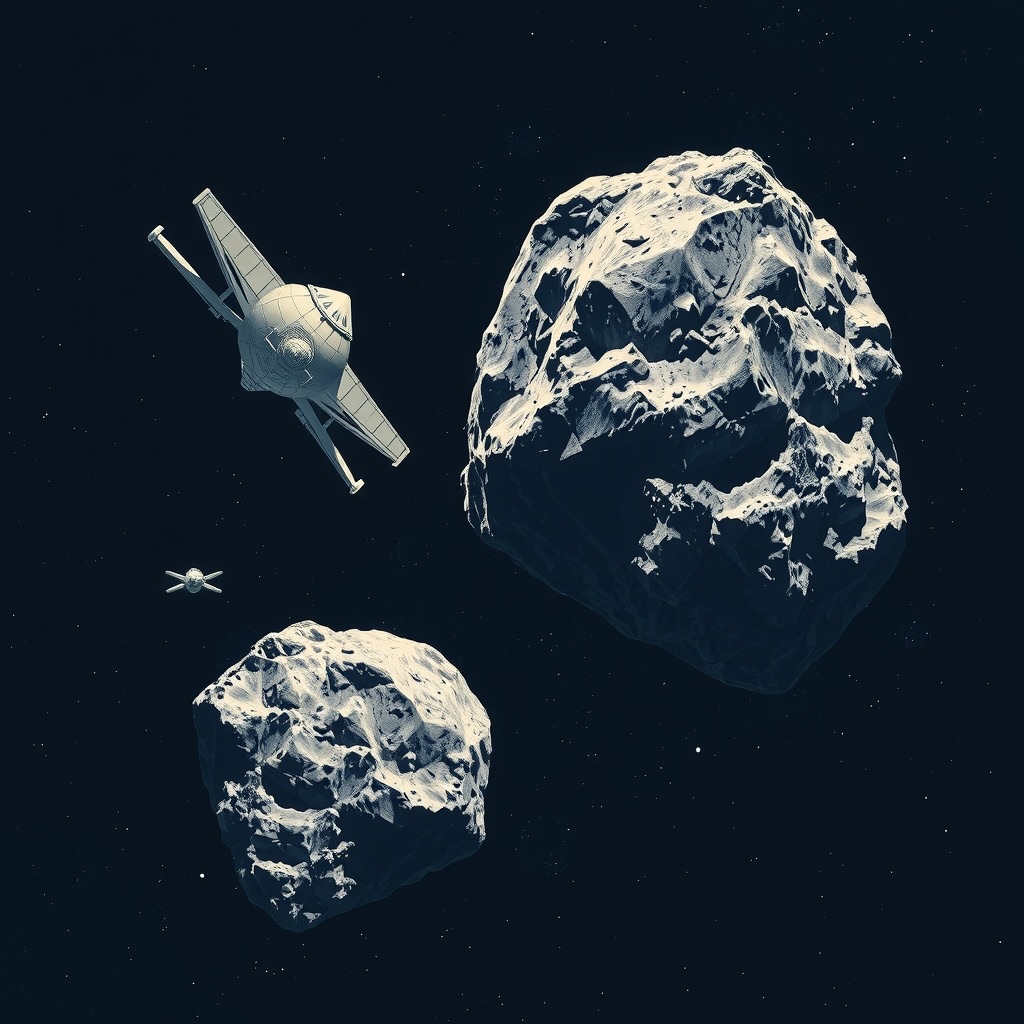
In the first week of July 2026, two space agencies reached two different near-Earth asteroids within days of each other — a coincidence of timing that let scientists compare fresh close-up data on two very different small bodies at once. China's Tianwen-2 arrived at the quasi-moon Kamoʻoalewa on July 6, and Japan's Hayabusa2 flew past the asteroid Torifune on July 5. Both missions delivered surprises that upend what ground-based telescopes had predicted.
Tianwen-2's year-long chase pays off
Tianwen-2 launched on May 29, 2025, and spent roughly 400 days covering nearly a billion kilometers to reach 469219 Kamoʻoalewa — Earth's smallest known quasi-satellite, an asteroid that orbits the Sun in a pattern gravitationally linked to Earth without technically orbiting our planet. The China National Space Administration released the first close-up image on July 6, and it immediately overturned expectations about the object's size.
Ground-based observations had estimated Kamoʻoalewa's diameter at somewhere between 40 and 100 meters. The CNSA's image instead shows a body just over 20 meters across — startlingly close to an 18-meter estimate published days earlier by researchers using James Webb Space Telescope data, a paper still under peer review at the time. The convergence between JWST's remote measurement and Tianwen-2's direct imaging is itself a validation of infrared asteroid-sizing techniques that will matter for future planetary defense surveys.
Tianwen-2's mission now moves into its most delicate phase: collecting between 20 and 100 milligrams of surface material. Given the asteroid's confirmed small size, the spacecraft's touch-and-go sampling maneuver will require unusually precise navigation — a small target leaves little margin for error. Once samples are secured, Tianwen-2 will depart Kamoʻoalewa and fly by Earth in November 2027 to release a return capsule near the Jiuquan Satellite Launch Center, while the main spacecraft continues on to a second target, comet 311P/PANSTARRS.
Hayabusa2 finds a asteroid made of two pieces
A day earlier, on July 5, Japan's Hayabusa2 — the same spacecraft that sampled asteroid Ryugu in 2018 and delivered those samples to Earth in December 2020 — flew within 10 kilometers of asteroid Torifune. This was a flyby only, not a sampling attempt, since Hayabusa2 expended its sample-return hardware at Ryugu. But the imaging revealed something ground telescopes couldn't resolve: Torifune is a contact binary, meaning it formed from two separate rubble-pile bodies that drifted together and stuck, rather than a single solid object.
Contact binaries are common among small asteroids — roughly 15% of near-Earth asteroids larger than 200 meters are estimated to have this shape — but confirming one requires close imaging that only a flyby or orbiter can provide. Torifune's confirmed shape adds to a small but growing catalog of directly imaged contact binaries, refining models of how rubble-pile asteroids accrete and hold together under weak self-gravity.
Why two missions in one week matters
Sample-return and flyby missions to near-Earth objects are expensive and rare enough that any given week normally has zero, not two. Having Tianwen-2 and Hayabusa2 return data almost simultaneously gives researchers two real-world calibration points, in the same observational window, for testing how well ground- and space-based telescope estimates of asteroid size and shape hold up against direct spacecraft imaging.
Both results point the same direction: telescopic size estimates for small, faint near-Earth objects are running large. Kamoʻoalewa came in roughly half the size ground observations suggested. That's directly relevant to planetary defense — sizing errors on genuinely hazardous asteroids affect impact-energy estimates and deflection mission planning, and JWST-based methods that matched Tianwen-2's imaging closely just got a meaningful real-world validation.
What to watch next
Tianwen-2's sample collection attempt at Kamoʻoalewa is the next milestone — watch for CNSA updates on the touch-and-go maneuver given the asteroid's smaller-than-expected size. Hayabusa2 continues on an extended mission trajectory toward asteroid 1998 KY26, expected around 2031. For planetary defense researchers, the Kamoʻoalewa size discrepancy is worth tracking as a case study in how much to trust remote sizing methods for the thousands of near-Earth objects too small or faint for a dedicated mission.