Carbon Robotics’ laser weeders prove farm automation works, but not the way the marketing claims
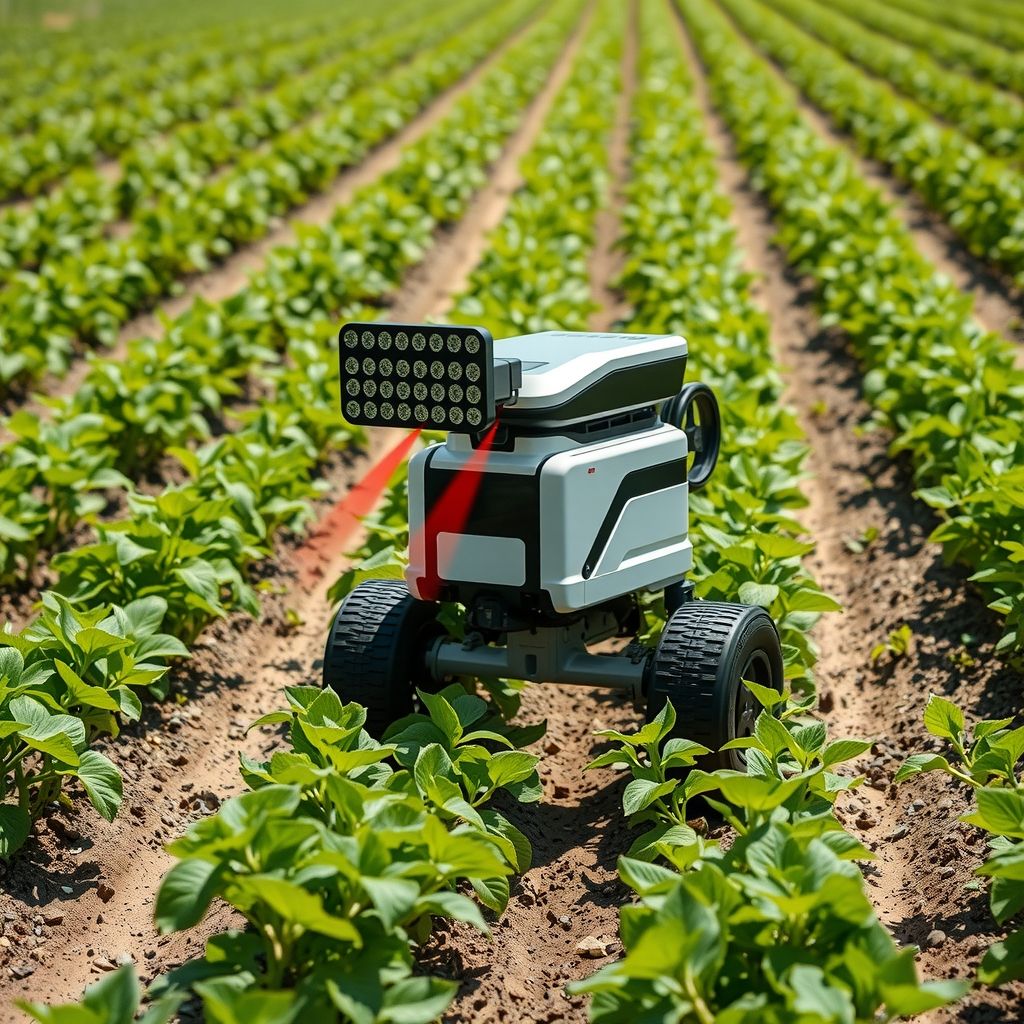
Carbon Robotics says its LaserWeeder fleet has eliminated more than 35 billion weeds across operations in 15 countries, and the company's G2 model, introduced in February 2025, is now running on more than 100 farms. Fiscal 2026 revenue reportedly topped $100 million, and the company is reportedly weighing an IPO. By any measure, this is a real, commercially viable automation business — not a lab demo. But a June 2026 survey of German arable farmers complicates the story Silicon Valley likes to tell about robots solving the farm labor crisis: most respondents said they adopted robots to stretch their existing workforce further, not to replace it.
That distinction matters more than it sounds. The pitch behind agricultural robotics funding rounds has consistently been framed around labor replacement: fewer workers needed, lower costs, a fix for chronic shortages that some estimates put at over a million unfilled US farm jobs in a given season. The actual deployment pattern looks different. Robots are concentrating on narrow, high-value, physically repetitive tasks — weeding, selective harvesting, field transport — while the broader farm labor force keeps doing everything else.
LaserWeeder is the clearest example of why this pattern holds. The machine identifies weeds with computer vision and kills them with a targeted laser pulse, avoiding the crop itself. That's a task robots are structurally good at: high repetition, a narrow decision space (weed or not-weed), and a clear, measurable output. Early units could cover 15 to 20 acres a day; the newer 20-foot G2 chassis works at roughly 1.5 to 3 acres per hour, a meaningful throughput gain but still a machine sized for operations in the tens of thousands of acres, not a replacement for a whole farm crew.
Compare that to harvesting delicate crops like strawberries or table grapes, where machines still lag far behind human dexterity, or to the judgment calls a farm foreman makes about irrigation timing, disease spotting, or equipment triage. Those tasks resist automation precisely because they require exactly the kind of flexible, context-dependent reasoning that laser-guided weed elimination doesn't. Naio's weeding robots (Ted, Oz, Dino) and transport robots like Burro follow the same pattern: each is built around one well-defined, physically repetitive job, not a general-purpose farmhand.
This is also why the market-size numbers for agricultural robotics are so inconsistent. One widely cited estimate puts the global market at $25.85 billion in 2026 growing at a 21.8% CAGR; another puts it closer to $9.5 billion growing at 47% year-over-year. The gap isn't just sloppy research — it reflects real disagreement about what counts as an "agricultural robot." Include GPS-guided tractors and precision-spray drones, and the market balloons. Restrict it to robots making autonomous task-level decisions, like LaserWeeder, and it shrinks considerably.
John Deere's own product line illustrates the same split. Its fully autonomous 8R tractor, unveiled for broad commercial availability in 2022, handles geofenced tillage with six pairs of stereo cameras for obstacle detection — another narrow, repetitive task (plow this defined area) rather than general farm management. Deere expanded the approach to the larger 9RX 830 for large-scale tillage, but the pattern is consistent: autonomy scales where the task is structured and the environment is relatively predictable, not where it requires the kind of judgment a human operator brings to unpredictable field conditions.
None of this means agricultural robotics is overhyped as a category. Carbon Robotics' revenue and acreage numbers are real, and herbicide-resistant weeds are a growing agronomic problem that laser weeding addresses without chemical inputs — a genuine selling point beyond labor economics. The overhype is specifically in the labor-replacement framing. Farms adopting these robots are not laying off workers; they're reallocating a shrinking, expensive labor pool away from the most repetitive tasks and toward the judgment-intensive work machines still can't do.
For anyone evaluating agricultural automation vendors, the practical takeaway is to ask a narrower question than "can this replace labor": ask which specific task the robot targets, how repetitive and visually well-defined that task is, and whether the economics work on a per-acre or per-task basis rather than a per-worker-displaced basis. Vendors who can answer that precisely, the way Carbon Robotics can point to weeds-per-hour and acres-covered, are building real businesses. Vendors who lead with headline labor-shortage statistics are often selling a narrative the deployment data doesn't yet support.