Beyond the Hype: The Real-World Impact of Humanoid Robots in 2026's Factories
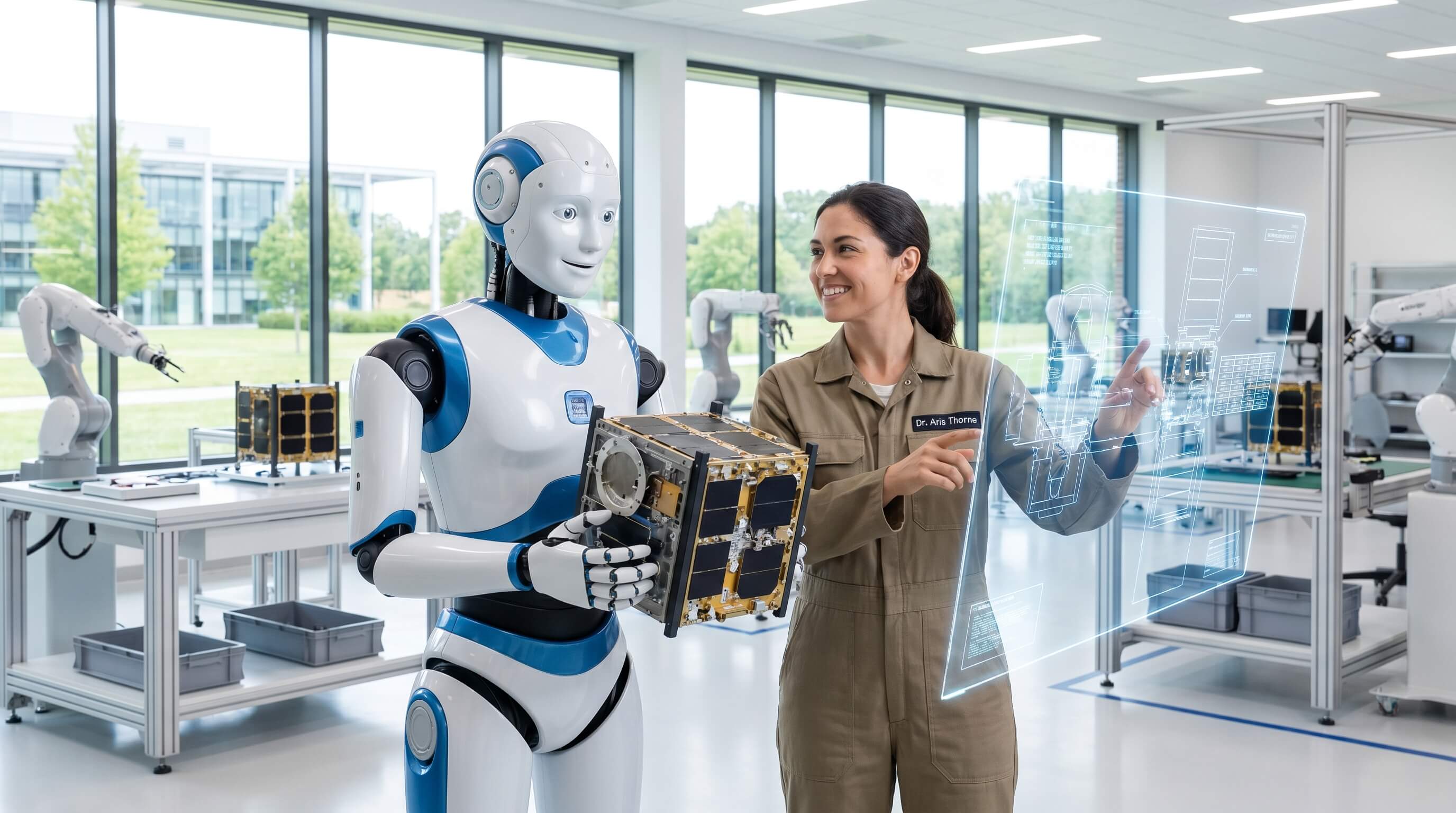
In the unending buzz around artificial intelligence, the idea of the humanoid robot has long been a staple of science fiction. For decades, it remained just that: a futuristic concept. But in 2026, the fiction is finally fading into fact. On factory floors across the globe, bipedal robots are clocking in, not as a wholesale replacement for human workers, but as a new class of flexible automation aimed at solving some of manufacturing’s most persistent challenges.
While the hype often paints a picture of autonomous androids running entire production lines, the reality is more grounded, yet no less significant. Humanoid robots are being deployed to handle the “dull, dirty, and dangerous” tasks that are difficult to automate with traditional, fixed-in-place robotics. This isn’t about replacing humans wholesale; it’s about augmenting human-centric workflows where they already exist.
The New Factory Worker: What Humanoids Are Actually Doing
So, what jobs are these new robotic colleagues taking on? The most significant applications in 2026 center on logistics and material handling. At companies like BMW and Mercedes-Benz, humanoid robots are being piloted to ferry parts and components to the assembly line. BMW’s partnership with Figure AI to deploy the Figure 02 robot in its Spartanburg, South Carolina plant is a prime example. These robots are tasked with moving bins and boxes, a physically demanding and repetitive job that is a perfect fit for a machine that can navigate spaces designed for people.
Similarly, Tesla is using its own Optimus Gen 2 robots within its Fremont factory for component delivery. Agility Robotics' Digit, one of the more commercially mature platforms, is already at work in the warehouses of GXO Logistics and Spanx, showcasing the immediate value of humanoids in logistics. These robots can pick up totes, move them across a warehouse, and place them where they need to go, all without the need for the extensive infrastructure modifications that traditional automated guided vehicles (AGVs) often require.
Beyond simply moving things, some humanoids are performing simple pick-and-place operations and assisting with quality inspection. UBTECH's Walker S robots, for instance, are being used to inspect the fit and finish of cars on the factory floor, a task that requires both mobility and a keen eye. While complex assembly is still largely the domain of human workers and specialized robotic arms, the groundwork is being laid for humanoids to take on more intricate tasks in the near future.
Why Now? The Tech Behind the Trend
The recent surge in humanoid robot deployment isn’t a coincidence. It’s the result of several key technologies converging at the right time. The most important of these is the advancement in AI, particularly in sim-to-real training pipelines. Developers can now train their robots in vast virtual environments, allowing them to accumulate millions of hours of experience in a fraction of the time it would take in the real world. This dramatically shortens the time from task conception to deployment.
Furthermore, vision-language-action (VLA) models, which borrow from the same technology that powers large language models like GPT, are giving these robots a new level of generalization. They can understand natural language commands and adapt their actions to a range of similar, but not identical, tasks without needing to be explicitly reprogrammed for every single variation. This is a crucial step toward creating truly general-purpose robots.
Finally, the cost of the sophisticated components required for a humanoid robot—high-torque actuators, force-torque sensors, and powerful onboard computers—has been steadily decreasing. This has brought the overall cost of a humanoid robot down to a point where it is becoming a viable investment for industrial applications.
Reality Check: The Hurdles Ahead
Despite the impressive progress, it’s important to maintain a realistic perspective. The year 2026 is not the year of the mass humanoid workforce. The vast majority of current deployments are pilot programs. These are tests, not full-scale rollouts. Manufacturers are still gathering data on performance, reliability, and, most importantly, safety.
One of the biggest hurdles for production line approval is the lack of published data on mean time to failure (MTTF). For a robot to be integrated into a high-stakes manufacturing environment, its reliability must be proven. Right now, most of these robots still require significant on-site engineering support to keep them running smoothly.
The dream of a "general-purpose robot you can deploy in any factory" is still on the horizon. For now, the focus is on structured tasks in controlled environments. While the humanoid form factor offers the promise of adaptability, we are still in the early days of realizing that potential.
The Road to 2030: What's Next?
The next few years will be critical in determining the trajectory of humanoid robots in manufacturing. Goldman Sachs predicts that cumulative installations will exceed 100,000 units by 2027, with growth centered on the kind of structured industrial tasks we are seeing today. As the technology matures, we can expect to see humanoids take on more complex operations, including multi-step assembly and more sophisticated pick-and-place tasks.
For now, the real-world impact of humanoid robots in 2026 is one of quiet, steady progress. They are not the science fiction fantasy of an autonomous workforce, but they are a powerful new tool for creating more efficient, flexible, and human-friendly factories. The revolution won't happen overnight, but the robots are finally here, and they're ready to get to work.