Android desktop mode is turning phones into casual PCs
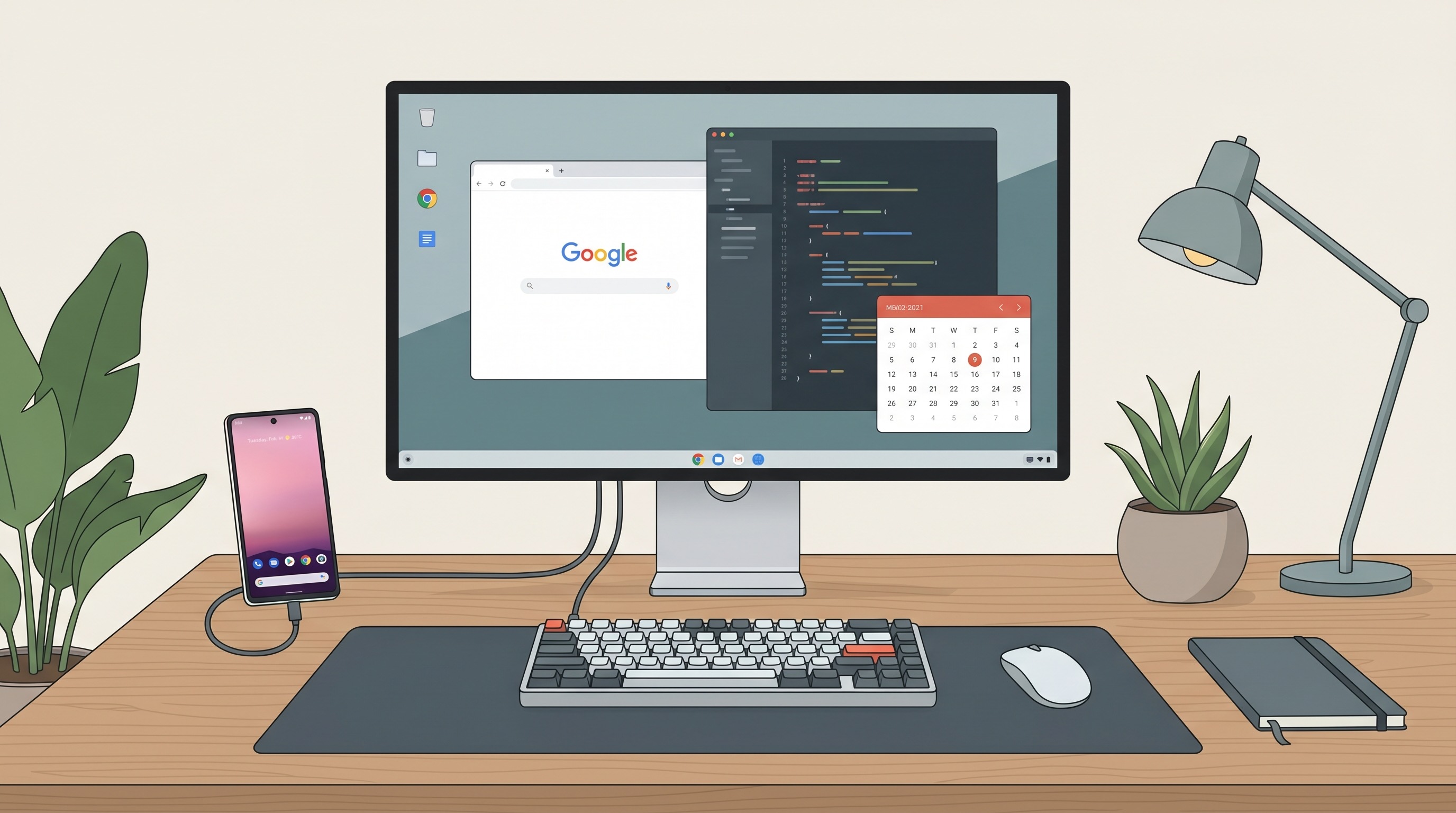
For years, the idea that a phone could replace a PC sounded convincing only during product demos. Samsung DeX was impressive, but niche. Google's own desktop ambitions on Android felt experimental. That has started to change. With Android 16 pushing connected displays into general availability on supported devices, and Samsung collaborating on the same direction, desktop mode is becoming less like a party trick and more like a practical second-computing option.
This does not mean the phone is about to kill the laptop. It does mean the gap between a handset and a casual productivity machine has narrowed enough that many people no longer need a separate device for light office work, messaging, browser tabs, document review, and dashboard-heavy tasks.
What changed this time
The biggest difference is platform maturity. In its March 2026 Android Developers announcement, Google said connected display support reached general availability with Android 16 QPR3 on supported hardware. The experience includes a desktop-style taskbar, freely resizable windows, better mouse and keyboard behavior, compatibility treatments for apps moving between displays, and new larger window size classes for adaptive layouts.
That sounds technical, but it matters because previous phone-to-monitor experiences often fell apart at the edges. Windows resized badly. Apps restarted. Keyboard shortcuts were inconsistent. Developers had little reason to optimize for a workflow that felt half-official. General availability changes the incentive structure. Once platform vendors start talking about desktop-style experiences as mainstream Android behavior, app teams have a stronger reason to care.
Samsung's role matters too. DeX spent years proving that people do like plugging a phone into a monitor when the software cooperates. Now that Google and Samsung are effectively converging on a more standardized desktop windowing model, Android has a better shot at escaping the old problem where one vendor carried the whole idea alone.
Who this is actually for
The obvious answer is travelers, field workers, students, and people who want one less device in their bag. But the more interesting audience may be knowledge workers who already spend much of the day inside a browser, chat apps, documentation tools, and cloud dashboards. For that group, the question is not whether a phone can run full desktop-class creative software. It is whether it can handle 70 percent of a normal work session without friction.
In many cases, it now can. If your workflow is email, Slack or Teams, CRM pages, calendars, note-taking, light spreadsheet editing, and web-based admin consoles, a modern flagship phone connected to a monitor is increasingly enough. Add cloud desktops or remote development sessions and the local hardware matters even less.
That makes desktop mode appealing not only as a primary device strategy in some markets, but also as a continuity feature. A phone becomes the machine you already have with you when a laptop battery dies, a hotel business center is unusable, or you just need an impromptu workstation in a conference room.
The real bottleneck is software behavior, not raw power
Phone silicon is no longer the obvious problem. High-end mobile chips have enough performance for windowed multitasking, video calls, office apps, and even local AI tasks. The bigger issue is whether Android apps behave like serious large-screen software.
That is where Google's push for adaptive design becomes strategically important. Developers are being nudged to build interfaces that scale beyond portrait phone assumptions. If an app still expects only touch input, hard-codes narrow layouts, or treats window resizing as an error state, the experience will still feel compromised. Desktop mode can only be as good as the least adaptive app in the workflow.
There is also a subtler challenge: users want coherent file handling, clipboard behavior, notifications, and window management. Traditional PCs win because decades of conventions make multitasking predictable. Android is getting closer, but consistency across apps will determine whether desktop mode becomes habitual or remains something users try twice a year.
Why this matters for the mobile market
Android desktop mode changes the value proposition of premium phones. A flagship device is easier to justify when it doubles as a travel computer, kiosk brain, or lightweight office terminal. It also creates new opportunities for monitor makers, dock makers, enterprise mobility vendors, and software developers building large-screen Android workflows.
There is a bigger strategic angle too. The more capable phones become on external displays, the more pressure it puts on the low end of the PC market. Cheap laptops have long survived by being "good enough." A phone that is already in your pocket, paired with a monitor and keyboard you already own, can look like a better deal than a mediocre extra computer.
That does not erase the strengths of Windows, macOS, or ChromeOS. But it does redraw the line between mobile and desktop. The phone is no longer just the companion device. In some contexts, it is becoming the default compute node, and the bigger screen is just an accessory.
The likely outcome is not replacement, but overlap
The smartest way to read Android desktop mode is not as a one-device future but as a workflow overlap story. Most people will still prefer laptops for heavier writing, creative work, local pro software, and sustained multitasking. But many more people are about to discover that they do not need a laptop for every serious task.
That is enough to matter. Technologies do not need to fully replace the incumbent to change markets. They only need to become good enough for a meaningful slice of everyday use. Android desktop mode has reached that threshold for more users than it had a year ago.
If Google keeps improving windowing and if developers respond with better adaptive apps, phones will keep absorbing low-end PC jobs one workflow at a time. Not dramatically, and not all at once. But steadily enough that the category boundary now feels negotiable.