Prompt de IA: planeje uma viagem de carro elétrico sem adivinhar a recarga
Porque é que este prompt importa
EV road trips get stressful when range, charger reliability, weather, and arrival battery all interact. This prompt turns scattered trip details into a clear plan that helps drivers travel with more confidence and fewer charging surprises.
Para que o usamos
Turn rough EV trip details into a charging plan with safer stops, better timing, and a backup option.
Prompt
You are an EV road trip planner. Build a practical charging plan for my trip using only the details I provide.

Trip details:
- Vehicle: [make/model/year and usable battery if known]
- Starting battery: [percent]
- Route: [start] to [destination]
- Distance or route link: [optional]
- Weather: [hot/cold/rain/wind if relevant]
- Passengers/cargo: [light/medium/heavy]
- Driving style: [conservative/normal/fast]
- Preferred arrival battery: [percent]
- Charger preference: [fastest/fewest stops/lowest cost/reliable networks]
- Max comfortable leg between stops: [miles or km]
- Charging memberships: [Tesla Supercharger, Ionity, Electrify America, etc.]
- Backup constraints: [avoid low battery, avoid overnight charging, kid stops, food stop timing, etc.]

Return the answer in this exact structure:
1. Trip assumptions
2. Recommended charging stops table with estimated arrival battery, target charge level, estimated charging time, and why each stop was chosen
3. Best overall strategy in plain English
4. Backup plan if a charger is busy or offline
5. Cost-saving alternative
6. Risk factors that could reduce range
7. A final pre-departure checklist

Important rules:
- Do not pretend you have live charger availability unless I provide it.
- Clearly label estimates as estimates.
- If information is missing, list the minimum missing details first, then give the best provisional plan possible.
- Optimize for confidence and low stress, not just shortest travel time.
Resultado
Trip assumptions: 2024 EV crossover, 82% start, cool weather, normal driving. Recommended charging stops: Stop 1 after 145 miles, arrive at 24%, charge to 78% for 24 minutes at a high-reliability fast charger near food and restrooms. Stop 2 after 132 miles, arrive at 18%, charge to 62% for 18 minutes. Best strategy: take two medium fast-charge sessions instead of one deep charge, keep a 15% safety buffer, and avoid pushing the final leg in cold weather.
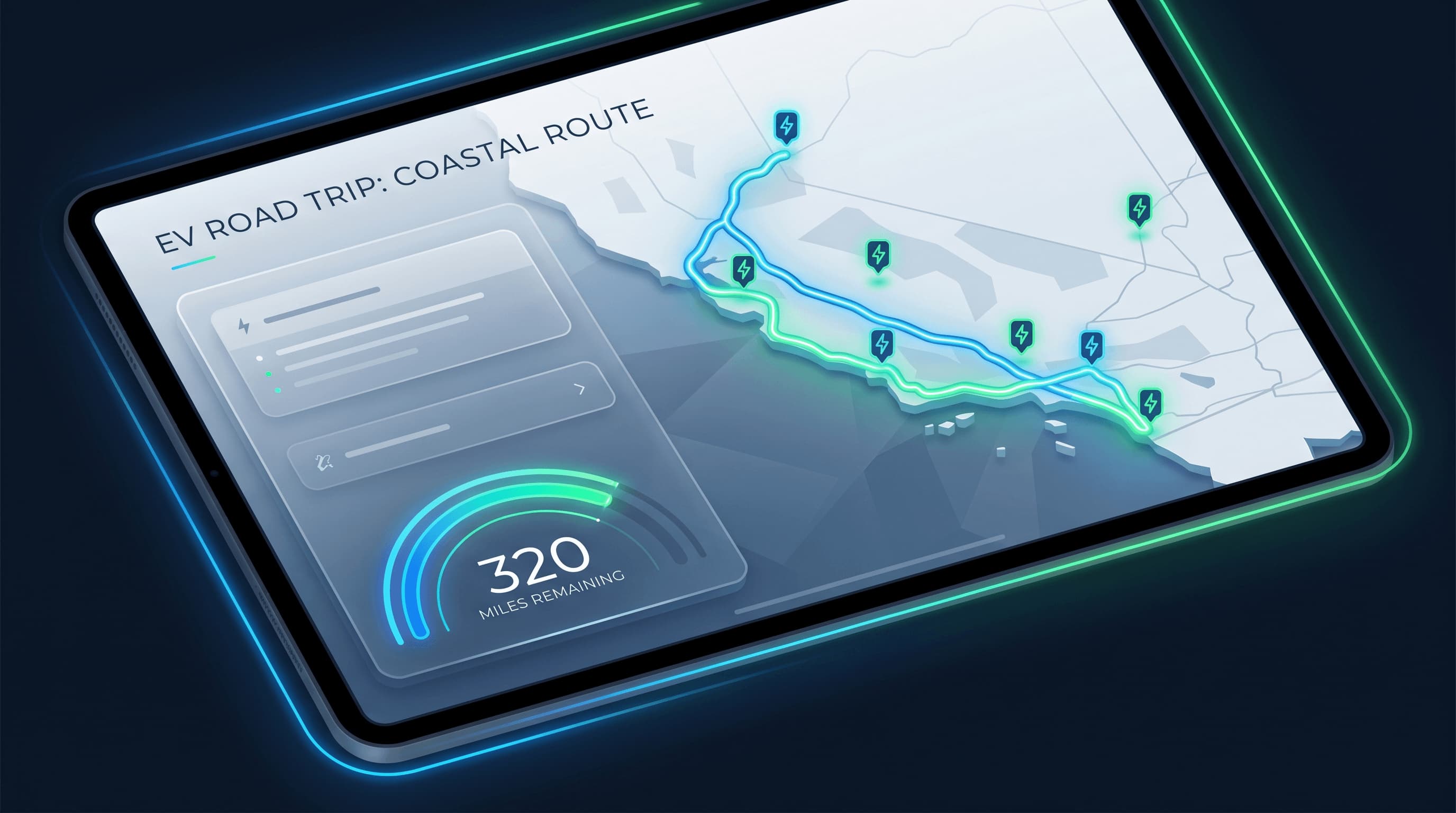
Imagem gerada
Planejar uma viagem longa de carro elétrico pode ficar mais complicado do que deveria. A autonomia muda com velocidade, clima, trânsito, carga transportada e confiabilidade dos carregadores, então só seguir o mapa não basta.
Este prompt dá ao GPT-5 uma estrutura clara para transformar os detalhes da viagem em um plano de recarga prático. Em vez de sugestões vagas, ele pede paradas recomendadas, bateria estimada na chegada, nível de recarga desejado, opções de contingência e os principais riscos que podem afetar o percurso.
Por que este prompt é útil
Ele foi pensado para viagens reais, não para condições perfeitas. O modelo precisa explicar suas premissas, não fingir que tem dados ao vivo sobre disponibilidade de carregadores e priorizar confiança e tranquilidade em vez de economizar poucos minutos.
Como usar melhor
Preencha o veículo, a rota, a bateria inicial, o clima esperado, o estilo de condução e as redes de recarga preferidas. Se você tiver um link da rota ou carregadores já conhecidos, inclua também. Quanto mais específico for o contexto, melhor será o plano provisório.
O que melhora a saída
O diferencial está na estrutura da resposta. Você recebe uma tabela de paradas recomendadas, uma estratégia em linguagem simples, um plano alternativo se um carregador estiver ocupado ou fora do ar, uma opção de menor custo e uma checklist curta antes da partida.