Fleet Orchestration Software, Not Hardware, Is Becoming the Warehouse Robotics Moat
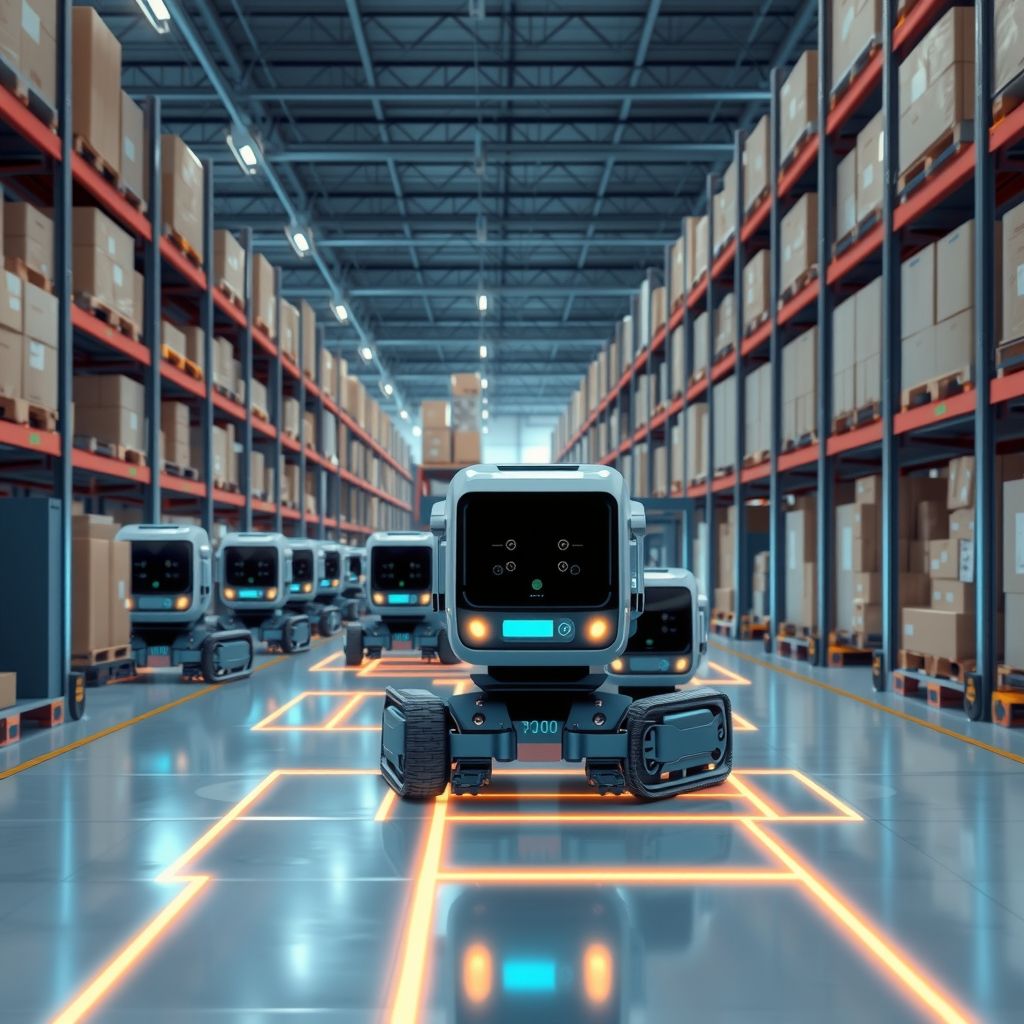
Warehouse robotics hardware has quietly become a commodity. Autonomous mobile robots (AMRs) that pick, tote, and shuttle inventory around a distribution center are built on a well-understood stack of LiDAR, depth cameras, and off-the-shelf motor controllers, and a dozen credible vendors — Locus Robotics, Geek+, Hai Robotics, inVia Robotics, Vecna Robotics, and others — can all ship a decent unit. The competitive battle that actually determines who makes money in this market has moved up a layer, to the fleet orchestration software that decides which robot goes where, in what order, around which human workers, and how the system recovers when something breaks or a shift changes.
The problem orchestration software actually solves
A single robot following a fixed path is easy. A warehouse running two hundred robots across multiple vendors, alongside human pickers, forklifts, and a constantly shifting SKU layout driven by order volume, is a real-time constraint-satisfaction problem that has to resolve in milliseconds and never cause a collision. The orchestration layer has to solve traffic management (which robot waits, which proceeds, through an intersection with no traffic light), task allocation (which robot gets the next pick job based on battery level, current load, and distance), and exception handling (a robot gets stuck, a shelf is misplaced, a human steps into a planned path) — continuously, without a human dispatcher in the loop for routine decisions.
This is the layer that determines throughput more than the robots themselves. Two warehouses running identical hardware can see meaningfully different picks-per-hour depending entirely on how well the orchestration software packs tasks and resolves contention. It's also the layer that's hardest to copy, because it requires enormous amounts of real operational data — actual warehouse layouts, actual order patterns, actual failure modes — to tune well. A new entrant can buy the same LiDAR sensor as an incumbent. It cannot buy five years of production traffic-management data.
The multi-vendor problem is forcing a new category
The complication that's reshaping the market is that large logistics operators don't want to be locked into one robot vendor's proprietary stack, especially after Amazon-scale operators demonstrated the leverage of running mixed fleets and multiple suppliers against each other on pricing. That has created real demand for vendor-agnostic orchestration — a coordination layer that can direct robots from different manufacturers the way Kubernetes abstracts compute away from the underlying cloud provider. Companies building this abstraction layer are effectively betting that the valuable long-term asset in warehouse automation isn't the robot at all; it's the software standing above a fleet of interchangeable robots, with the data moat and the integration relationships to make switching providers at the orchestration layer costly even if switching robot hardware is cheap.
This mirrors what already happened in enterprise IT a decade earlier: the server hardware commoditized first, and the orchestration and management layer (virtualization, then container orchestration) became where the durable margin and lock-in lived. Zebra Technologies' 2021 acquisition of Fetch Robotics, and SoftBank's acquisition of Berkshire Grey, both look less like hardware plays in retrospect and more like acquisitions of fleet-management software and the operational data behind it, bundled with a hardware business that happened to come along with it.
What to actually evaluate when choosing a robotics vendor
If you're a warehouse operator or an investor sizing up this space, the hardware spec sheet — payload capacity, battery life, top speed — is the least differentiating thing to compare. The questions that actually predict whether a deployment will scale past a pilot are different: Does the orchestration software expose an open API that lets you add a second vendor's robots into the same fleet later without a rip-and-replace? How does the system handle a robot going offline mid-task — does the whole zone stall, or does the fleet reroute automatically? What's the actual picks-per-hour-per-robot number in a comparable live deployment, not a demo environment, and how has it changed over the last two years of the vendor's own tuning? A vendor that can't answer the second and third questions with real production numbers is selling you hardware and hoping you don't notice the software underneath it isn't ready for scale.
The takeaway for the next eighteen months
Expect the competitive and M&A activity in warehouse robotics to keep concentrating on orchestration and fleet-management software companies rather than robot manufacturers, and expect larger logistics operators to increasingly standardize on a vendor-agnostic coordination layer the way they standardized on a cloud orchestration layer rather than picking one hardware vendor's ecosystem and staying locked in. If you're evaluating this market, weight the software and data advantages far more heavily than the hardware specs — that's where the next few years of consolidation will actually happen.