Transformez du code source en documentation API vraiment exploitable
Pourquoi ce prompt est important
Bad API docs slow integration, create support tickets, and turn simple launches into guesswork. A strong prompt helps teams extract the contract from real code, catch missing edge cases early, and ship cleaner developer experience without starting from a blank page.
À quoi nous l'utilisons
Use this when you have working API code but weak or outdated documentation, especially before handing an endpoint to frontend engineers, partners, QA teams, or external developers.
Prompt
Role: Act as a senior API platform engineer and technical writer.

Context: I will give you source code, route definitions, validators, example payloads, and any notes I have. The code may be incomplete, inconsistent, or lightly documented. Your job is to infer the real API contract from the implementation without inventing behavior that is not supported by the code.

Task: Produce complete API documentation for [API NAME] based on the code and notes I provide. Document each endpoint with: purpose, HTTP method, path, authentication requirements, request headers, path/query/body parameters, validation rules, request example, success response example, error responses, important edge cases, and one curl example. If the API behavior is ambiguous, explicitly label the uncertainty and list the exact code area that needs human review.

Inputs:
- Product/service name: [API NAME]
- Intended audience: [INTERNAL DEVELOPERS | PARTNERS | PUBLIC DEVELOPERS]
- Source code or route files: [PASTE CODE OR FILE CONTENTS]
- Validation schemas / types: [PASTE SCHEMAS]
- Auth details: [PASTE AUTH LOGIC OR NOTES]
- Known business rules: [PASTE NOTES]

Constraints:
1. Do not invent endpoints, fields, or response codes that are not supported by the inputs.
2. Separate confirmed behavior from inferred behavior.
3. Use plain English and keep jargon low unless the code requires it.
4. Include warnings for breaking changes, unsafe defaults, or inconsistent naming.
5. If examples are missing, generate clearly labeled illustrative examples that match the schema.
6. Call out undocumented pagination, rate limits, idempotency behavior, retries, and nullability when visible in code.
7. End with a short section titled "Gaps to confirm with engineering".

Output Format:
Return the result in this exact structure:
1. API overview
2. Authentication
3. Base URL and versioning
4. Endpoint reference (repeat per endpoint)
5. Error model
6. Common workflows
7. Breaking-change and quality risks
8. Gaps to confirm with engineering
Résultat
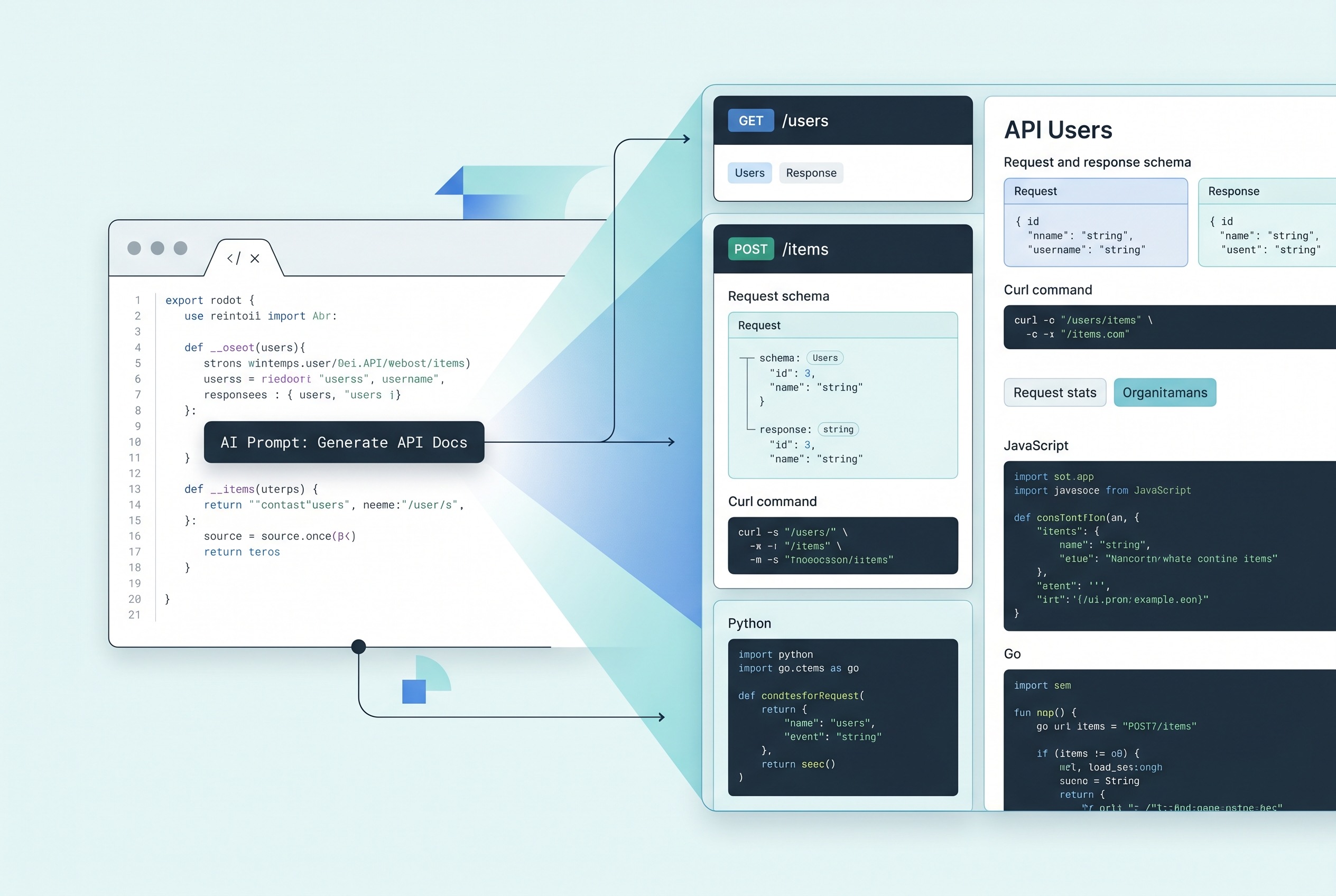
Image générée
Ce Prompt s’adresse aux équipes qui ont déjà une API fonctionnelle mais une documentation faible ou obsolète. Au lieu de demander à un modèle d’écrire de la documentation de manière vague, il l’oblige à lire l’implémentation réelle, à distinguer le certain de l’inféré et à produire un résultat exploitable.
La structure joue un rôle clé. La partie Role place le modèle comme ingénieur plateforme API et rédacteur technique. La partie Context signale que le code peut être incomplet ou incohérent, ce qui pousse le modèle à montrer les zones d’incertitude. La partie Task demande les éléments utiles en production: auth, validation, request, response, erreurs, cas limites et exemples curl.
Les Constraints empêchent l’invention d’endpoints ou de champs non soutenus par le code et imposent l’analyse de pagination, rate limits, idempotency, retries et nullability. Ce sont souvent les détails manquants dans la documentation manuelle.
Si vous utilisez FastAPI, Express, Laravel, Django, Rails, Go ou des backends Java, ce Prompt permet de transformer rapidement l’implémentation en contrat lisible et utile. Il fonctionne aussi très bien comme passe QA avant publication.