Générez une suite de tests exhaustive à partir de n'importe quelle fonction ou description de fonctionnalité
Pourquoi ce prompt est important
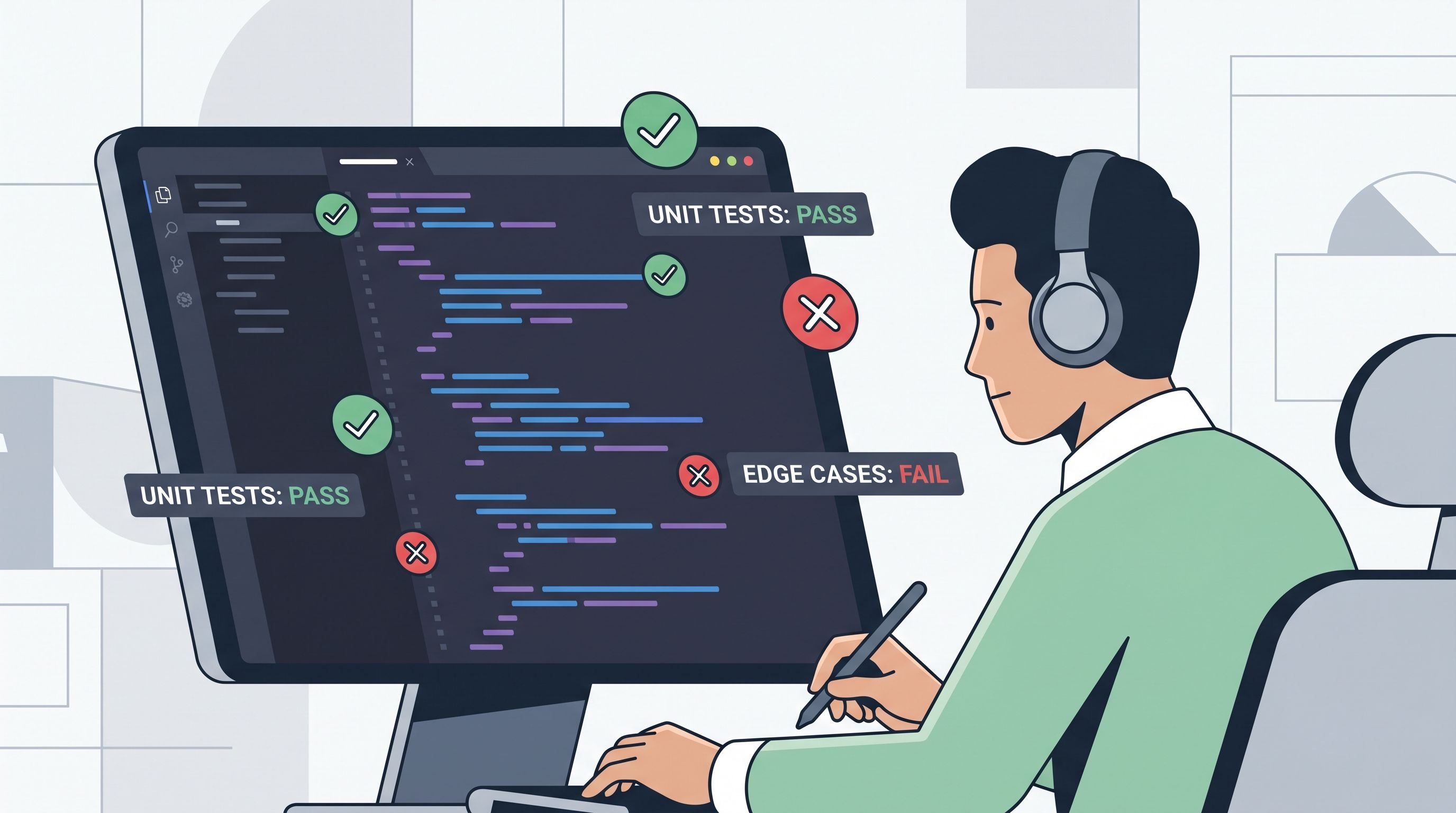
<p>Incomplete tests are the leading cause of regressions in production. A typical developer writing tests from memory covers 60-70% of edge cases — the remaining 30% is where bugs live. Every missed edge case is a future incident, a 2am page, or a data corruption bug discovered by a customer. Beyond bugs: code without proper tests blocks confident refactoring. You end up with unmaintainable spaghetti because nobody dares touch it. This prompt forces systematic coverage across happy paths, boundaries, failures, and integration points — the same coverage a dedicated QA engineer would produce in several hours, generated in under a minute.</p>
À quoi nous l'utilisons
You wrote a function or shipped a feature and need full test coverage before merging. You have the code in front of you but writing tests feels slow — you keep forgetting edge cases and your PR review always comes back with 'what about null input?' or 'does this handle timeout?'
Prompt
Act as a senior software engineer and QA architect with deep expertise in test-driven development.

Context:
I have a [FUNCTION / FEATURE / MODULE] that I need fully tested. It is written in [PROGRAMMING LANGUAGE] and uses [FRAMEWORK / LIBRARY if any]. Here is the code or description:

[PASTE YOUR FUNCTION OR FEATURE DESCRIPTION HERE]

Task:
Generate a comprehensive test suite for the above. Cover ALL of the following:
1. Happy-path unit tests
2. Edge case unit tests
3. Error/failure scenarios
4. Integration test outlines
5. Security-relevant tests if applicable

Constraints:
- Write tests in [TEST FRAMEWORK, e.g. Jest, pytest, JUnit]
- Name tests: should_[expected behavior]_when_[condition]
- Do NOT write implementation code
- Group tests into describe blocks by category
- Flag any testability issues in the original code

Output Format:
- Full runnable test file with all imports
- Section comments: // === HAPPY PATH ===, // === EDGE CASES ===, etc.
- Summary table: test count per category + estimated code coverage %
- Testability issue flags
Le problème de l'écriture manuelle des tests
Demandez à n'importe quel développeur ce qu'il saute quand il est sous pression de délais, et les tests reviennent systématiquement. Rédiger des tests complets est fastidieux et mentalement épuisant. La plupart des développeurs manquent 30 à 40 % des cas limites pertinents.
Ce prompt résout ce problème en intégrant la pensée systématique d'un ingénieur QA senior dans un template réutilisable.
Ce qui rend ce prompt efficace
Le prompt utilise un framework de couverture en cinq catégories : chemin heureux, cas limites, erreurs, intégration et sécurité. La contrainte de nommer les tests avec should_[behavior]_when_[condition] force l'IA à être précise. L'exigence de signaler les problèmes de testabilité permet de détecter les problèmes architecturaux avant qu'ils ne deviennent de la dette technique.
Comment l'utiliser
Copiez le prompt dans Claude Sonnet 4.5 (ou GPT-4o). Remplissez les trois champs : votre langage, votre framework de test et la description de la fonction. Le résultat est un fichier de test prêt à exécuter accompagné d'un tableau récapitulatif de couverture.
Adaptation à différents langages et frameworks
Pour Python, pytest. Pour TypeScript, Jest ou Vitest. Pour Java, JUnit 5. Pour Go, Go testing package.