Ce Prompt AI réécrit les documents techniques pour de vraies personnes
Pourquoi ce prompt est important
Technical teams lose time when the same document has to be re-explained across meetings, Slack threads, and stakeholder reviews. Poor translation between engineering and business causes delayed decisions, bad prioritization, and preventable confusion about risk. A strong plain-English pass helps technical work get approved, funded, understood, and shipped faster.
À quoi nous l'utilisons
You have to send an engineering update, incident recap, API change note, or architecture proposal to people who influence decisions but do not speak in deeply technical language every day. Instead of dumbing the document down manually, you use this Prompt to create a version that product, leadership, sales, or operations can act on quickly.
Prompt
Role: Act as a senior technical writer and cross-functional translator between engineering teams and business stakeholders.

Context: I will give you a technical document, feature spec, architecture note, incident summary, API description, or engineering proposal that was written for experts. Your job is to convert it into language that non-technical stakeholders can understand without flattening the meaning or losing important tradeoffs. The audience may include executives, product managers, sales leaders, operations teams, legal reviewers, or clients.

Task: Rewrite the material into clear plain English for [TARGET AUDIENCE]. Explain what the system, issue, or proposal actually does, why it matters, what changes, what risks remain, and what decisions the audience may need to make. Preserve important technical terms when removing them would reduce accuracy, but define them in context.

Constraints:
- Do not patronize the reader or oversimplify to the point of being misleading.
- Do not remove key caveats, limitations, dependencies, or risks.
- Keep essential technical terms such as API, GPU, latency, encryption, model, and outage when needed, but define them briefly in natural language.
- Replace jargon, acronyms, and internal shorthand unless they are necessary for accuracy.
- Call out any unclear assumptions or missing context from the source.
- If the source mixes facts, recommendations, and open questions, separate them clearly.
- If the source includes numbers, keep them and explain why they matter.
- Write in a calm, direct, business-friendly tone.

Output Format:
1. One-sentence summary for [TARGET AUDIENCE]
2. Plain-English explanation (3 to 6 short paragraphs)
3. Key terms decoded (bullet list)
4. What changed / what matters now (bullet list)
5. Risks, limits, or unanswered questions (bullet list)
6. Recommended next steps for [TARGET AUDIENCE] (bullet list)
7. Optional: executive version in 5 bullets if [NEED EXECUTIVE SUMMARY = YES]

Input to transform:
[PASTE TECHNICAL DOCUMENT HERE]
Résultat
1. One-sentence summary for Product and Customer Success The upcoming API authentication change improves account security and partner isolation, but it will require every external integration to rotate credentials and update request headers before the cutoff date.
2. Plain-English explanation Our platform is replacing a shared authentication pattern with tenant-scoped API keys and signed requests. In practice, that means each customer environment will have its own access boundary instead of relying on a broader credential model that was easier to manage early on but is now too permissive for larger enterprise accounts.
The biggest reason for the change is risk reduction. Under the old design, a misconfigured integration had a wider blast radius than we were comfortable with. Under the new model, access is narrower, logs are easier to audit, and suspicious behavior can be isolated faster. This will matter most for enterprise customers with multiple integrations, regulated data, or stricter vendor review requirements.
The change is not a visible product redesign for end users, but it is an operational change for anyone who maintains an API connection to our system. Partners will need to generate new credentials, update authentication headers, and test the new signing flow in sandbox before the production deadline. Internal support and solutions teams should expect a temporary increase in setup questions during the migration window.
The engineering team has already shipped backward compatibility for a limited transition period, but this is not an indefinite dual-stack plan. After the cutoff date, older requests will fail authentication. Teams that assume the old integration will simply keep working are likely to see avoidable outages.
3. Key terms decoded - Tenant-scoped API keys: separate credentials for each customer environment instead of broader shared access - Signed requests: requests that include a cryptographic proof so the platform can verify they were not modified in transit - Blast radius: how much damage one mistake or compromise can cause - Sandbox: a safe test environment that does not affect live customer data
4. What changed / what matters now - Integrations must move to new authentication headers - Each customer environment now has narrower access control - Security review posture improves because access is easier to audit - Older integrations will stop working after the deprecation date
5. Risks, limits, or unanswered questions - Some customers may not know who owns their existing integration - Support volume may rise during migration - Partners with hardcoded credentials may need longer remediation time - We still need a final communication schedule for high-volume API users
6. Recommended next steps for Product and Customer Success - Identify affected partners and rank them by integration criticality - Send a migration notice with deadline, docs, and sandbox instructions - Prepare a short FAQ for common setup issues - Flag top-revenue customers for proactive outreach - Confirm who will monitor failed authentication spikes during rollout
7. Executive version in 5 bullets - We are tightening API security by replacing broad credentials with tenant-level access - The change reduces security exposure and strengthens enterprise readiness - External integrations must update before the cutoff date - Short-term support demand will rise during migration - Clear customer communication is the difference between a smooth rollout and preventable disruption
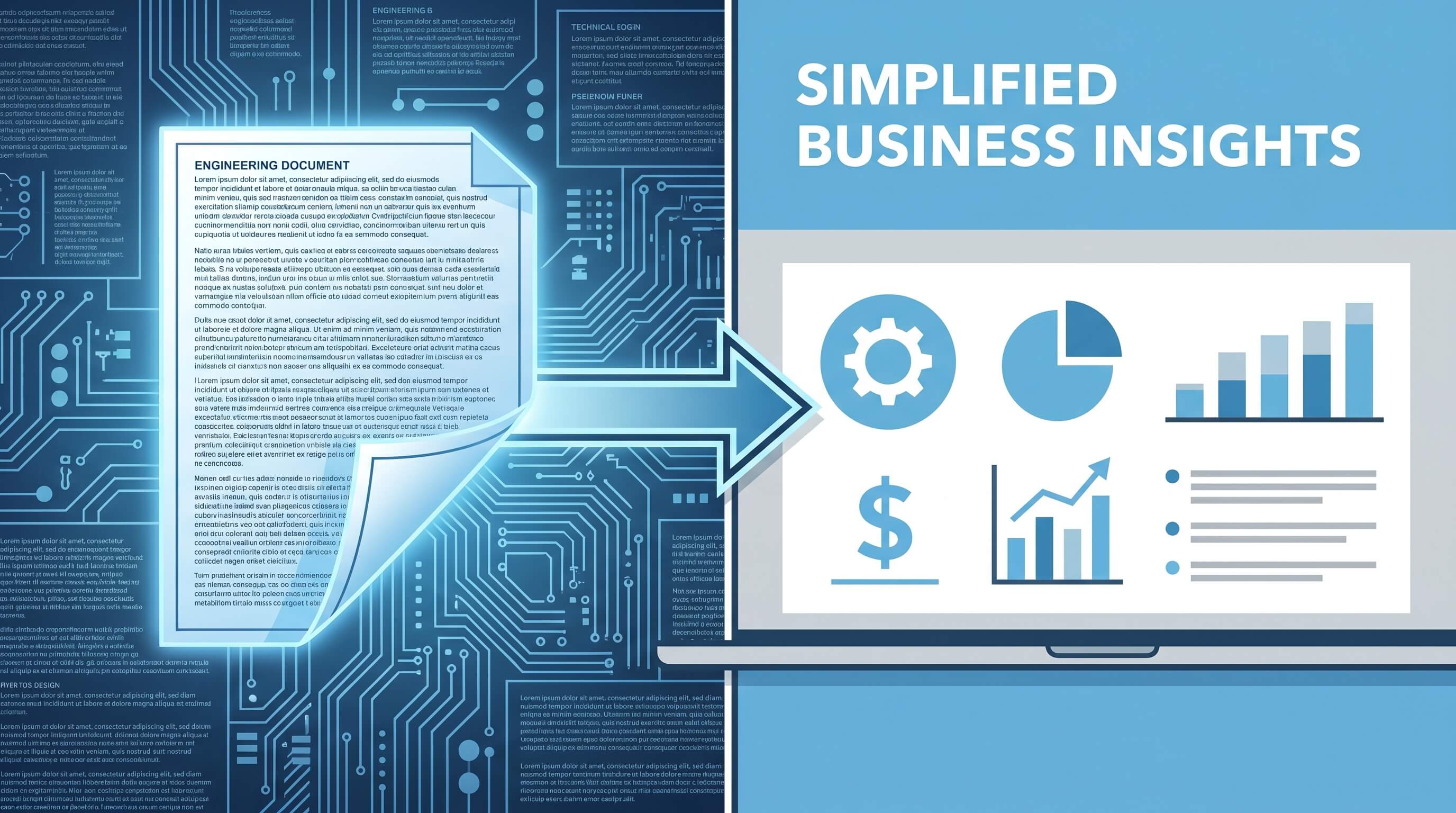
Image générée
L’un des échecs les plus fréquents dans les équipes techniques ne vient pas d’une mauvaise ingénierie, mais d’une mauvaise traduction entre métiers. Une feature spec, un incident summary, une architecture proposal ou une note de changement d’API peut être juste sur le fond et pourtant échouer si les non-techniciens ne comprennent pas rapidement ce qui change, ce qui comporte un risque et quelle décision est attendue.
Ce Prompt est conçu précisément pour combler cet écart. Il transforme l’écriture technique en plain-English clair sans vider le contenu de sa substance. C’est important, car beaucoup de Prompts faibles gardent trop de jargon ou simplifient tellement qu’ils effacent les vrais tradeoffs.
Sa force vient de sa structure. Le Role positionne le modèle comme un technical writer senior. Le Context indique que la mission est une traduction entre fonctions, pas un simple résumé. Le Task demande d’expliquer ce que fait le système, pourquoi cela compte, ce qui change et quelles décisions peuvent suivre. Les Constraints empêchent le ton condescendant, la simplification trompeuse et la perte des caveats essentiels.
Ce Prompt est particulièrement utile pour les product managers, les fondateurs, les équipes ventes, support et les dirigeants qui reçoivent régulièrement des documents techniques. Il aide aussi les ingénieurs eux-mêmes en réduisant la nécessité de reformuler manuellement la même explication pour plusieurs audiences.
L’exemple inclus montre bien sa valeur pratique: un changement de sécurité lié à une API devient une note claire, exploitable et orientée décision. C’est ce qui en fait un Prompt à conserver.