Utilities Are Replacing Time-Based Maintenance With Digital Twins
For most of the history of power and water infrastructure, maintenance has run on the calendar, not on the equipment's actual condition. A transformer gets inspected every three years because three years is the schedule, not because anyone has measured whether it's degrading faster or slower than that. A water main gets flagged for replacement at a fixed age threshold, regardless of the soil conditions and pressure cycles it actually experienced. This time-based approach is simple to budget and staff around, but it wastes money servicing equipment that's fine and, more importantly, misses equipment that's failing faster than its schedule assumed.
What a Digital Twin Actually Is in This Context
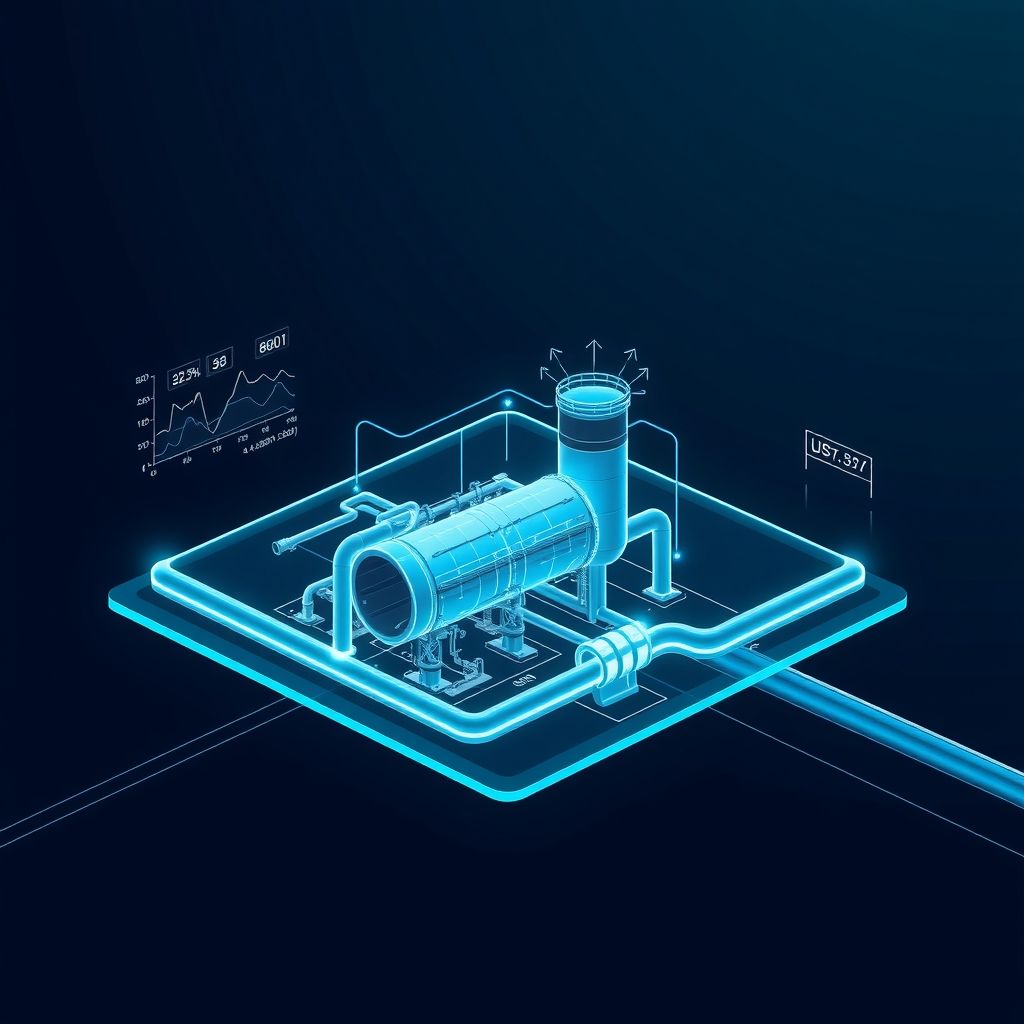
In utility operations, a digital twin is a continuously updated software model of a physical asset — a transformer, a pump station, a stretch of pipeline, a section of grid — built from a combination of design specifications, historical maintenance records, and live sensor data (vibration, temperature, pressure, flow rate, partial discharge activity, acoustic signatures). The model doesn't just store that data; it simulates how the asset should behave under current conditions and flags when real sensor readings diverge from the simulated expectation. That divergence is often the earliest available signal that something is going wrong, well before the kind of catastrophic failure that triggers an emergency outage.
From Time-Based to Condition-Based Maintenance
The industry shorthand for this shift is CBM — condition-based maintenance — and it's a direct replacement for the fixed-schedule model. Instead of inspecting every transformer in a substation on the same three-year cycle, a utility running CBM inspects the ones whose digital twin is flagging anomalous readings, while leaving healthy equipment alone for longer than the old schedule would have allowed. CIGRE's 2026 technical literature on grid-scale digital twins describes this as the central value proposition for power utilities: continuously updated asset models that support both predictive maintenance and operational scenario planning, like simulating how a substation will behave if a specific transformer is taken offline for repair.
The water sector is earlier in adoption but following the same logic. A documented case from Sand Technologies describes a water utility using a digital twin for network risk management, with the utility reporting a reduction in both leak incidents and service interruptions after deployment — the twin let operators prioritize inspection and replacement on pipe segments the model flagged as high-risk, rather than working strictly through an age-based replacement queue.
Why Utilities Are Moving Now, Not Earlier
Three things converged to make this practical at scale in the past few years. IoT sensor hardware got cheap enough to instrument assets that weren't previously worth monitoring individually — a single pump station, not just a whole treatment plant. Cloud compute made it affordable to run continuous simulation against thousands of individual asset models rather than a handful of flagship ones. And grid modernization investment, driven partly by renewable integration (variable solar and wind output puts different stress patterns on transformers and switching equipment than steady fossil generation did), gave utilities a budget line and a regulatory mandate to build the sensor and software infrastructure this requires in the first place.
Where the Numbers Are Still Soft
Market-research estimates on this space should be read skeptically — vendor-funded reports on digital twin adoption cite figures like “68% of large utility operators run pilot projects” without disclosing methodology, and should not be treated as verified. What's better supported is the directional claim from utility-facing industry literature (CIGRE, utility conference proceedings, and vendor case studies with named customers) that utilities have moved past treating digital twins as an experimental technology and are now building them into standard grid modernization roadmaps. The honest caveat is that rigorous, utility-disclosed before/after outcome data — the kind that would come from a regulatory filing rather than a vendor case study — is still thin across the industry.
What This Means If You Work With Utility Infrastructure
- Procurement teams evaluating digital twin vendors should ask specifically which sensor inputs feed the model and how divergence alerts are validated against real failure events — a twin that's never been checked against an actual failure hasn't proven anything yet.
- Engineers working on asset management should expect inspection scheduling to shift from fixed calendars to risk-ranked queues over the next several years, which changes how field crews get dispatched and how spare-parts inventory gets forecast.
- Regulators and ratepayer advocates should push utilities requesting CBM-related rate increases to disclose actual avoided-failure counts, not just pilot program announcements — the technology's value case depends entirely on catching failures the old schedule would have missed, and that claim is falsifiable with utility-held outage data.
The Takeaway
The shift from time-based to condition-based maintenance is one of the more consequential, least-discussed changes in utility operations right now, because it directly affects how often the power stays on and the water stays clean. The technology is real and the early case studies are credible, but the industry-wide adoption statistics circulating in market reports are mostly unverified vendor claims. If you're assessing a utility's digital twin program — as an engineer, a regulator, or a procurement lead — ask for failure-detection track record over pilot-program press releases.