یک Prompt ماتریس تصمیمگیری وزنی برای انتخابهای سریعتر تیمی
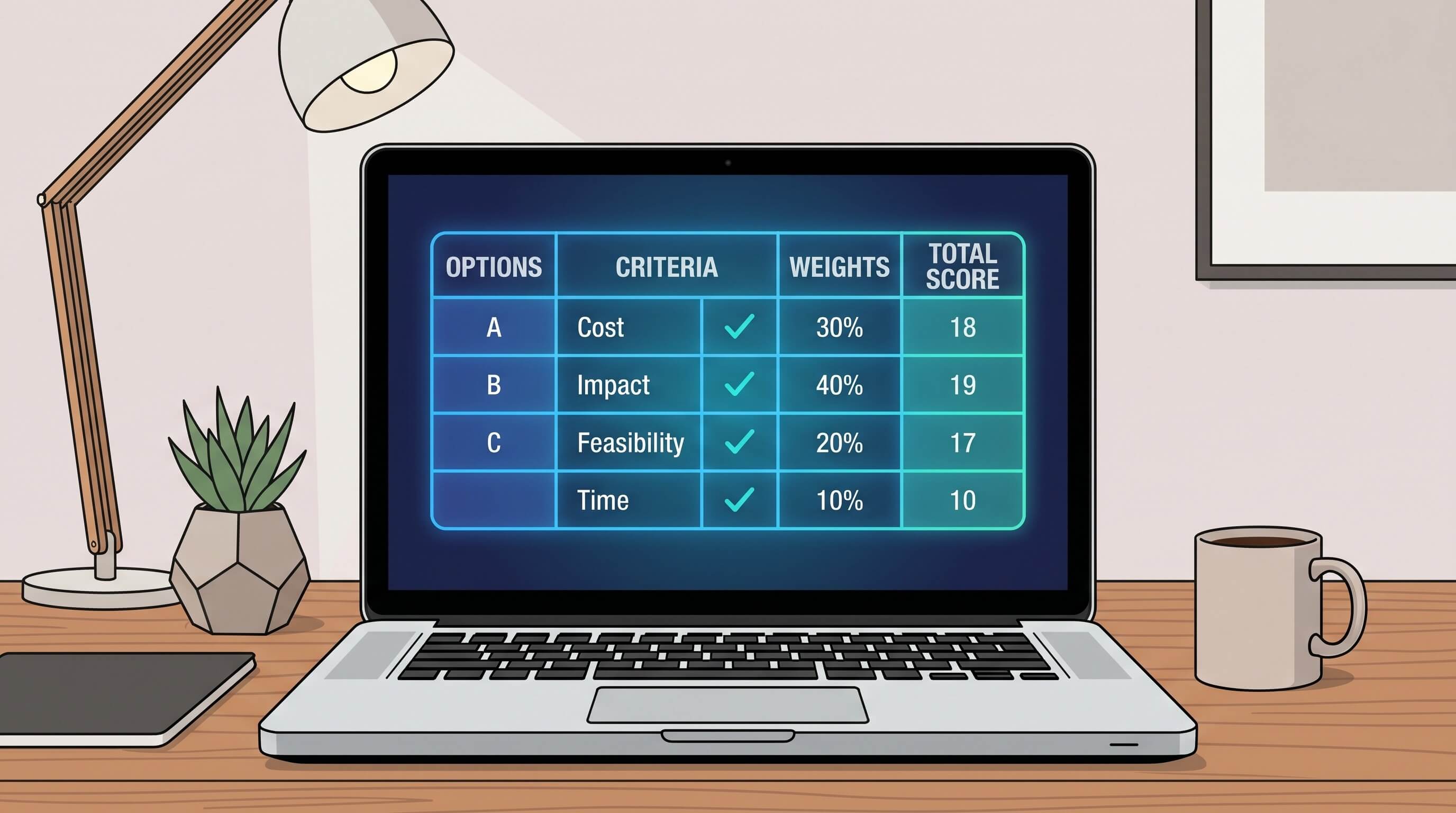
چرا این پرامپت اهمیت دارد
Teams waste weeks revisiting the same decision when criteria are implicit, stakeholders optimize for different goals, and nobody can explain why an option won. A weighted matrix turns vague debate into an auditable decision record and exposes where disagreement actually lives.
ما از آن برای چه استفاده میکنیم
Use this when you need to choose between several real options under time pressure, such as selecting a project management tool, vendor, framework, or job offer, and you want a defensible recommendation instead of gut feel.
پرامپت
Role: Act as a senior strategy analyst helping me make a high-stakes decision with a transparent weighted scoring model.

Context: I am deciding between [OPTION 1], [OPTION 2], [OPTION 3], and [OPTION 4] for [DECISION CONTEXT]. The decision matters because [WHY THIS DECISION MATTERS]. My constraints include [BUDGET], [TIMELINE], [TEAM SIZE], and [NON-NEGOTIABLE REQUIREMENTS].

Task: Build a weighted decision matrix that compares the options across the criteria I provide. Use these criteria and weights, adding up to 100: [CRITERION 1 + WEIGHT], [CRITERION 2 + WEIGHT], [CRITERION 3 + WEIGHT], [CRITERION 4 + WEIGHT], [CRITERION 5 + WEIGHT]. Score each option from 1 to 10 on every criterion, explain each score in one or two sentences, calculate weighted totals, rank the options, and recommend the best choice. Then stress-test the recommendation by showing which option would win if the top-weighted criterion changed by plus or minus [SENSITIVITY %].

Constraints: Do not use vague language. If information is missing, list the missing inputs explicitly and make the smallest reasonable assumption. Do not force a tie. Call out hidden risks, second-order effects, and cases where the highest-scoring option may still be the wrong practical choice.

Output Format: 1) Decision summary, 2) assumptions and missing data, 3) weighted decision matrix in table form, 4) ranking with weighted totals, 5) recommendation with rationale, 6) sensitivity analysis, 7) next steps before committing.
نتیجه
Decision summary: Based on the weighted matrix, Notion is the strongest fit for a 12-person remote product team choosing a project management platform for the next 18 months. It does not win every category, but it delivers the best overall balance of flexibility, cross-functional collaboration, documentation, and cost. Jira remains the better pure engineering tracker, while Asana is the easiest to adopt quickly, but neither matches Notion's combined score across the broader operating model this team needs.
Assumptions and missing data: I assumed the team needs one shared workspace for product, engineering, design, and operations, with a monthly software budget below $500. I also assumed the company values fast onboarding and documentation quality as much as sprint planning. Missing inputs that would affect the outcome include existing tool lock-in, compliance requirements, and whether the engineering team needs advanced issue hierarchy and release reporting.
Weighted decision matrix: Criteria were weighted as follows: collaboration and documentation 30, ease of adoption 20, engineering workflow support 20, automation and integrations 15, total cost 15. Notion scored 9, 8, 7, 8, and 9 respectively, producing a weighted total of 8.30. Jira scored 6, 5, 10, 9, and 7 for a total of 7.20. Asana scored 8, 9, 6, 7, and 6 for a total of 7.35. ClickUp scored 7, 6, 7, 8, and 8 for a total of 7.10.
Recommendation with rationale: Choose Notion if the company wants one system that supports planning, documentation, meeting notes, lightweight roadmapping, and cross-team visibility without adding another knowledge base. Its main weakness is deeper engineering workflow structure, so teams with strict release governance may still prefer Jira despite the lower blended score.
Sensitivity analysis: If engineering workflow support rises from 20 to 35, Jira becomes much more competitive and may overtake Notion, especially if the company already uses GitHub and wants stronger issue discipline. If collaboration and documentation fall below 20, Asana also narrows the gap. That means the decision is robust only if the organization truly values a shared operating system over a specialist tracker.
Next steps before committing: Run a two-week pilot with one live project, measure onboarding time, check migration friction, and ask each function to list one blocker that would make the chosen tool fail in practice.
انتخاب بین چند گزینه خوب همان جایی است که تیمها زمان زیادی از دست میدهند. بحث ظاهراً مفید پیش میرود، اما معیارها پنهان میمانند، صدای بلندتر نتیجه را شکل میدهد و دو هفته بعد تصمیم دوباره باز میشود. این Prompt با تبدیل مبادلهها و اولویتها به یک ماتریس وزنی قابل بررسی، این مشکل را حل میکند.
ساختار Prompt مهم است. بخش Role مدل را به جای حالت ایدهپردازی عمومی، وارد حالت تحلیلگر میکند. بخش Context اهمیت تصمیم، محدودیتها و موارد غیرقابل مذاکره را مشخص میکند تا پیشنهاد نهایی روی یک تصمیم واقعی کسبوکار سوار بماند، نه سلیقه انتزاعی. بخش Task هم کار اصلی را انجام میدهد: امتیازدهی به هر گزینه، توضیح هر امتیاز، محاسبه مجموعهای وزنی و سپس آزمودن نتیجه با sensitivity analysis.
همین بخش آخر است که باعث میشود این Prompt ارزش ذخیره کردن داشته باشد. یک Prompt مقایسهای معمولی فقط فهرستی رتبهبندیشده به شما میدهد. اما نسخه بهتر نشان میدهد اگر مهمترین معیار کمی جابهجا شود، آیا برنده هنوز همان گزینه است یا نه. اگر با یک تغییر کوچک نتیجه عوض شود، مسئله اصلی دیگر ابزار یا Vendor نیست، بلکه همراستایی ذینفعان است.
این Prompt یک خطای رایج AI را هم مهار میکند: پاسخ مطمئن اما بیپایه وقتی دادههای مهم ناقص هستند. بخش Constraints از مدل میخواهد خلأهای اطلاعاتی را آشکار کند، حداقل فرض معقول را بسازد و موقعیتهایی را مشخص کند که حتی بالاترین امتیاز هم الزاماً بهترین انتخاب عملی نیست. خروجی نهایی بیشتر شبیه یک decision memo است تا یک حدس شیک و صیقلی.
میتوانید از آن برای انتخاب نرمافزار، تصمیمهای استخدام، ارزیابی آژانس، مدلهای قیمتگذاری، مبادلههای roadmap و هر تصمیم دیگری استفاده کنید که چند گزینه مناسب در ابعاد مختلف با هم رقابت میکنند. خروجی بهراحتی در یک سند کپی میشود، در جلسه قابل دفاع است و اگر فرضها تغییر کنند بعداً هم میتوان به آن برگشت.