تبدیل یک پست وبلاگ به یک بسته محتوای شبکه اجتماعی متناسب با هر پلتفرم
چرا این پرامپت اهمیت دارد
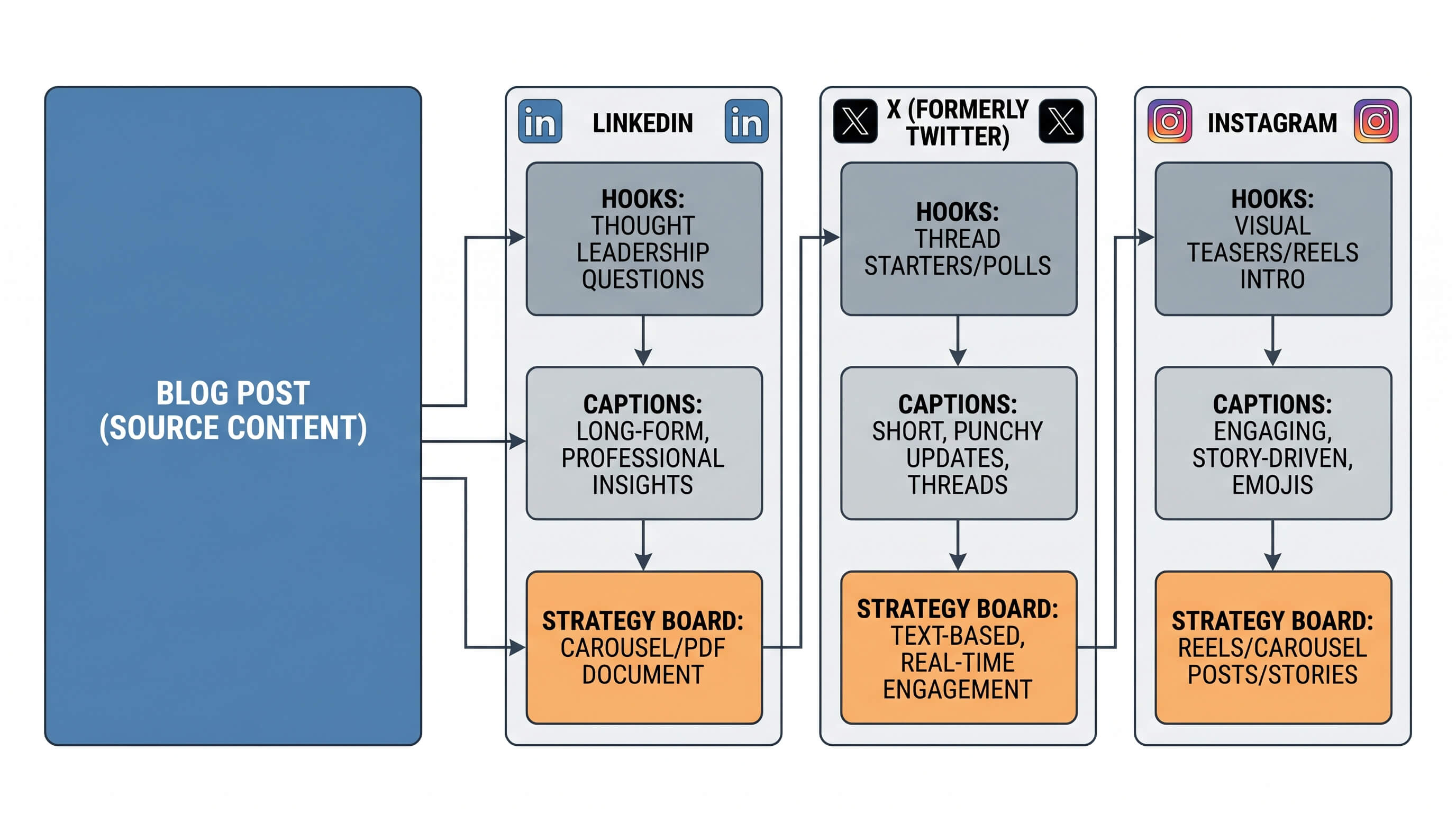
This matters because most repurposed marketing content underperforms when teams paste the same idea everywhere. A structured Prompt helps you extract more reach, more consistency, and more usable campaign assets from one piece of source content while keeping each platform native.
ما از آن برای چه استفاده میکنیم
Use this Prompt when you already have a strong blog post and want to turn it into a coordinated social media package without rewriting from scratch for every channel.
پرامپت
Role: You are a senior content marketing strategist and social media editor for [BRAND_NAME].

Context: I have one source blog post titled [BLOG_TITLE] for [TARGET_AUDIENCE]. The post covers [BLOG_SUMMARY]. Our goal is to turn it into a multi-platform social content pack that feels native to each channel instead of copied and pasted. The channels are [PLATFORMS], and our brand voice is [BRAND_VOICE]. The campaign goal is [CAMPAIGN_GOAL].

Task: Read the blog post below and create a repurposing pack with distinct hooks, post angles, and reuse ideas for each platform. Prioritize LinkedIn, X/Twitter, and Instagram, then add optional ideas for [EXTRA_PLATFORM]. For each platform, identify the best audience angle, strongest opening hook, recommended structure, and a specific CTA. Also suggest how to slice the blog into multiple follow-up posts so the content can be reused over [CONTENT_WINDOW].

Constraints: Do not repeat the same copy across platforms. Keep each platform native to its style and audience behavior. Preserve the original meaning of the blog post and do not invent unsupported claims, numbers, quotes, or customer results. Make the hooks concrete, not generic. Keep X/Twitter concise and thread-aware, keep LinkedIn insight-led and professional, keep Instagram visual and caption-friendly. Include [NUMBER_OF_POSTS] core post assets minimum. If a point from the blog is weak for social, say so and replace it with a better angle from the source material.

Output Format: 1) A short campaign summary. 2) A message hierarchy with primary theme, supporting themes, and audience pain points. 3) A platform-by-platform content pack for LinkedIn, X/Twitter, Instagram, and [EXTRA_PLATFORM], each including audience angle, 3 hook options, 1 finished draft post, 2 follow-up post ideas, CTA, and asset suggestion. 4) A reuse matrix that maps sections of the blog to post formats. 5) A publishing sequence for [CONTENT_WINDOW]. 6) A brief risks and fixes section that flags weak or repetitive angles.

Source Blog Post:
[BLOG_POST_TEXT]
نتیجه
Campaign summary: Promote FlowPilot's new blog post, "Why Async Check-ins Beat Status Meetings for Remote Product Teams," as a one-week social campaign targeting startup operators, product managers, and remote team leads. Position the article as practical advice for teams losing hours to recurring sync meetings.
Message hierarchy: Primary theme, remote teams can recover focus by replacing low-value status meetings with structured async updates. Supporting themes, better documentation improves alignment, managers gain visibility without interrupting work, and teams make faster decisions when updates are written clearly. Pain points, calendar overload, context switching, shallow updates in meetings, and weak accountability after calls.
LinkedIn: Audience angle, operational leadership for remote teams. Hooks, 1) Most status meetings do not create clarity, they delay work. 2) Remote teams do not need more meetings, they need better visibility. 3) Async check-ins are not about avoiding communication, they are about upgrading it. Draft post: "A lot of product teams say they have a communication problem, but what they often have is a meeting design problem. In our latest blog, we break down why weekly status calls create the illusion of alignment while written async check-ins create a searchable record, clearer ownership, and fewer interruptions. If your team keeps repeating the same updates live, this is the workflow shift worth testing next." CTA, read the full breakdown and compare your current ritual against the framework. Asset suggestion, carousel with 5 slides showing the old meeting flow versus async flow. Follow-ups, a post on what managers should ask in an async update, and a post on mistakes teams make when moving away from meetings.
X/Twitter: Audience angle, founders and operators who want sharper execution. Hooks, 1) Your weekly status meeting may be your slowest workflow. 2) Async check-ins save more than time, they save attention. 3) Teams do not need fewer updates, they need better update formats. Draft thread opener: "Most teams treat status meetings as harmless overhead. They are not. They fragment focus, bury decisions, and rarely produce a useful record. Here are 5 reasons async check-ins work better for remote product teams:" Follow-ups continue with one idea per post, ending with a CTA to read the blog. Asset suggestion, simple text thread plus one diagram card.
Instagram: Audience angle, visually minded team builders and creators running remote businesses. Hooks, 1) 5 signs your status meetings are wasting team energy. 2) The remote ops habit that gives teams hours back each week. 3) Swap one meeting for this async system. Draft caption: "Remote teams do not need constant calls to stay aligned. They need a simple update rhythm that people will actually use. We turned our latest blog into a quick framework you can swipe through, from what to ask in an async check-in to how to keep accountability high without adding another meeting. Save this if your calendar is full but progress still feels slow." CTA, save and share with your operations lead. Asset suggestion, 7-slide carousel with bold pain point headlines and one template slide. Follow-ups, Reel script on signs of meeting fatigue, and a static post with an async update template.
Reuse matrix: Intro becomes a contrarian hook, the section on focus cost becomes a LinkedIn insight post, the framework section becomes an Instagram carousel, the manager guidance becomes an X thread, and the conclusion becomes a short email teaser.
Publishing sequence: Day 1 LinkedIn flagship post, Day 2 X thread, Day 3 Instagram carousel, Day 4 LinkedIn follow-up on implementation mistakes, Day 5 Instagram template post, Day 6 X quote post, Day 7 recap CTA linking back to the blog.
Risks and fixes: Avoid vague productivity language like "work smarter" because it sounds generic. Lead with meeting fatigue and lost focus instead. Do not reuse the same opening line across platforms. Instagram needs visual framing, not a text-dense summary.
از این Prompt زمانی استفاده کنید که یک پست وبلاگ منتشرشده یا تقریباً آماده دارید و میخواهید از آن در شبکههای اجتماعی ارزش بسیار بیشتری بگیرید. بهجای اینکه برای هر پلتفرم همان ایده را دستی بازنویسی کنید، این Prompt از مدل میخواهد همزمان مثل یک استراتژیست محتوا و یک ادیتور شبکه اجتماعی عمل کند.
چیزی که این Prompt را مؤثر میکند، ساختار آن است. بخش Role مدل را در نقش یک اپراتور ارشد بازاریابی قرار میدهد و آن را به سمت تفکر کمپینی میبرد، نه خلاصهسازی عمومی. بخش Context اطلاعات برند، مخاطب، موضوع پست، هدف کمپین و فهرست پلتفرمها را میدهد تا خروجی کاربردی و تجاری بماند. بخش Task فقط کپشن نمیخواهد. این بخش هوکهای متناسب با هر پلتفرم، زاویههای انتشار، CTA، ایدههای ادامهدار و برنامه بازاستفاده از مقاله را مطالبه میکند.
بخش Constraints برای تیمهای مارکتینگ اهمیت ویژهای دارد. این بخش جلوی رایجترین خطا در repurposing را میگیرد، یعنی کپی تقریباً یکسان در همه کانالها. همچنین به مدل میگوید ادعا نسازد و ایدههای ضعیف را به زور وارد پست اجتماعی نکند. در پایان، بخش Output Format پاسخ را به یک دارایی کاری واقعی تبدیل میکند، شامل سلسلهمراتب پیام، پیشنویس پستها، ماتریس بازاستفاده، توالی انتشار و بخش بررسی ریسک.
خروجی فقط چند پیشنهاد ساده نیست. شما یک سیستم کوچک کمپین میگیرید که از یک مقاله منبع ساخته شده است. به همین دلیل این Prompt برای تیمهای محتوا، بنیانگذاران، مارکترهای مستقل، آژانسها و هر کسی که میخواهد بهرهوری محتوا را بدون افت کیفیت پلتفرمی بالا ببرد، بسیار کاربردی است.