سازنده ماتریس تصمیم برای هر انتخاب مهم
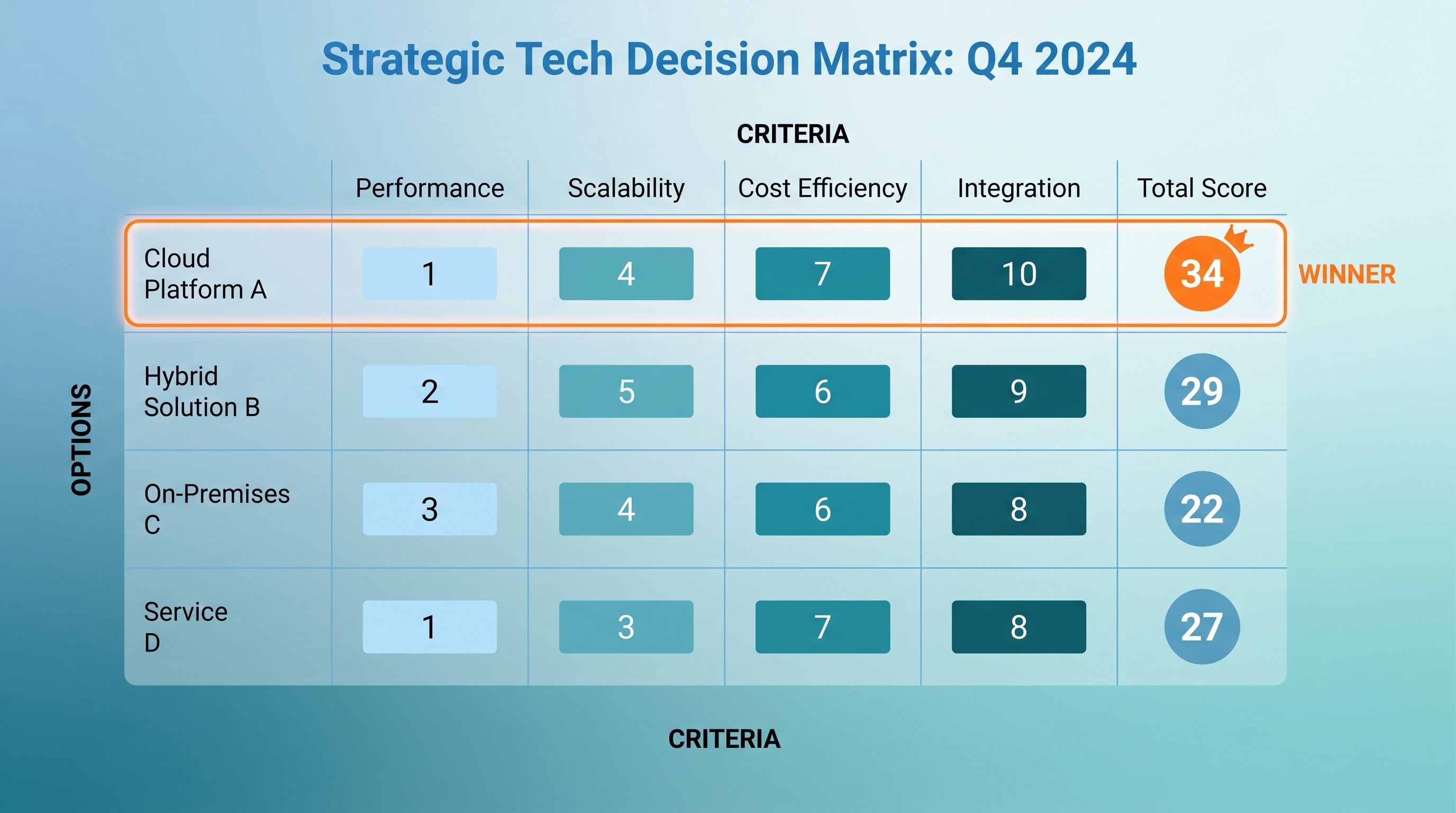
چرا این پرامپت اهمیت دارد
Most people make complex decisions on gut feel, which introduces cognitive biases like anchoring (over-weighting the first option seen) and recency bias (favoring the last option considered). A weighted scoring matrix forces you to define what matters before you evaluate options, separating criteria-setting from scoring — the same technique used in formal procurement, engineering design reviews, and McKinsey-style strategy work. The result is a defensible, documented decision you can explain to a team.
ما از آن برای چه استفاده میکنیم
Use this prompt when you are facing a significant decision with multiple options and competing priorities — choosing a new tech stack, picking a vendor, deciding between job offers, evaluating business strategies, or selecting among product features to build next quarter.
پرامپت
Act as a senior strategy consultant who specializes in structured decision-making frameworks.

I need to make a major decision and want to use a weighted scoring matrix to evaluate my options objectively.

My decision: [DESCRIBE YOUR DECISION IN 1-2 SENTENCES]

My options:
1. [OPTION A]
2. [OPTION B]
3. [OPTION C]
(Add more if needed)

My criteria for evaluating these options (list what matters most):
- [CRITERION 1, e.g. cost]
- [CRITERION 2, e.g. implementation time]
- [CRITERION 3, e.g. team capability]
- [CRITERION 4, e.g. long-term scalability]
(Add or remove criteria as needed)

Constraints and context:
- [ANY HARD CONSTRAINTS — e.g. budget cap, deadline, must-have features]
- [RELEVANT CONTEXT — e.g. team size, current situation, strategic goals]

Do the following:
1. Review my criteria and suggest adjustments if any important factor is missing or if two criteria overlap significantly.
2. Ask me to assign weights to each criterion (1-5, where 5 = most important) — or assign sensible weights yourself based on the context I provided and explain your reasoning.
3. Score each option against every criterion on a scale of 1-10.
4. Calculate the weighted score for each option (score × weight, summed).
5. Present a clean scoring table with: criteria | weight | scores per option | weighted scores | totals.
6. Identify the winning option and explain in 2-3 sentences why it scored highest.
7. Flag any minority concern: if the runner-up is close or if the top scorer has a critical weakness, call it out explicitly.

Output format:
- Start with the scoring table (use markdown table formatting)
- Follow with a 3-paragraph analysis: winner rationale, key tradeoffs, one risk to watch
نتیجه
Scoring Matrix: Cloud Provider for Our SaaS Product
| Criterion | Weight | AWS | GCP | Azure | AWS x W | GCP x W | Azure x W |
|---|---|---|---|---|---|---|---|
| Cost at scale | 5 | 7 | 8 | 6 | 35 | 40 | 30 |
| ML/AI tooling | 4 | 8 | 9 | 7 | 32 | 36 | 28 |
| Team familiarity | 5 | 9 | 5 | 6 | 45 | 25 | 30 |
| Enterprise support | 3 | 9 | 7 | 9 | 27 | 21 | 27 |
| Vendor lock-in risk | 3 | 5 | 6 | 5 | 15 | 18 | 15 |
| TOTAL | 20 | 154 | 140 | 130 |
Winner: AWS (154 points)
AWS wins primarily because of team familiarity (weight 5), which carries the most points. Ramp-up time for a new platform would cost 3-4 engineering months — a real cost that GCP marginal ML advantage does not offset at your current AI workload scale.
Key tradeoff: GCP leads on ML/AI tooling and is the better long-term bet if AI inference becomes your core product. If your roadmap shifts heavily toward custom model serving in the next 12 months, revisit this matrix with ML tooling weighted at 5 instead of 4 — GCP would likely overtake AWS.
Risk to watch: AWS scored lowest on vendor lock-in risk across all three providers. Before committing, audit which AWS-specific services you plan to use. If the answer includes proprietary services like Lambda, DynamoDB, and SageMaker together, your vendor dependency compounds fast.
دیگر تصمیمهای مهم را با حدس و گمان نگیرید
هر تصمیم بزرگی یک مشکل مشترک دارد: گزینههای زیاد، معیارهای متعدد، و ذهنی که دوست دارد میانبر بزند. گزینهها را در ذهن میسنجید، تحت تأثیر آخرین چیزی که بررسی کردید قرار میگیرید، و در نهایت تصمیمی میگیرید که نمیتوانید آن را درست توجیه کنید.
ماتریس تصمیم وزنی یکی از قدیمیترین و قابل اعتمادترین ابزارها در تصمیمگیری ساختاریافته است — که دهههاست در مناقصات دولتی، بازبینیهای طراحی مهندسی، و مشاوره مدیریتی استفاده میشود. این Prompt آن چارچوب را مستقیماً وارد Claude میکند.
این Prompt چه میکند
شما تصمیم، گزینهها، و معیارهای مهم خود را توضیح میدهید. AI ابتدا معیارها را برای پیدا کردن شکافها یا همپوشانیها بررسی میکند، سپس وزنها را تعیین میکند، هر گزینه را امتیازدهی میکند، ماتریس را محاسبه میکند، و یک جدول امتیازدهی به همراه تحلیل سه بخشی ارائه میدهد: دلایل انتخاب برنده، معاوضههای کلیدی، و یک ریسک مهم.
مرحله تعیین وزن عمدی است. با تعریف وزنها قبل از دیدن امتیازها، از این جلوگیری میکنید که معیارها را بر اساس پاسخ از پیش تعیین شده تنظیم کنید — یک خطای رایج در فرایندهای تصمیمگیری غیررسمی.
چه زمانی استفاده کنید
- انتخاب پلتفرم فناوری یا تأمینکننده
- ارزیابی پیشنهادهای شغلی یا تغییر مسیر کاری
- انتخاب ویژگیهای محصول برای اسپرینت یا سهماهه بعدی
- مقایسه استراتژیهای تجاری یا رویکردهای ورود به بازار
- هر تصمیمی که نیاز به مستندات برای تیم یا ذینفعان دارد
بهترین عملکرد با
Claude Sonnet 4.6 خروجی ساختاریافته و استدلال چندمرحلهای را به خوبی مدیریت میکند. GPT-4o هم گزینه مناسبی است. برای تصمیمهای با بیش از پنج معیار یا شش گزینه، تحلیل را در دو مرحله انجام دهید: ابتدا وزندهی به معیارها، سپس امتیازدهی.