این Prompt یادداشتهای رقبا را به نقشه جایگاهسازی تبدیل میکند
چرا این پرامپت اهمیت دارد
Most teams collect competitor information but never convert it into decisions. Without a structured teardown, companies copy feature lists, miss the buyer's real priorities, and ship messaging that sounds identical to everyone else in the market.
ما از آن برای چه استفاده میکنیم
Use this when you need to turn scattered competitor notes, pricing screenshots, sales call takeaways, and product assumptions into a positioning brief before rewriting your homepage, launching a new product, or preparing a sales push.
پرامپت
Role: Act as a senior product marketing strategist who has to prepare a sharp competitive positioning brief for an executive team.

Context: I will give you information about my product, three competitors, the target buyer, and any market notes I have collected. Your job is to find the real positioning gaps instead of producing generic marketing language.

Task: Build a competitive teardown that compares the products, identifies where each competitor is strongest, shows where our product can win, and turns those insights into concrete messaging. Use the exact structure below.

Inputs:
- Our product: [DESCRIBE YOUR PRODUCT]
- Target buyer: [WHO BUYS THIS AND WHY]
- Main job-to-be-done: [CORE CUSTOMER PROBLEM]
- Competitor 1: [NAME + NOTES]
- Competitor 2: [NAME + NOTES]
- Competitor 3: [NAME + NOTES]
- Market notes: [REVIEWS, SALES CALL NOTES, PRICING, FEATURE GAPS, CUSTOMER QUOTES]
- Constraints: [PRICE LIMITS, MISSING FEATURES, COMPLIANCE LIMITS, GO-TO-MARKET REALITY]

Constraints:
1. Do not praise every product equally. Force tradeoffs.
2. If the input evidence is weak, say what is missing instead of inventing certainty.
3. Separate feature differences from positioning differences.
4. Focus on what matters to the target buyer, not what sounds impressive internally.
5. Avoid vague claims like "better user experience" unless you explain why.
6. Flag any area where our product is likely to lose.

Output Format:
1. Executive summary (5-7 bullet points)
2. Competitor comparison table with columns: Product, Ideal Buyer, Core Strength, Weakness, Pricing Signal, Messaging Pattern
3. Positioning map with two axes you choose and justify
4. White-space opportunities: 3 specific gaps the market is leaving open
5. Messaging recommendations:
   - 3 homepage headline options
   - 3 value proposition bullets
   - 3 objection-handling lines for sales
6. Risks and blind spots
7. What additional evidence we should collect next

Write like a strategist briefing a CEO: clear, skeptical, and specific.
نتیجه
Executive summary - Northstar should position itself as the security-first knowledge assistant for regulated mid-market teams, not as a general AI workspace. - The strongest competitive opening is trust plus deployment control: two competitors push speed and breadth, but neither owns governance for compliance-heavy buyers. - Cipher leans on broad integrations and workflow automation, which makes it attractive to operations teams but harder to trust for legal and healthcare use cases. - Briefly wins on ease of use and fast onboarding, but its lightweight controls create a ceiling for buyers who need auditability and role-based access. - Northstar is weakest on ecosystem breadth today; if the buyer prioritizes plug-and-play integrations over compliance, we likely lose. - Messaging should stop leading with "AI productivity" and start leading with "answers your team can trace, govern, and approve."
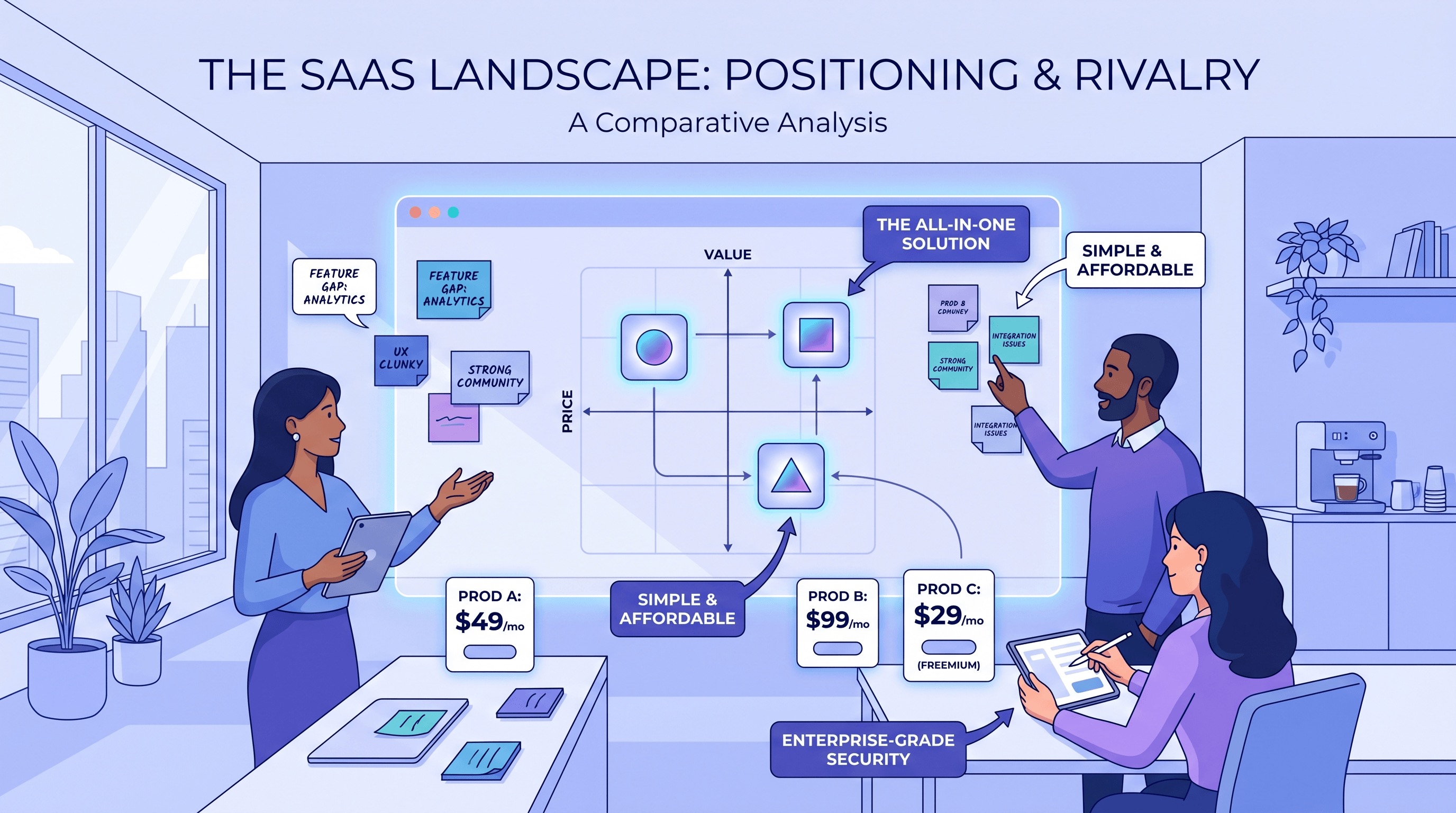
Competitor comparison table Product: Northstar | Ideal Buyer: COO or IT lead at a 200-1000 person regulated company | Core Strength: approval workflows, audit logs, private deployment options | Weakness: fewer prebuilt integrations, slower initial setup | Pricing Signal: premium, consultative | Messaging Pattern: trust, control, policy alignment Product: Cipher | Ideal Buyer: fast-moving operations and enablement teams | Core Strength: many integrations, fast automation, broad workflow coverage | Weakness: vague governance story, noisy interface, shallow permission controls | Pricing Signal: mid-tier SaaS | Messaging Pattern: speed, automation, scale Product: Briefly | Ideal Buyer: small teams adopting AI for the first time | Core Strength: simple onboarding, clean UI, quick time to value | Weakness: limited admin controls, weaker analytics, less enterprise depth | Pricing Signal: lower-cost self-serve | Messaging Pattern: simplicity, instant productivity Product: LedgerMind | Ideal Buyer: finance and procurement teams | Core Strength: reporting depth and approval history | Weakness: narrow use cases, dated product feel, weaker collaboration | Pricing Signal: enterprise contract | Messaging Pattern: compliance, record keeping
Positioning map Axis 1: governance depth. Axis 2: speed to first value. Northstar sits high on governance and mid on speed. Briefly sits high on speed and low on governance. Cipher sits mid-high on speed and mid-low on governance. LedgerMind sits high on governance and low on speed. This shows the open territory clearly: strong governance without the heavy enterprise friction.
White-space opportunities 1. Regulated teams that want AI adoption without sending sensitive knowledge into an uncontrolled workspace. 2. Mid-market buyers who need audit logs and approvals but cannot afford a six-month enterprise rollout. 3. Cross-functional teams that want one governed answer layer across policy, sales, and operations content.
Messaging recommendations Homepage headline options: - AI answers your team can trace, approve, and trust - The governed AI workspace for regulated teams - Move faster with AI without losing control of your knowledge
Value proposition bullets: - Keep sensitive knowledge inside reviewable workflows - Give every answer an audit trail your compliance team can inspect - Roll out AI across teams without creating policy chaos
Objection-handling lines for sales: - If you only need speed, lighter tools may be enough; if you need accountable AI, that tradeoff changes. - We are not the broadest integration layer today, but we are built for teams that cannot treat governance as an afterthought. - The implementation takes longer than a self-serve chatbot because approvals, roles, and data boundaries are part of the product, not add-ons.
Risks and blind spots Northstar may overestimate how much buyers value governance before they feel day-to-day workflow pain. Pricing could also become a barrier if the proof-of-value story is not concrete within the first two weeks.
What additional evidence we should collect next Interview three lost deals, gather screenshots of competitor pricing pages, and review five customer calls to see whether governance is a purchase driver or only a procurement checkbox.
تصویر تولیدشده
این Prompt برای بنیانگذاران، بازاریابهای محصول و تیمهای رشد ساخته شده که درباره رقبا یادداشت دارند اما هنوز آنها را به استراتژی قابل استفاده تبدیل نکردهاند. بهجای اینکه از AI یک مقایسه کلی بخواهید، این Prompt مدل را مجبور میکند بین گزینهها tradeoff تعیین کند، تفاوت ویژگی و positioning را جدا کند و مشخص کند محصول شما واقعاً کجا میتواند برنده شود.
چرا این Prompt مفید است
تحقیق رقابتی معمولاً در یک نقطه خراب میشود: تیمها اسکرینشات، صفحه قیمتگذاری، یادداشت تماس فروش و نظر کاربران را جمع میکنند و همانجا متوقف میشوند. چیزی که بعدش لازم دارند داده بیشتر نیست. آنها به ساختاری نیاز دارند که شواهد را به تصمیم جایگاهسازی تبدیل کند. این Prompt دقیقاً همین کار را انجام میدهد و مدل را وادار میکند خریدار ایدهآل، سیگنال قیمتگذاری، الگوی پیامرسانی و شکافهای بازار را مشخص کند.
چرا این ساختار جواب میدهد
بخش Role مدل را در نقش یک استراتژیست بازاریابی محصول با نگاه انتقادی قرار میدهد و خروجیهای پفدار را کمتر میکند. بخشهای Context و Inputs جا برای یادداشتهای خام فروش، reviewها و teardownهای محصول باز میگذارند. بخش Constraints مهمترین کنترل کیفیت است: به مدل میگوید همه محصولات را یکسان تحسین نکند، از خودش قطعیت نسازد و پشت عبارتهای مبهمی مثل «تجربه بهتر» پنهان نشود. بعد Output Format تحلیل را به داراییهایی تبدیل میکند که یک تیم واقعی واقعاً استفاده میکند: جدول مقایسه، نقشه جایگاهسازی، گزینههای پیامرسانی، ریسکها و فهرست شواهد بعدی.
چه زمانی از آن استفاده کنید
قبل از بازنویسی صفحه اصلی، بهروزرسانی قیمتگذاری، لانچ محصول، بازنویسی deck سرمایهگذار یا تغییر پیام فروش از آن استفاده کنید. وقتی تیم نظر زیاد دارد اما همراستایی کم است، این Prompt بیشترین ارزش را دارد.
خود Prompt
Model: GPT-5، Claude 3.7 Sonnet یا Gemini 2.5 Pro
Use case: تبدیل یادداشتهای پراکنده رقبا به یک brief مشخص برای positioning.
Why it matters: بدون یک teardown ساختاریافته، بیشتر شرکتها همان ادعاهای رقبایشان را تکرار میکنند و شکافهایی را که خریدار واقعاً به آن اهمیت میدهد از دست میدهند.
Role: Act as a senior product marketing strategist who has to prepare a sharp competitive positioning brief for an executive team.

Context: I will give you information about my product, three competitors, the target buyer, and any market notes I have collected. Your job is to find the real positioning gaps instead of producing generic marketing language.

Task: Build a competitive teardown that compares the products, identifies where each competitor is strongest, shows where our product can win, and turns those insights into concrete messaging. Use the exact structure below.

Inputs:
- Our product: [DESCRIBE YOUR PRODUCT]
- Target buyer: [WHO BUYS THIS AND WHY]
- Main job-to-be-done: [CORE CUSTOMER PROBLEM]
- Competitor 1: [NAME + NOTES]
- Competitor 2: [NAME + NOTES]
- Competitor 3: [NAME + NOTES]
- Market notes: [REVIEWS, SALES CALL NOTES, PRICING, FEATURE GAPS, CUSTOMER QUOTES]
- Constraints: [PRICE LIMITS, MISSING FEATURES, COMPLIANCE LIMITS, GO-TO-MARKET REALITY]

Constraints:
1. Do not praise every product equally. Force tradeoffs.
2. If the input evidence is weak, say what is missing instead of inventing certainty.
3. Separate feature differences from positioning differences.
4. Focus on what matters to the target buyer, not what sounds impressive internally.
5. Avoid vague claims like "better user experience" unless you explain why.
6. Flag any area where our product is likely to lose.

Output Format:
1. Executive summary (5-7 bullet points)
2. Competitor comparison table with columns: Product, Ideal Buyer, Core Strength, Weakness, Pricing Signal, Messaging Pattern
3. Positioning map with two axes you choose and justify
4. White-space opportunities: 3 specific gaps the market is leaving open
5. Messaging recommendations:
   - 3 homepage headline options
   - 3 value proposition bullets
   - 3 objection-handling lines for sales
6. Risks and blind spots
7. What additional evidence we should collect next

Write like a strategist briefing a CEO: clear, skeptical, and specific.
نمونه خروجی
نمونه خروجی همراه این پست نشان میدهد باید چه سطحی از دقت انتظار داشته باشید: خریدار ایدهآل، ضعفهای واقعی، متنهای مشخص برای صفحه اصلی و توضیح صریح درباره جایی که محصول احتمالاً میبازد. همین است که این Prompt را واقعاً قابل استفاده مجدد میکند. فقط بازار را خلاصه نمیکند؛ به تیم کمک میکند تصمیم بگیرد بعدی چه بگوید.