La maqueta instantánea de producto: fotos de producto con calidad de estudio sin cámara
Por qué importa este prompt
Product photography is one of the highest-leverage conversion factors in e-commerce, and also one of the most expensive barriers for new sellers. Studies on online shopping behavior consistently show that image quality is the single biggest factor in purchase decisions before a customer ever reads a description. Without a strong product photo, even a great product gets scrolled past. This prompt collapses a $300-800, one-week photography workflow into a five-minute generation cycle you can iterate on as many times as you need before spending a cent on a real photo shoot for your hero campaign.
Para qué lo usamos
You're a solo founder or small e-commerce seller who just got your first product sample back from the manufacturer. You need a scroll-stopping product photo for an Instagram ad launching tomorrow, but a professional photography session costs $300-800 and takes a week to schedule. You have a phone snapshot of the product on your kitchen counter and a launch deadline in 12 hours.
Prompt
Act as a professional product photographer and creative director for e-commerce brands.

Context:
- Product: [DESCRIBE YOUR PRODUCT — e.g. "a matte sage green stainless steel water bottle with a brushed metal cap"]
- Target use: [WHERE THIS IMAGE WILL APPEAR — e.g. "Instagram feed ad", "Amazon main listing image", "website hero banner"]
- Brand aesthetic: [DESCRIBE THE MOOD — e.g. "clean, natural, wellness-focused morning routine" or "bold, energetic, gym culture"]

Task:
Generate a photorealistic product photography image of the product styled for the target use and brand aesthetic described above.

Constraints:
- Do not render any text, logos, or watermarks onto the image — AI-generated text is unreliable and will look broken.
- Keep the product's proportions and materials physically accurate to the description.
- Match lighting to context: soft natural window light for lifestyle/wellness contexts, controlled studio softbox lighting for clean commercial/tech contexts.
- Include shallow depth of field with a blurred, contextually appropriate background (not a plain white void) unless a pure white background is explicitly requested for a marketplace listing.

Output format:
One high-resolution image, followed by 2-3 lines describing the framing, lighting, and background choices made, so I can request specific adjustments.
Resultado
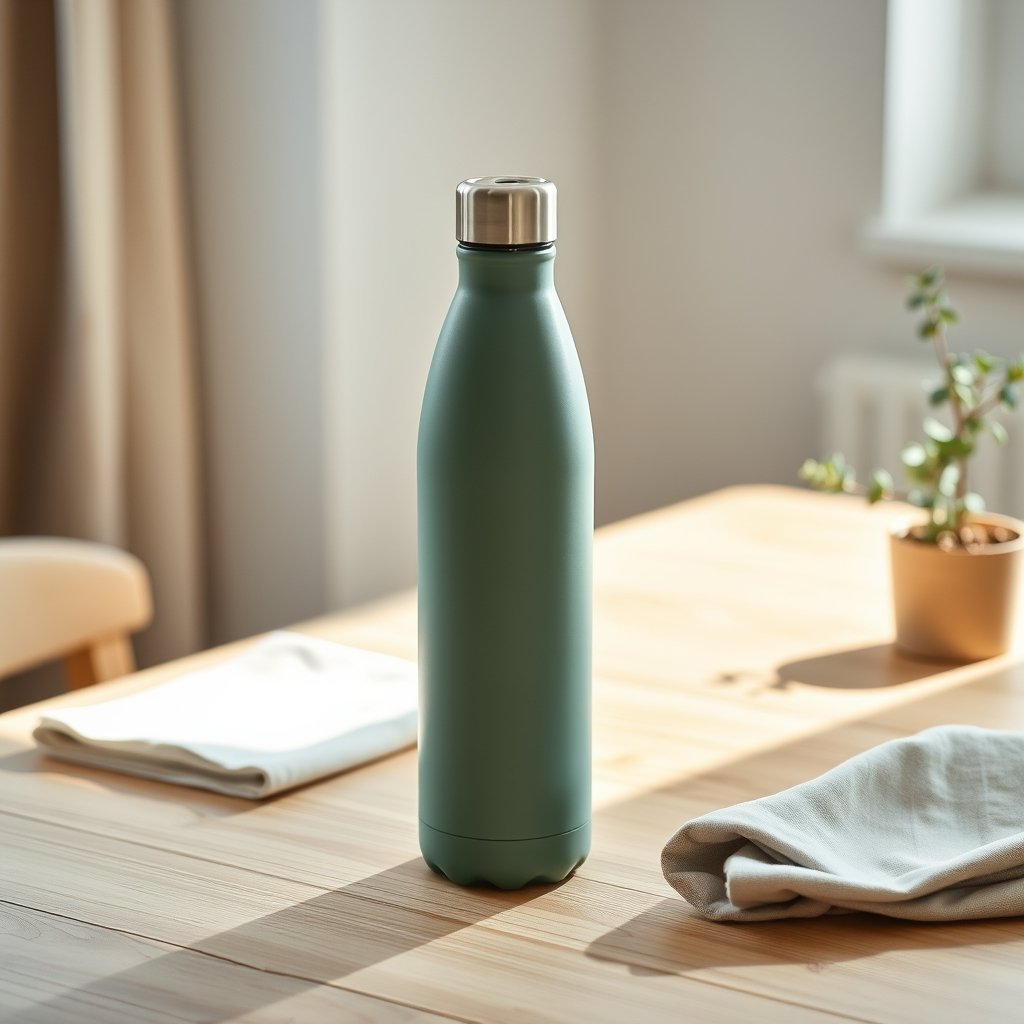
Generated image: A matte sage green stainless steel water bottle stands upright on a light oak wooden table, positioned slightly off-center following the rule of thirds. Soft, warm natural light streams in from the left, casting a gentle directional shadow across the table and giving the bottle's matte finish a soft highlight along its curve without harsh reflections.
In the background, softly out of focus: a folded linen napkin to the left, a small potted eucalyptus sprig and a hint of a window frame to the right, and a wooden chair barely visible at the frame's edge. The shallow depth of field (achieved by simulating a 100mm macro lens at a wide aperture) keeps the bottle in crisp focus while the surrounding elements read as an inviting, sunlit breakfast-nook setting rather than a sterile studio backdrop.
Framing and lighting notes: The camera angle is a slight three-quarter view at eye level, standard for hero product shots because it shows both the label-facing side and the cap detail. The light source direction (left, low-angle, warm color temperature) was chosen to suggest early morning — reinforcing the "morning routine" brand aesthetic requested. To adapt this for a marketplace listing instead of a lifestyle ad, request "pure white seamless background, front-facing angle, even studio lighting with no visible shadow" instead.
Imagen generada
Caso de uso: Eres un fundador único o un pequeño vendedor de comercio electrónico que acaba de recibir la primera muestra de producto del fabricante. Necesitas una foto de producto que detenga el desplazamiento para un anuncio de Instagram que se lanzará mañana, pero una sesión fotográfica profesional cuesta entre $300 y $800 y tarda una semana en programarse. Tienes una foto de tu teléfono del producto en la encimera de tu cocina y una fecha límite de lanzamiento en 12 horas.
Por qué importa: La fotografía de producto es uno de los factores de conversión de mayor apalancamiento en el comercio electrónico, y también una de las barreras más costosas para los nuevos vendedores. Los estudios sobre el comportamiento de compra en línea muestran consistentemente que la calidad de la imagen es el factor individual más importante en las decisiones de compra antes de que un cliente lea siquiera una descripción. Sin una foto de producto sólida, incluso un producto excelente pasa desapercibido. Esta instrucción reduce un flujo de trabajo de fotografía de $300–800 y una semana a un ciclo de generación de cinco minutos que puedes iterar tantas veces como necesites antes de gastar un centavo en una sesión fotográfica real para tu campaña principal.
Este prompt utiliza una estructura de Rol + Contexto + Tarea + Restricciones + Formato de Salida, adaptada específicamente para la generación de imágenes en lugar de salida de texto. La decisión clave de diseño es prohibir explícitamente el texto y los logotipos generados — los modelos de imágenes de IA suelen renderizar texto confuso e inutilizable, por lo que este prompt mantiene esa responsabilidad en manos del vendedor (añadir la marca real en la posproducción) mientras permite que el modelo se concentre por completo en lo que hace bien: iluminación, composición y materiales fotorrealistas. La salida incluye un breve desglose de las decisiones de encuadre e iluminación, lo que convierte una imagen de un solo intento en un punto de partida editable — cambia una variable (fondo, estilo de iluminación, ángulo) y regenera en lugar de empezar desde cero.