Prompt de AI: convierte reportes vagos de bugs en briefs de depuración
Por qué importa este prompt
Most teams lose time not on fixing bugs, but on clarifying them. This prompt helps teams move faster by converting messy reports into structured, testable investigation plans.
Para qué lo usamos
Turn vague Slack messages, support tickets, or QA notes into a clean debugging brief that engineers can act on immediately.
Prompt
You are a senior debugging assistant. Turn the rough bug report below into a developer-ready debugging brief.

Goals:
1. Rewrite the issue in one clear sentence.
2. Extract the likely product area, affected users, and severity.
3. List missing details needed to reproduce the bug.
4. Produce step-by-step reproduction instructions using only confirmed information. If anything is unknown, mark it explicitly.
5. Suggest the 3 most likely root-cause hypotheses, ordered by probability.
6. Recommend the next 5 debugging actions, including logs, metrics, feature flags, environment checks, and recent code paths to inspect.
7. Return the result in this structure:
   - Summary
   - Known facts
   - Unknowns
   - Reproduction steps
   - Likely causes
   - Next actions

Bug report:
[PASTE RAW BUG REPORT HERE]
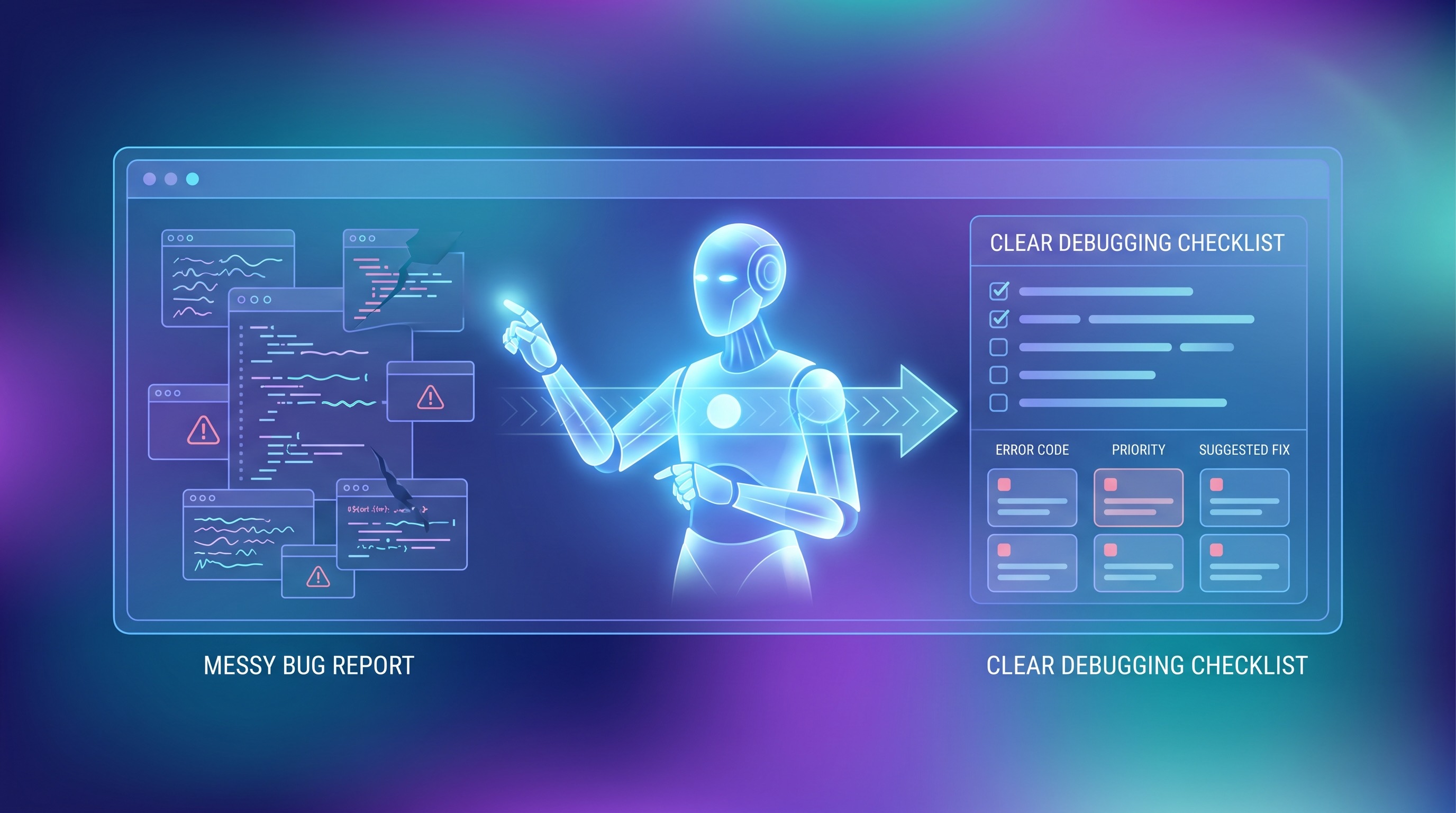
Los reportes de bugs suelen llegar como mensajes dispersos en Slack, capturas incompletas o una nota rápida del equipo de QA. El verdadero cuello de botella no siempre es arreglar el problema, sino entender qué ocurrió realmente.
Este prompt te ayuda a convertir descripciones crudas de errores en un brief de depuración claro. Le pide al modelo separar hechos confirmados de suposiciones, detectar la información que falta, proponer causas probables y sugerir los siguientes pasos de investigación.
Por qué este prompt es útil
Es especialmente valioso para engineering managers, equipos de soporte, líderes de QA y desarrolladores que necesitan priorizar incidencias con rapidez sin perder contexto. En lugar de reescribir reportes a mano, puedes generar un brief estructurado en segundos.
La mejor forma de usarlo
Pega el reporte original exactamente como lo recibiste. Incluye detalles del dispositivo, notas del entorno, mensajes de error, capturas y marcas de tiempo. Cuanto más contexto bruto aportes, mejor será el brief de depuración.
Qué esperar del resultado
Una buena respuesta debería darte un resumen conciso, dudas claramente señaladas, pasos reproducibles cuando sea posible, varias hipótesis sobre la causa raíz y una lista corta de acciones para la siguiente ronda de depuración.