Startup 3D-prints a rigid beam in the vacuum of space for the first time
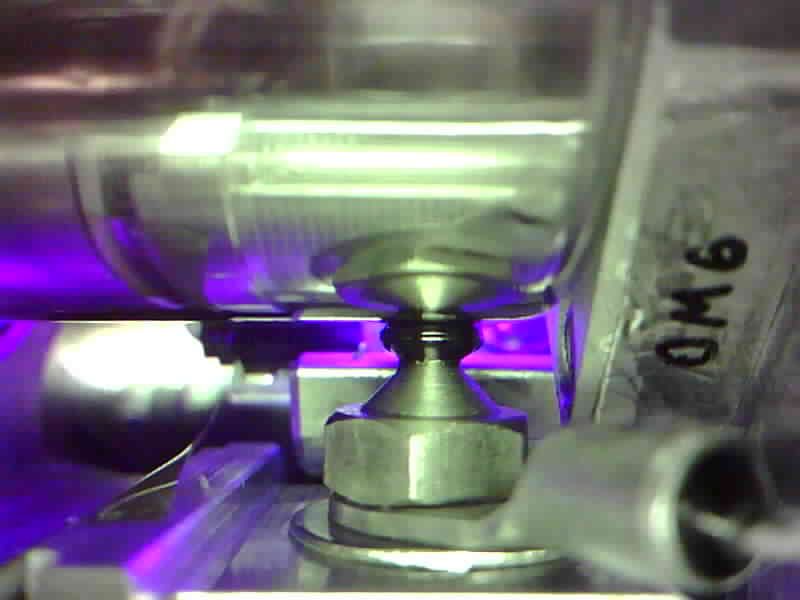
Warsaw- and Berlin-based startup Orbital Matter says its Replicator 2 satellite has 3D-printed a rigid, half-meter beam in the open vacuum of space, a milestone the company calls the first time a free-flying spacecraft has manufactured a rigid structural part in orbit. Replicator 2 launched July 7, 2026 aboard a SpaceX Falcon 9 Transporter-17 rideshare mission carrying four onboard printers built to test the technique.
The achievement matters because satellites today launch with their structures — solar arrays, antennas, trusses — already built and folded up, which caps how large they can be by what fits inside a rocket fairing. If spacecraft can instead print their own structural components after reaching orbit, the size limit shifts from “what fits in a fairing” to “how much raw material you can carry,” opening the door to solar arrays and antennas many times larger than anything deployable today.
How the printing actually works
Each printer extrudes coils of a custom resin that ultraviolet light cures into a rigid cylindrical beam, a process that needs no heating element. That detail matters specifically because of the vacuum: with no atmosphere to carry heat away, a heat-cured process would take months to cool and solidify in orbit, while UV curing works almost immediately. Four onboard cameras monitored the print automatically. An early test run released excess resin and required a software fix, and one of the four printers failed outright during the mission — but a second printer successfully completed a beam that went on to deploy a flexible solar array, Orbital Matter said.
The company isn't starting from zero. Its first attempt, a 3U CubeSat launched on Ariane 6 in 2024, aimed to print a 50 cm beam at 580 km altitude but never returned a confirmed successful result. Redwire, a competitor, printed similar beams in an Earth-based vacuum chamber in 2023, but Orbital Matter says this is the first time the process has been demonstrated by a spacecraft actually flying in orbit rather than in ground-based simulation.
Funding, partners, and what's unproven
Orbital Matter, founded in 2022 by Jakub Stojek and Robert Ihnatisin, has raised roughly $3 million to date and separately secured €500,000 from the European Innovation Council's Pre-Accelerator program. The company is also working with Thales Alenia Space on a related mission to test an in-orbit-manufactured antenna boom, and has drawn public comment from ESA engineer Advenit Makaya on the limits of today's fold-out deployable structures.
The roadmap is ambitious and explicitly unproven at scale. An earlier target called for two 3-meter beams supporting a 1 kW solar array by late 2027; a newer plan points to a 5 kW demonstration in 2028 and more than 100 kW per solar wing by 2030, with individual booms eventually reaching 100 meters. Orbital Matter has not named a commercial customer publicly, and the length of any printed beam today is still capped by how much resin a satellite can carry. Grand View Research pegs the broader 3D-printed satellite components market at roughly $213 million in 2026 — a figure dominated by parts printed on Earth, not in orbit, underlining how early-stage in-space manufacturing still is.
If the approach scales the way Orbital Matter hopes, the near-term customers are likely to be operators of large communications or power-beaming satellites who need bigger solar arrays than a rocket fairing can currently accommodate — a problem that's becoming more acute as demand for in-orbit compute and power grows.
Publicado originalmente por Cryptopolitan. Lee el artículo original para más detalles.
Ver fuente original