Turn source code into API docs your team can use
Why this prompt matters
Bad API docs slow integration, create support tickets, and turn simple launches into guesswork. A strong prompt helps teams extract the contract from real code, catch missing edge cases early, and ship cleaner developer experience without starting from a blank page.
What we use it for
Use this when you have working API code but weak or outdated documentation, especially before handing an endpoint to frontend engineers, partners, QA teams, or external developers.
Prompt
Role: Act as a senior API platform engineer and technical writer.

Context: I will give you source code, route definitions, validators, example payloads, and any notes I have. The code may be incomplete, inconsistent, or lightly documented. Your job is to infer the real API contract from the implementation without inventing behavior that is not supported by the code.

Task: Produce complete API documentation for [API NAME] based on the code and notes I provide. Document each endpoint with: purpose, HTTP method, path, authentication requirements, request headers, path/query/body parameters, validation rules, request example, success response example, error responses, important edge cases, and one curl example. If the API behavior is ambiguous, explicitly label the uncertainty and list the exact code area that needs human review.

Inputs:
- Product/service name: [API NAME]
- Intended audience: [INTERNAL DEVELOPERS | PARTNERS | PUBLIC DEVELOPERS]
- Source code or route files: [PASTE CODE OR FILE CONTENTS]
- Validation schemas / types: [PASTE SCHEMAS]
- Auth details: [PASTE AUTH LOGIC OR NOTES]
- Known business rules: [PASTE NOTES]

Constraints:
1. Do not invent endpoints, fields, or response codes that are not supported by the inputs.
2. Separate confirmed behavior from inferred behavior.
3. Use plain English and keep jargon low unless the code requires it.
4. Include warnings for breaking changes, unsafe defaults, or inconsistent naming.
5. If examples are missing, generate clearly labeled illustrative examples that match the schema.
6. Call out undocumented pagination, rate limits, idempotency behavior, retries, and nullability when visible in code.
7. End with a short section titled "Gaps to confirm with engineering".

Output Format:
Return the result in this exact structure:
1. API overview
2. Authentication
3. Base URL and versioning
4. Endpoint reference (repeat per endpoint)
5. Error model
6. Common workflows
7. Breaking-change and quality risks
8. Gaps to confirm with engineering
Result
Generated Image
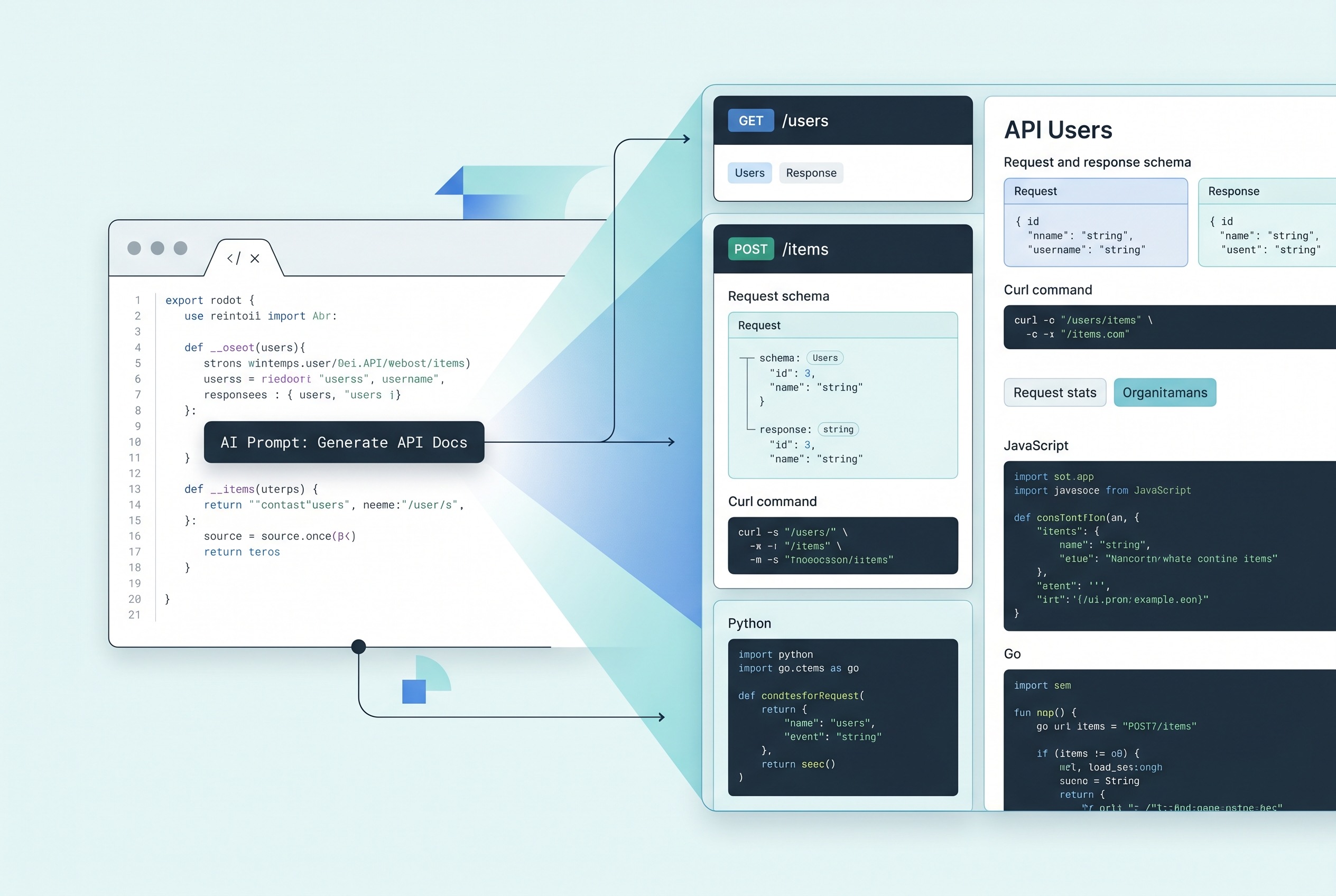
This PROMPT is for teams that have real API code but weak documentation. Instead of asking an AI model to write docs in the abstract, it pushes the model to read implementation details, separate confirmed behavior from inference, and produce something a frontend engineer or integration partner can actually use.
The design is intentional. The Role frames the model as both an API platform engineer and a technical writer, which improves precision and readability at the same time. The Context warns that the code may be messy or incomplete, which nudges the model to surface uncertainty instead of inventing confident nonsense. The Task then asks for the pieces that matter in production: auth, validation, request and response shapes, error handling, edge cases, and curl examples.
The Constraints are what make this reusable. They tell the model not to invent unsupported endpoints, to label ambiguity clearly, and to call out practical issues like pagination, rate limits, idempotency, retries, and nullability. Those details are often exactly what developers need and exactly what hand-written docs forget.
If you work with FastAPI, Express, Laravel, Django, Rails, Go, or Java backends, this PROMPT is a fast way to turn implementation into a usable contract. It also works well as a QA pass before publishing docs, because it tends to expose mismatched field names, undocumented error codes, and business rules that only exist in validators or controller branches.