The Jargon Stripper: Turn a Dense Technical Spec Into an Executive Summary Non-Engineers Will Actually Read
Why this prompt matters
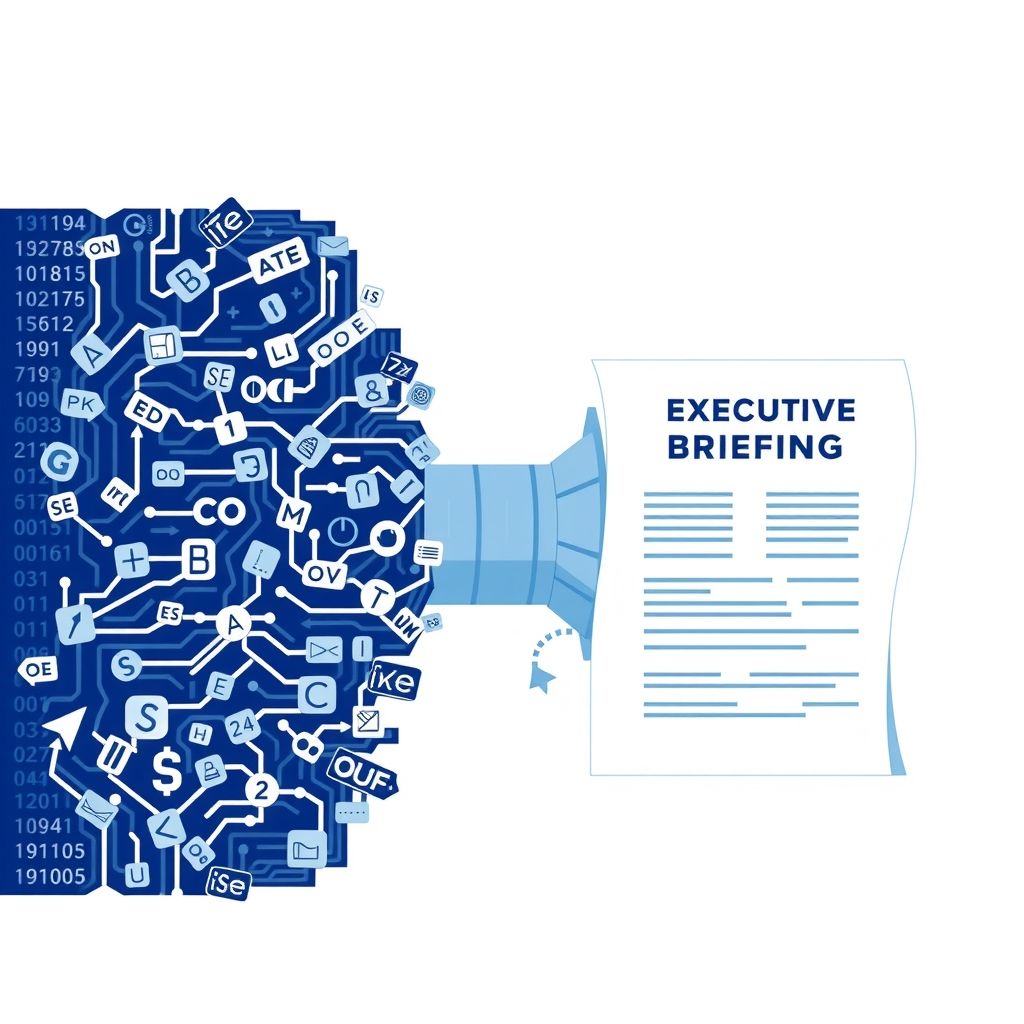
When technical documents don't get translated, one of two expensive things happens: executives skip them entirely and approve or reject the work based on a hallway conversation and whoever argued most confidently, or they skim the document, miss a caveat buried in paragraph nine, and greenlight something they didn't actually understand. Both patterns show up later as budget overruns, re-litigated scope arguments, or a postmortem that starts with 'we didn't realize that part was still unresolved.' A five-minute summary pass catches that before the decision gets made, not after.
What we use it for
A product manager has a 14-page engineering RFC proposing a database migration due for review at Friday's leadership sync. The VP of Product has 90 seconds between meetings to read it and will be asked by the CEO afterward whether it's safe to approve. The PM pastes the RFC into this prompt that morning instead of writing the summary by hand under deadline pressure.
Prompt
Role: Act as a technical communication specialist who has spent years translating engineering and product specs for executives, boards, and non-technical stakeholders without losing accuracy.

Context: I will paste a technical document (spec, RFC, architecture proposal, postmortem, or research summary). The audience is [AUDIENCE, e.g. VP of Product, the board, a non-technical founder]. They have [TIME BUDGET, e.g. 90 seconds, 2 minutes] to read this before [DECISION CONTEXT, e.g. a Friday leadership review, a go/no-go call].

Task: Produce an executive summary that lets this audience make an informed decision without reading the full document, while preserving every fact that changes the decision.

Constraints:
- Do not simplify away anything that affects cost, timeline, risk, or scope — simplify the LANGUAGE, not the substance.
- If the source document is ambiguous, contradicts itself, or is missing a number the audience will ask for, say so explicitly instead of guessing or smoothing it over.
- No buzzwords, no hedging filler ("it's worth noting", "at a high level"), no restating the question back before answering it.
- Use plain English sentence structure. If a technical term is unavoidable, define it in the same sentence, once.
- Keep the entire output within [MAX LENGTH, e.g. 300 words / 1 page].
- If the document recommends an action, state the recommendation in the first two sentences — do not bury it.

Output Format:
1. The Decision (1-2 sentences: what is being asked of this reader, and the recommended answer)
2. What's Changing and Why (3-5 sentences: the core technical change in plain language, and the business reason it exists)
3. What It Costs (time, money, headcount, or risk — concrete numbers from the source document, not vague ranges unless the source itself is vague)
4. What Could Go Wrong (the 2-3 real risks or tradeoffs the source document raises, stated plainly, including anything the author hedged on)
5. What You're Not Being Told (anything missing from the source that this audience would reasonably ask for — mark clearly as a gap, not a fact)
6. One-Line Verdict (a single sentence this reader could repeat in a hallway if asked "so what's the deal with this?")

Source document to summarize:
[PASTE TECHNICAL DOCUMENT HERE]
Result
1. The Decision Approve the phased database migration with the 6-week timeline, but push back on running phase 2 and phase 3 in parallel — the RFC's own risk section argues against it.
2. What's Changing and Why The team wants to move the orders database from a single Postgres instance to a sharded setup because the current database is hitting write-capacity limits during peak checkout hours, causing the slowdowns reported last month. The migration splits customer data by region across three database shards instead of one, which is a standard way to let a database handle more simultaneous writes.
3. What It Costs Six weeks of two senior engineers' time (roughly 0.4 of the quarter's backend capacity), plus an estimated $8,400/month in additional infrastructure cost once all three shards are running in production. No new hires needed.
4. What Could Go Wrong The RFC flags two real risks: first, any reporting query that currently pulls data across all customers at once will need to be rewritten to query three shards instead of one, and the author admits not all of these queries have been found yet. Second, the cutover window requires roughly 20 minutes of read-only mode for checkout, which the RFC proposes doing at 3am UTC but has not yet confirmed with the on-call rotation.
5. What You're Not Being Told The RFC does not say how many of those cross-shard reporting queries exist, which means the real engineering cost could be underestimated. It also doesn't name who owns confirming the 3am cutover window with on-call — ask for this before approving the date.
6. One-Line Verdict The migration itself is sound and necessary, but approve it contingent on the team finding and costing the reporting-query rewrites first — that's the actual unknown, not the migration mechanics.
Most executive summaries fail in one of two directions. Either they oversimplify and strip out the detail that actually mattered, or they stay so close to the source document that the reader is still doing translation work themselves. This prompt is built to avoid both failure modes by forcing a specific output shape instead of a generic “write me a summary” request.
The Role section matters more than it looks. Framing the model as a technical communication specialist — not a generic assistant — pushes it toward preserving substance while changing register, which is a different skill than compressing word count. The Context section asks for the audience and their time budget up front, because a summary for a CEO with 90 seconds is structurally different from one for a VP doing due diligence over lunch.
The Constraints are where this prompt earns its reuse value. Telling the model to flag ambiguity instead of smoothing it over is the single most important line in the whole prompt — most AI-generated summaries default to confident-sounding prose even when the source document hedges, which is exactly how a buried caveat gets lost on the way to a leadership meeting.
The output format is deliberately decision-shaped rather than summary-shaped: a stated recommendation first, then cost, then what could go wrong, then what's missing, then a one-line verdict the reader could repeat out loud. That last section exists because executives often get asked to restate a decision they only skimmed — giving them one clean sentence to lean on prevents a confident-sounding but inaccurate paraphrase in the next meeting.
If you regularly sit between a technical team and a non-technical decision-maker — product managers, chiefs of staff, engineering leads reporting up, or technical founders briefing a board — this is a prompt you'll reach for weekly, not once.