The Instant Product Mockup: Studio-Quality Product Photos Without a Camera
Why this prompt matters
Product photography is one of the highest-leverage conversion factors in e-commerce, and also one of the most expensive barriers for new sellers. Studies on online shopping behavior consistently show that image quality is the single biggest factor in purchase decisions before a customer ever reads a description. Without a strong product photo, even a great product gets scrolled past. This prompt collapses a $300-800, one-week photography workflow into a five-minute generation cycle you can iterate on as many times as you need before spending a cent on a real photo shoot for your hero campaign.
What we use it for
You're a solo founder or small e-commerce seller who just got your first product sample back from the manufacturer. You need a scroll-stopping product photo for an Instagram ad launching tomorrow, but a professional photography session costs $300-800 and takes a week to schedule. You have a phone snapshot of the product on your kitchen counter and a launch deadline in 12 hours.
Prompt
Act as a professional product photographer and creative director for e-commerce brands.

Context:
- Product: [DESCRIBE YOUR PRODUCT — e.g. "a matte sage green stainless steel water bottle with a brushed metal cap"]
- Target use: [WHERE THIS IMAGE WILL APPEAR — e.g. "Instagram feed ad", "Amazon main listing image", "website hero banner"]
- Brand aesthetic: [DESCRIBE THE MOOD — e.g. "clean, natural, wellness-focused morning routine" or "bold, energetic, gym culture"]

Task:
Generate a photorealistic product photography image of the product styled for the target use and brand aesthetic described above.

Constraints:
- Do not render any text, logos, or watermarks onto the image — AI-generated text is unreliable and will look broken.
- Keep the product's proportions and materials physically accurate to the description.
- Match lighting to context: soft natural window light for lifestyle/wellness contexts, controlled studio softbox lighting for clean commercial/tech contexts.
- Include shallow depth of field with a blurred, contextually appropriate background (not a plain white void) unless a pure white background is explicitly requested for a marketplace listing.

Output format:
One high-resolution image, followed by 2-3 lines describing the framing, lighting, and background choices made, so I can request specific adjustments.
Result
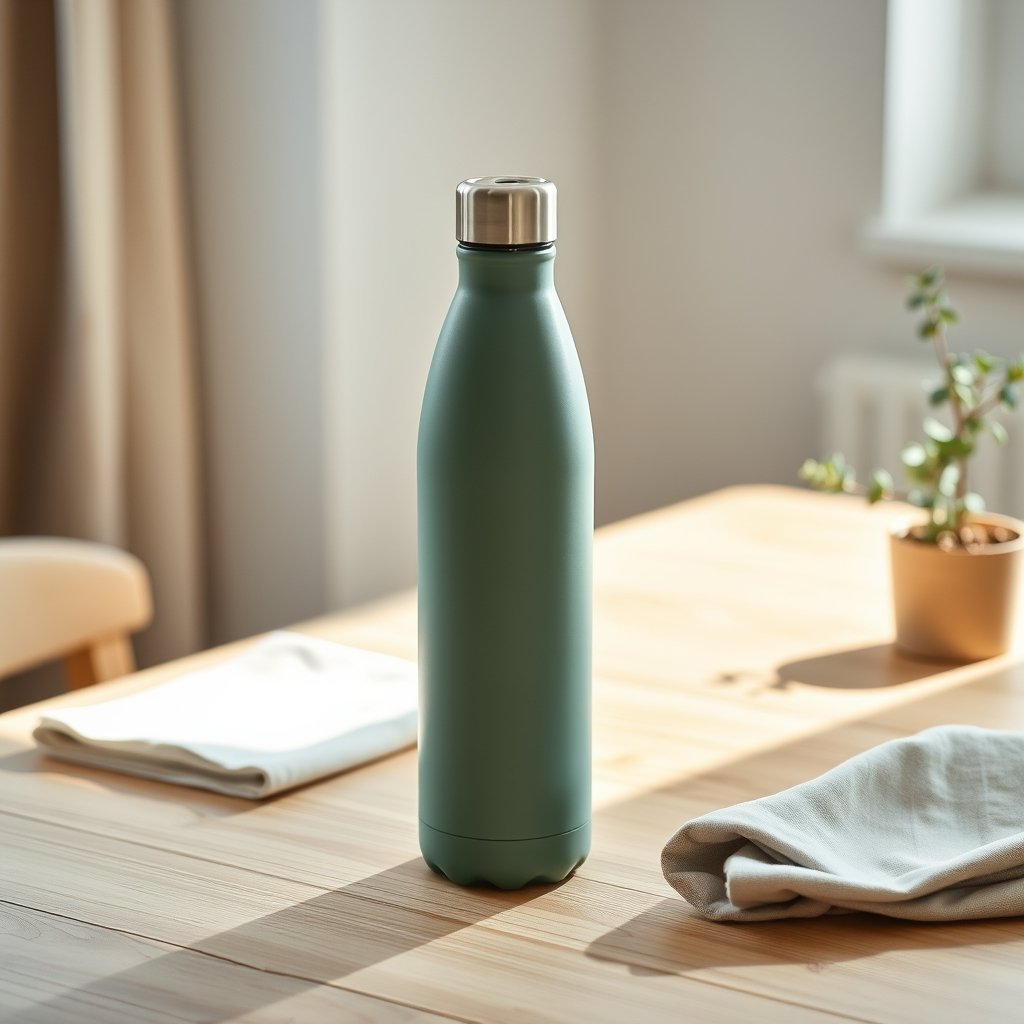
Generated image: A matte sage green stainless steel water bottle stands upright on a light oak wooden table, positioned slightly off-center following the rule of thirds. Soft, warm natural light streams in from the left, casting a gentle directional shadow across the table and giving the bottle's matte finish a soft highlight along its curve without harsh reflections.
In the background, softly out of focus: a folded linen napkin to the left, a small potted eucalyptus sprig and a hint of a window frame to the right, and a wooden chair barely visible at the frame's edge. The shallow depth of field (achieved by simulating a 100mm macro lens at a wide aperture) keeps the bottle in crisp focus while the surrounding elements read as an inviting, sunlit breakfast-nook setting rather than a sterile studio backdrop.
Framing and lighting notes: The camera angle is a slight three-quarter view at eye level, standard for hero product shots because it shows both the label-facing side and the cap detail. The light source direction (left, low-angle, warm color temperature) was chosen to suggest early morning — reinforcing the "morning routine" brand aesthetic requested. To adapt this for a marketplace listing instead of a lifestyle ad, request "pure white seamless background, front-facing angle, even studio lighting with no visible shadow" instead.
Generated Image
Use case: You're a solo founder or small e-commerce seller who just got your first product sample back from the manufacturer. You need a scroll-stopping product photo for an Instagram ad launching tomorrow, but a professional photography session costs $300-800 and takes a week to schedule. You have a phone snapshot of the product on your kitchen counter and a launch deadline in 12 hours.
Why it matters: Product photography is one of the highest-leverage conversion factors in e-commerce, and also one of the most expensive barriers for new sellers. Studies on online shopping behavior consistently show that image quality is the single biggest factor in purchase decisions before a customer ever reads a description. Without a strong product photo, even a great product gets scrolled past. This prompt collapses a $300-800, one-week photography workflow into a five-minute generation cycle you can iterate on as many times as you need before spending a cent on a real photo shoot for your hero campaign.
This prompt uses a Role + Context + Task + Constraints + Output Format structure, adapted specifically for image generation rather than text output. The key design choice is explicitly banning generated text and logos — AI image models routinely render garbled, unusable text, so the prompt keeps that responsibility with the seller (add real branding in post-production) while letting the model focus entirely on what it does well: lighting, composition, and photorealistic materials. The output includes a short breakdown of the framing and lighting choices, which turns a one-shot image into an editable starting point — swap one variable (background, lighting style, angle) and regenerate instead of starting from scratch.