Engineers Can Generate API Documentation Directly From Endpoint Code
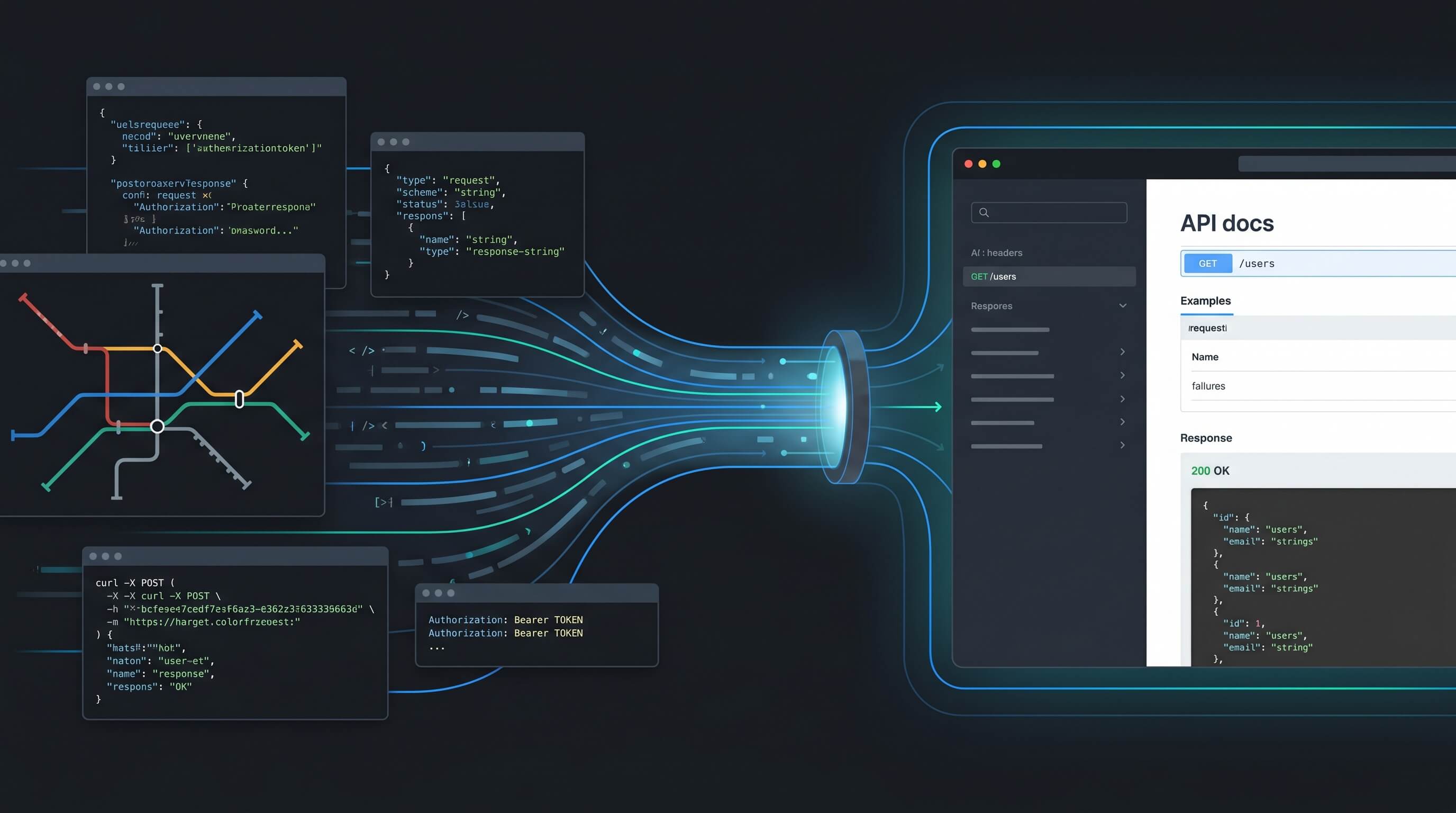
Why this prompt matters
Engineering teams often ship endpoints faster than they document them, which leaves frontend developers, partners, QA, and new teammates relying on source code to understand basic usage. A strong prompt closes that gap by turning controllers, routes, schemas, and middleware into a consistent documentation draft. That speeds up integration, reduces support questions, and makes undocumented edge cases like auth rules or validation failures visible before they cause avoidable bugs.
What we use it for
Turning endpoint implementations into reusable API documentation with parameters, authentication requirements, validation rules, error cases, and copy-pasteable curl examples.
Prompt
Act as a senior API technical writer and backend engineer. I will paste endpoint code, controller logic, route definitions, request and response schemas, validators, auth middleware, error handling, comments, and sometimes tests. Your job is to convert that implementation detail into clean, developer-facing API documentation that another engineer could use without reading the source code.

Return your answer in exactly these sections:
1. Endpoint Summary
2. HTTP Method and Path
3. What This Endpoint Does
4. Authentication Requirements
5. Request Headers
6. Path Parameters
7. Query Parameters
8. Request Body Schema
9. Validation Rules and Constraints
10. Success Response
11. Error Responses
12. Example cURL Request
13. Example Success Response JSON
14. Implementation Notes and Assumptions

Rules:
- Base the documentation only on the code and context provided. Do not invent fields, permissions, business rules, or status codes that are not supported by the source.
- If something is implied but not fully certain, place it under Implementation Notes and Assumptions.
- Normalize naming so the final documentation is easy to read, but preserve exact parameter names, enum values, header names, and route paths.
- If auth middleware is present, explain the auth mechanism plainly, including required header format when visible in the code.
- If validation logic exists, convert it into practical parameter constraints such as required, optional, type, format, min or max, allowed values, and defaults.
- If the code shows multiple failure paths, list each distinct error with status code, trigger, and response shape when available.
- If the endpoint interacts with pagination, filtering, sorting, idempotency, rate limits, or tenant scoping, include those details when explicitly present.
- Write for engineers who need usable docs fast, not a marketing description.
- Keep the output concise but implementation-ready.

Source code and related context:
[PASTE CODE HERE]
Result
API documentation often falls behind the code that actually ships. A backend team adds a new route, updates validation, changes an auth requirement, or introduces a new error path, but the docs stay partial or stale. That creates a familiar problem inside engineering teams: people have to read controllers, schemas, and middleware just to answer basic integration questions.
This prompt is designed to turn that implementation detail into usable documentation quickly. Instead of asking the model for a vague summary, it forces a specific documentation structure: endpoint summary, method and path, authentication, headers, parameters, request schema, validation rules, success response, error responses, and a cURL example. That structure matters because it mirrors the exact questions frontend developers, QA engineers, partner engineers, and technical writers usually need answered.
The prompt also reduces hallucination risk by telling the model to stay grounded in the provided code and move uncertain points into an assumptions section. That is especially important for API work, where inventing a field or status code makes the output worse than useless. By separating confirmed implementation details from inferred notes, the result stays practical and safer to reuse.
Another reason this prompt works is that it translates low-level code patterns into developer-facing language. Middleware becomes a plain explanation of authentication requirements. Validation logic becomes readable parameter constraints. Error branches become documented failure cases with status codes and likely triggers. Tests and route definitions become supporting evidence for examples and behavior.
Used well, this prompt can help teams build internal docs faster, improve handoff between backend and frontend engineers, and create a cleaner first draft for external API references without starting from a blank page.