AI Prompt: Plan an EV Road Trip Without Charger Guesswork
Why this prompt matters
EV road trips get stressful when range, charger reliability, weather, and arrival battery all interact. This prompt turns scattered trip details into a clear plan that helps drivers travel with more confidence and fewer charging surprises.
What we use it for
Turn rough EV trip details into a charging plan with safer stops, better timing, and a backup option.
Prompt
You are an EV road trip planner. Build a practical charging plan for my trip using only the details I provide.

Trip details:
- Vehicle: [make/model/year and usable battery if known]
- Starting battery: [percent]
- Route: [start] to [destination]
- Distance or route link: [optional]
- Weather: [hot/cold/rain/wind if relevant]
- Passengers/cargo: [light/medium/heavy]
- Driving style: [conservative/normal/fast]
- Preferred arrival battery: [percent]
- Charger preference: [fastest/fewest stops/lowest cost/reliable networks]
- Max comfortable leg between stops: [miles or km]
- Charging memberships: [Tesla Supercharger, Ionity, Electrify America, etc.]
- Backup constraints: [avoid low battery, avoid overnight charging, kid stops, food stop timing, etc.]

Return the answer in this exact structure:
1. Trip assumptions
2. Recommended charging stops table with estimated arrival battery, target charge level, estimated charging time, and why each stop was chosen
3. Best overall strategy in plain English
4. Backup plan if a charger is busy or offline
5. Cost-saving alternative
6. Risk factors that could reduce range
7. A final pre-departure checklist

Important rules:
- Do not pretend you have live charger availability unless I provide it.
- Clearly label estimates as estimates.
- If information is missing, list the minimum missing details first, then give the best provisional plan possible.
- Optimize for confidence and low stress, not just shortest travel time.
Result
Trip assumptions: 2024 EV crossover, 82% start, cool weather, normal driving. Recommended charging stops: Stop 1 after 145 miles, arrive at 24%, charge to 78% for 24 minutes at a high-reliability fast charger near food and restrooms. Stop 2 after 132 miles, arrive at 18%, charge to 62% for 18 minutes. Best strategy: take two medium fast-charge sessions instead of one deep charge, keep a 15% safety buffer, and avoid pushing the final leg in cold weather.
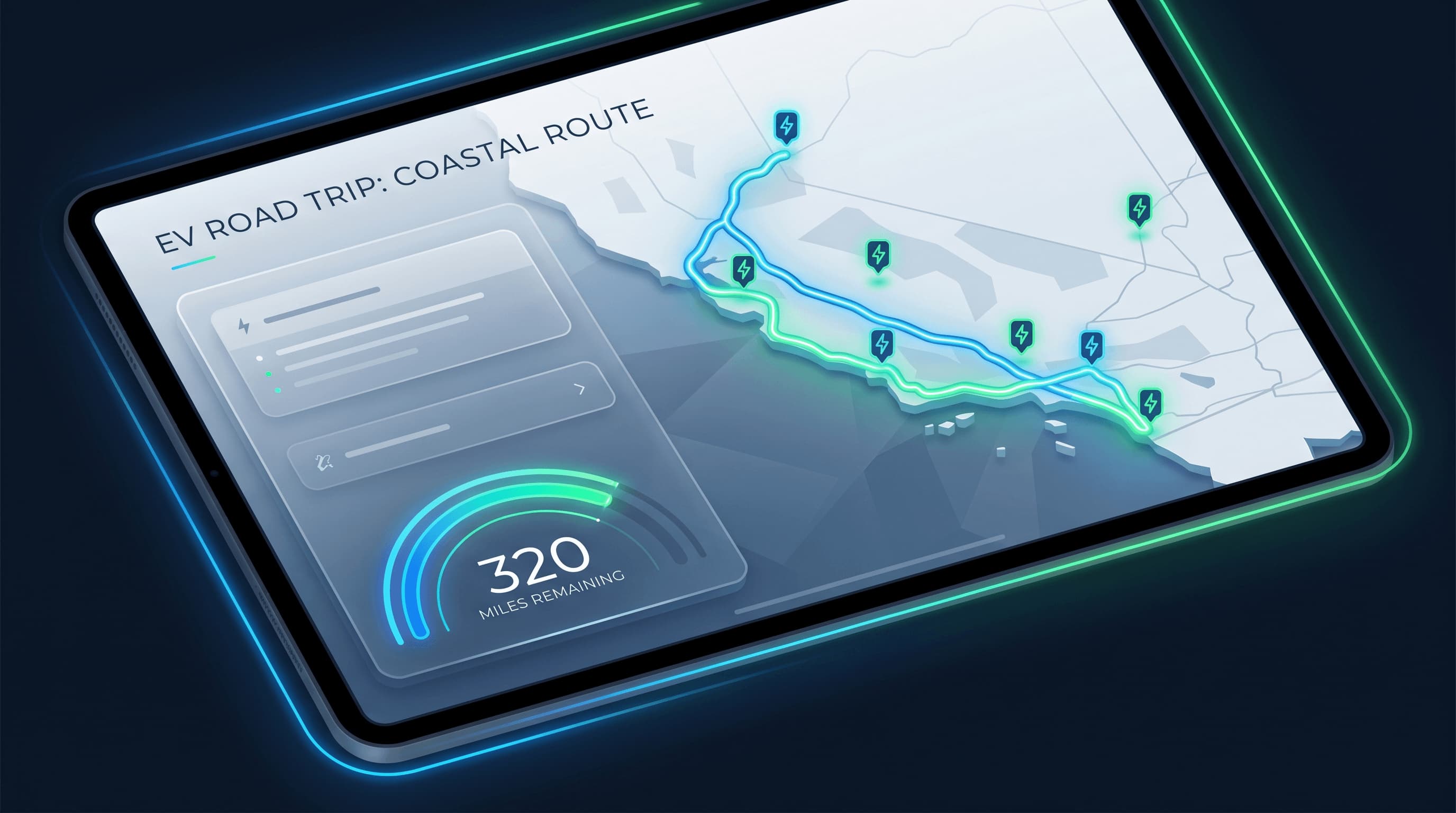
Generated Image
Planning an EV road trip is easy to overcomplicate. Range changes with speed, weather, traffic, cargo, and charger reliability, which means a simple map route is not enough.
This prompt gives GPT-5 a structured way to turn your trip details into a practical charging plan. Instead of vague suggestions, it asks for charging stops, estimated arrival battery, charge targets, fallback options, and the main risks that could affect the journey.
Why this prompt is useful
It is built for real-world travel, not ideal conditions. The prompt asks the model to state assumptions, avoid pretending it has live charger data, and prioritize confidence over shaving a few minutes off the trip.
Best way to use it
Fill in your vehicle, route, starting battery, expected weather, driving style, and network preferences. If you have a route link or known charger options, include them. The more specific your inputs, the better the provisional plan will be.
What makes the output better
The key is the response structure. You get a recommended stop table, a plain-English strategy, a backup plan if a charger is busy or offline, a cost-saving alternative, and a short checklist before departure. That makes the result useful even when your trip conditions change.