5 Ad Copy Variants With A/B Test Hypotheses — From a Single Prompt
Why this prompt matters
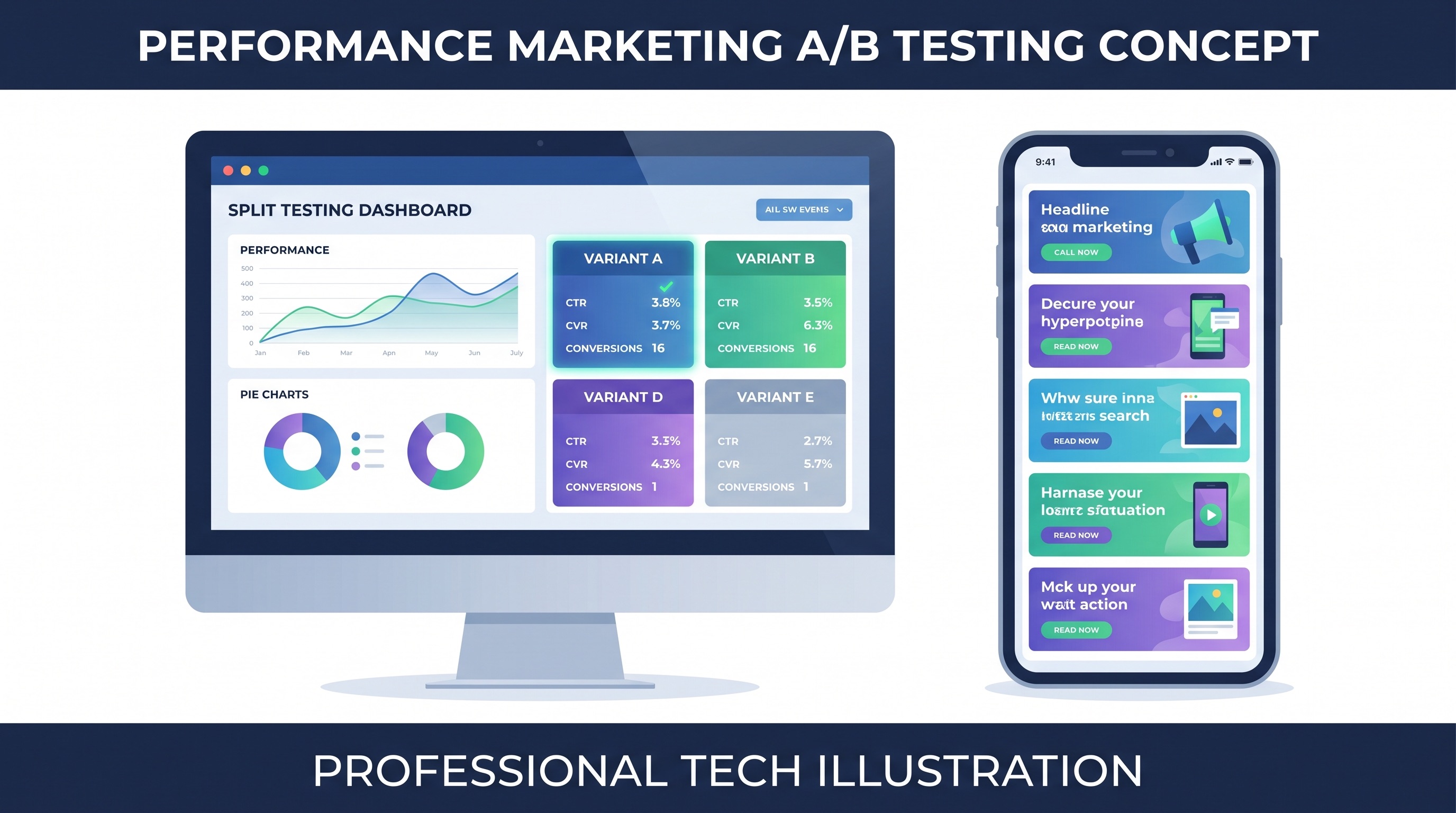
Campaigns without structured A/B hypotheses waste 40–60% of ad spend because you cannot improve what you cannot isolate. Teams that write copy without specifying test variables end up running "tests" where two variants differ in headline, tone, CTA, and length simultaneously — making it impossible to know what drove performance.
What we use it for
You are launching a paid campaign for a new product next week and need five distinct ad copy variants across Google and Meta — each testing a different creative angle — so your media buyer can run structured A/B tests and optimize spend based on what is actually being measured, not gut feel.
Prompt
Act as a senior performance marketing copywriter with 10+ years of experience running paid campaigns on Google Ads, Meta (Facebook/Instagram) Ads, and LinkedIn Ads.

Context:
- Product/Service: [PRODUCT OR SERVICE NAME]
- Target Audience: [DESCRIBE YOUR IDEAL CUSTOMER — role, company size, pain point, or demographic]
- Core Value Proposition: [ONE SENTENCE: the main benefit your product delivers]
- Campaign Goal: [CHOOSE ONE: brand awareness / lead generation / direct sales / app downloads / event sign-ups]
- Monthly Budget Range: [e.g., under $5K / $5K–$25K / $25K–$100K / $100K+]
- Platforms: [CHOOSE: Google Search / Meta / LinkedIn / YouTube / All of the above]

Task:
Generate 5 distinct ad copy variants for the platforms selected above. Each variant must test a clearly different creative variable so I can run structured A/B tests and know exactly what I am measuring.

Constraints:
- Respect platform character limits strictly: Google Search (30-char headline / 90-char description), Meta (125-char primary text / 40-char headline), LinkedIn (70-char headline / 150-char intro text)
- Each variant tests ONE distinct variable: headline framing, CTA type, emotional appeal, social proof vs. problem-agitation, urgency vs. curiosity, benefit-first vs. pain-first
- Write in natural language — no buzzwords, no filler, no generic phrases like "cutting-edge" or "game-changing"
- Match tone to the audience persona: B2B LinkedIn copy reads differently from B2C Meta copy
- Never repeat the same hook or CTA across variants

Output Format (use this structure for all 5 variants):

Variant [N] — [Variable Being Tested]
Platform: [which platform(s)]
Headline: "[headline text]" ([X] chars)
Body: "[body copy]" ([X] chars)
CTA: [button text]
A/B Hypothesis: [One sentence: what this variant tests vs. the baseline, and why you expect it to perform differently]
Result
Example output for: B2B SaaS project management tool | Target: Startup ops managers | Goal: Lead generation | Platform: Google Search + LinkedIn
Variant 1 — Problem-First Headline vs. Benefit-First Baseline
Platform: Google Search
Headline: "Projects Still Slipping Deadlines?" (34 chars)
Body: "See why 8,000 ops teams switched to Taskflow. Free 14-day trial, no credit card." (81 chars)
CTA: Start Free Trial
A/B Hypothesis: Problem-framed headlines trigger higher CTR for audiences actively searching for solutions to a pain they already recognize. If CTR exceeds the benefit-first variant by 15%+, lead intent is stronger at this keyword match type.
Variant 2 — Social Proof Quantity vs. Named Customer
Platform: LinkedIn
Headline: "Used by 8,000 Startup Ops Teams" (31 chars)
Body: "Stop rebuilding your tracking spreadsheet every quarter. Taskflow syncs your roadmap, sprints, and OKRs in one place. Teams at Deel, Rippling, and Remote run on it." (164 chars)
CTA: See How It Works
A/B Hypothesis: Named customer social proof (Deel, Rippling) outperforms raw volume numbers for LinkedIn audiences because decision-makers recognize peer companies. This tests brand recognition as a trust signal over statistical credibility.
Variant 3 — Urgency / Loss Aversion
Platform: Meta
Headline: "Your Q3 Roadmap Is Already Behind" (34 chars)
Body: "Most teams spend 6 hours/week reconciling status updates that should take 20 minutes. Taskflow closes that gap. Start free." (122 chars)
CTA: Fix It Free
A/B Hypothesis: Loss aversion framing (time already lost) should convert mid-funnel warm audiences better than aspirational framing. This variant targets users who have engaged with productivity content in the past 30 days.
Variant 4 — Curiosity Gap / Contrarian Hook
Platform: Google Search
Headline: "Stop Using Jira for Everything" (30 chars)
Body: "Jira was built for engineering, not operations. Taskflow is built for the full company. 14-day free trial." (106 chars)
CTA: Try Taskflow Free
A/B Hypothesis: Contrarian framing targeting a known incumbent creates curiosity and pre-qualifies switcher intent. This should outperform generic "best project tool" messaging for branded competitor keywords.
Variant 5 — ROI Quantification
Platform: LinkedIn
Headline: "Cut Weekly Status Meetings by Half" (34 chars)
Body: "Teams using Taskflow report 3.2 fewer hours spent on status updates per person per week. At 20 people, that is 64 hours back. Book a 20-minute demo." (148 chars)
CTA: Book a Demo
A/B Hypothesis: Quantified ROI (hours saved, dollar value) outperforms abstract benefit claims for ops managers who need to justify software spend to a CFO. Numeric specificity increases credibility and purchase intent.
Most ad campaigns waste budget because variants have no clear test hypothesis. This prompt generates five platform-ready ad copy variants for Google, Meta, or LinkedIn — each testing a different variable, with a built-in hypothesis so your media buyer knows exactly what to optimize.
You are launching a paid campaign for a new product next week and need five distinct ad copy variants across Google and Meta — each testing a different creative angle — so your media buyer can run structured A/B tests and optimize spend based on what is actually being measured, not gut feel.
Campaigns without structured A/B hypotheses waste 40–60% of ad spend because you cannot improve what you cannot isolate. Teams that write copy without specifying test variables end up running "tests" where two variants differ in headline, tone, CTA, and length simultaneously — making it impossible to know what drove performance.